Exploring Latvia and Lithuania in Winter: A One-Week Itinerary
Visiting Latvia and Lithuania in winter offers a very different perspective from the peak summer season, especially around Christmas and New Year. During this time, cities are quieter, daylight is limited, and winter weather shapes what you can do. Find here an itinerary to travel through Latvia and Lithuania in winter, in particular over the Christmas and New Year holidays.
- Itinerary
- Day 1: Arrival in Riga
- Day 2: Kemeri National Park, Tukums, and Jurmala
- Day 3: Gaujas National Park and Riga
- Day 4: Heading to Lithuania – Bauska Castle, Rundale Palace, Hill of Crosses, and Kaunas
- Day 5: Aukstaitijos National Park and Labanoro Regional Park
- Day 6: Trakai and surrounding areas
- Day 7: Vilnius and back home
- Personal highlights
- Where to stay?
- What to eat in Latvia and Lithuania?
- Practical info
- Looking for more inspiration?
Itinerary
Day 1: Arrival in Riga
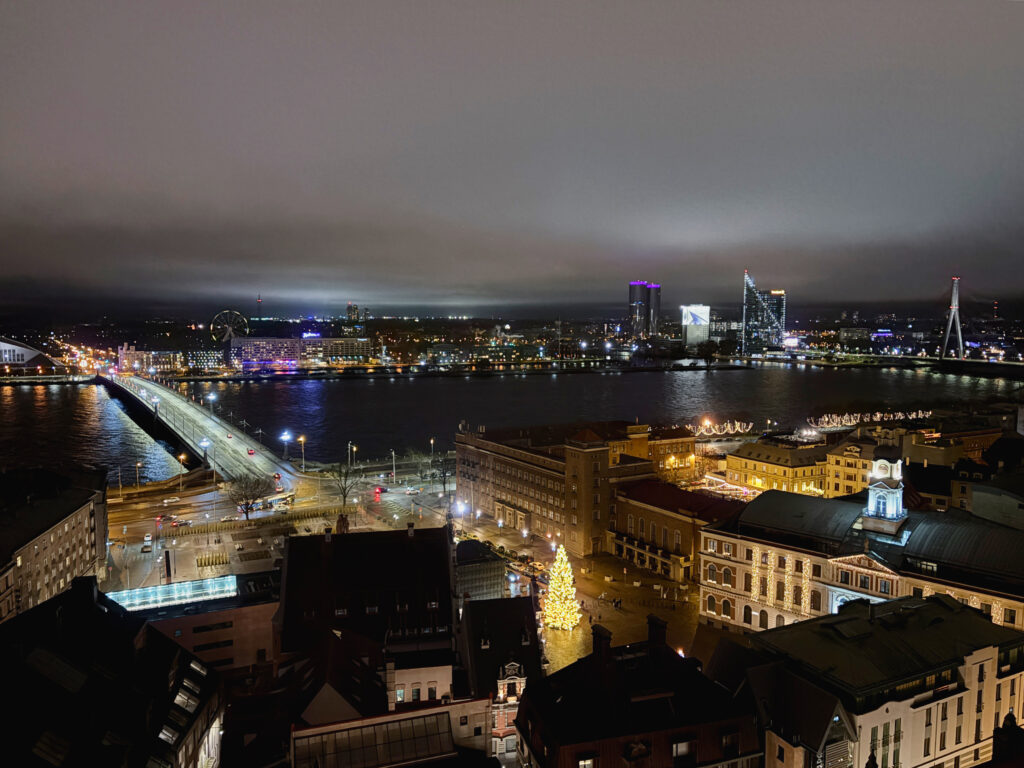
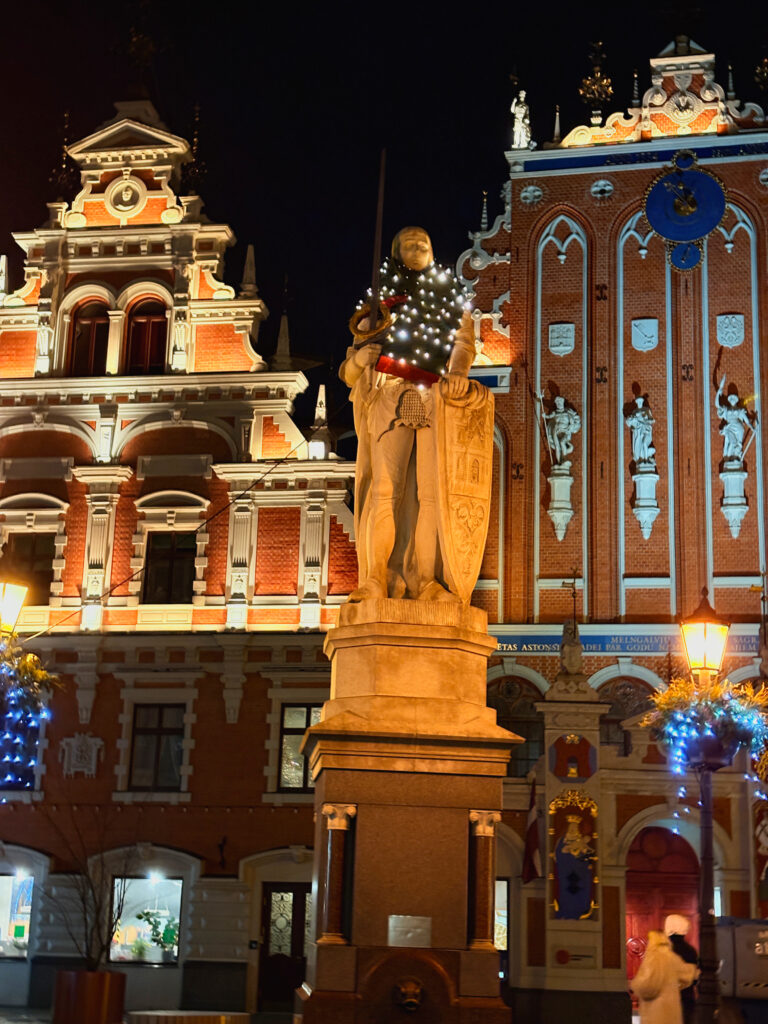
My friend had a better connection to Riga, so she arrived first and started exploring Riga. I arrived when it was already dark, and she showed me the key places, including the St. Peter’s Church, which we could climb up, as they had extended the opening times until 21:00. The church is located in a square where you also can see the Town Musicians of Bremen, a sculpture with four animals one on top of the other, mirroring the famous tale of the Bremen’s musicians. People were rubbing the animals’ noses, as it’s said to bring good luck.
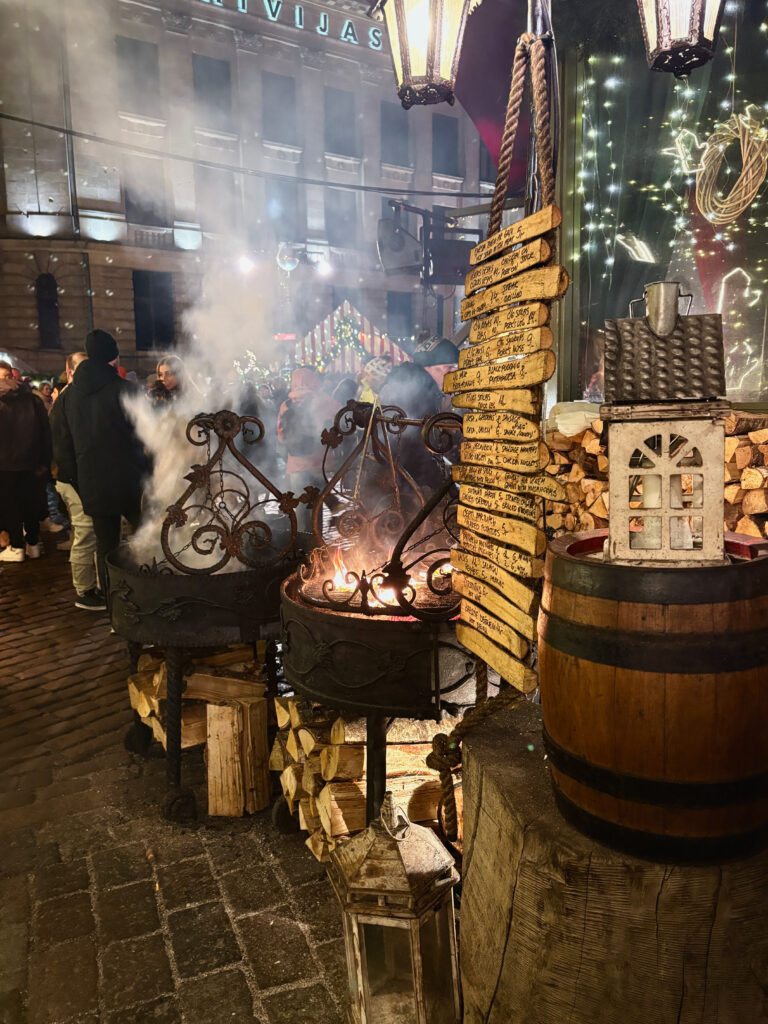
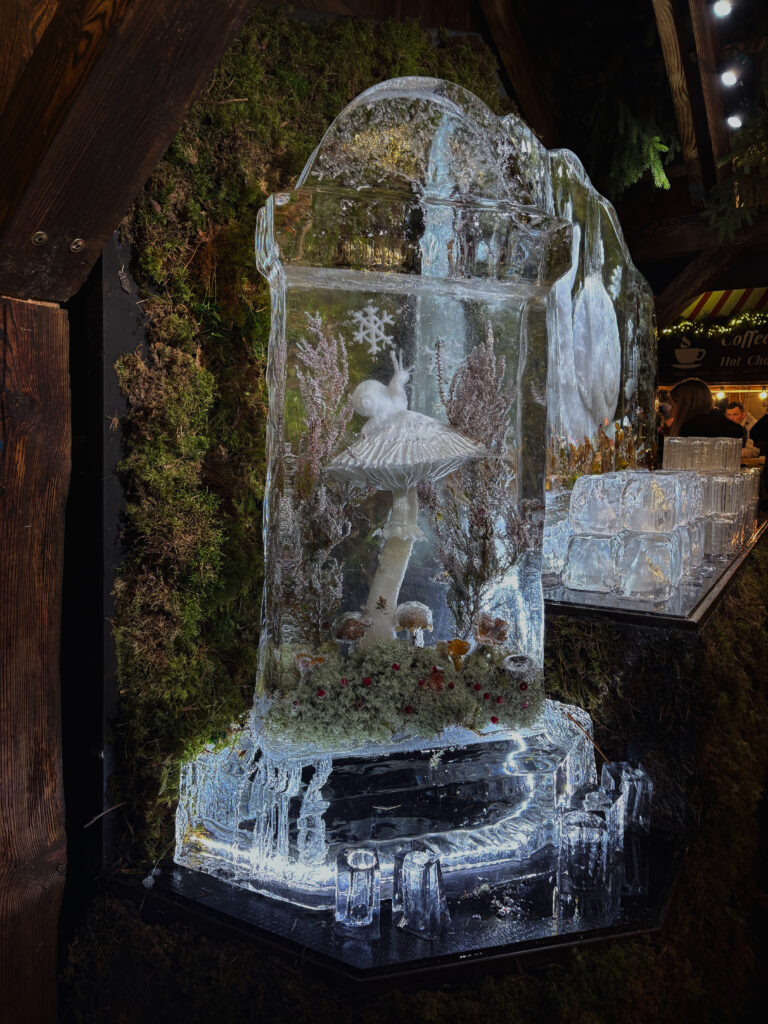
We then headed to the Christmas market at the Dome Square. I was positively surprised by the market – it was really fun! It had the right amount of people (not too crowded to be uncomfortable and not too few to feel empty), it had live music, and there were a lot of cool stalls. I particularly liked the traditional food ones, as well as a bar making glasses out of ice.
Day 2: Kemeri National Park, Tukums, and Jurmala
One of the main disadvantages of going north in the winter is that the number of sun hours is reduced. In Latvia and Lithuania, the shortest days last from approx. 9 to 16, which is not terrible, but one definitely needs to optimize what one wants to see. The weather is also quite variable, so it can be sunny for a while and then start snowing. While we were in Latvia it wasn’t too cold (approx. 4-5ªC) and there was no snow, which made hiking easier.
Kemeri National Park
Our first stop of the day was the Kemeri National Park. It’s quite a small park relatively close to Riga (45 min by car), which makes it an ideal destination for nature lovers. I will admit we didn’t do the deepest research, so it was a bit of a challenge to find the routes that we wanted to take – we ended up choosing one through AllTrails.
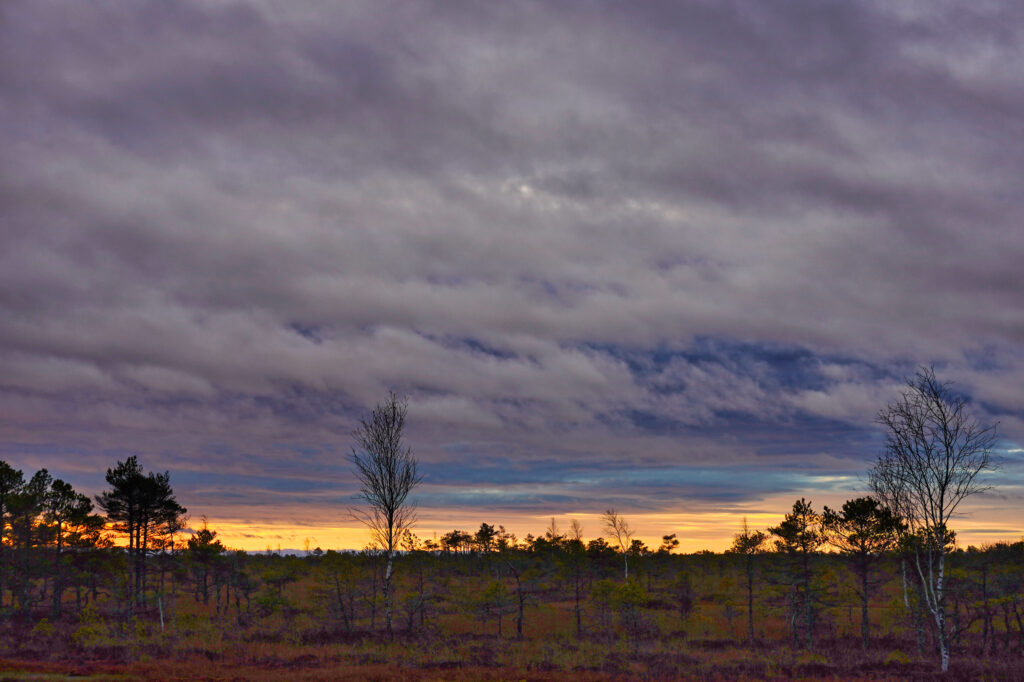
The highlight of the Kemeri Park is the bogs. We took the Kemeri Bog Trail, which was relatively short (4.6 km) and very flat. There is a paid parking lot at the beginning of the trail, and from there you walk through the forest for a bit before you reach the bog. After that, you’ll be walking on a wooden platform. There’s two options, one shorter and one longer hike (we took the long one). If you take the long, you can go up a platform to have views of the bog.
On the way to Tukums, we stopped at the Inverted Houses, but they were closed for the season. You can still see them from the outside though.
Tukums
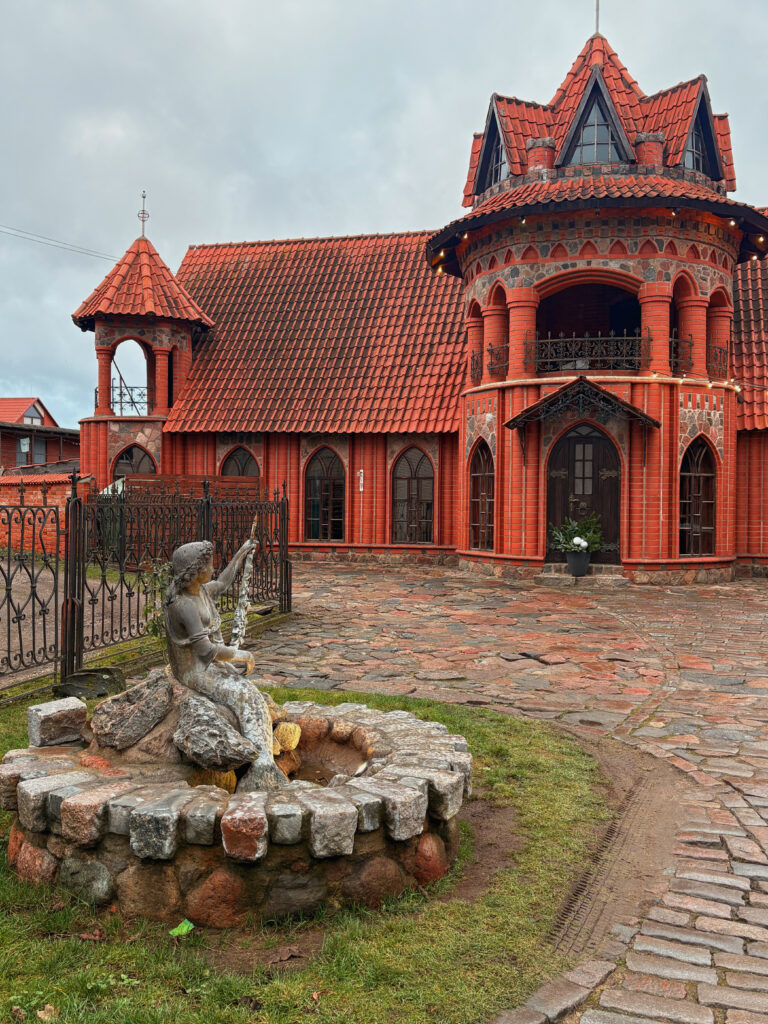
Tukums is the 13th largest city in Latvia, located 30 min west of the Kemeri National Park. Although it’s clearly focused on summer tourism, Tukums has lots to offer also in winter. There’s a few traditional buildings and some cute cafés and stores (that were open also in December). You can also visit a couple of churches and the local market, where we bought some nice pastries. There’s a couple of museums too, but we didn’t stop at any as we wanted to see Jurmala with sunlight.
Jūrmala
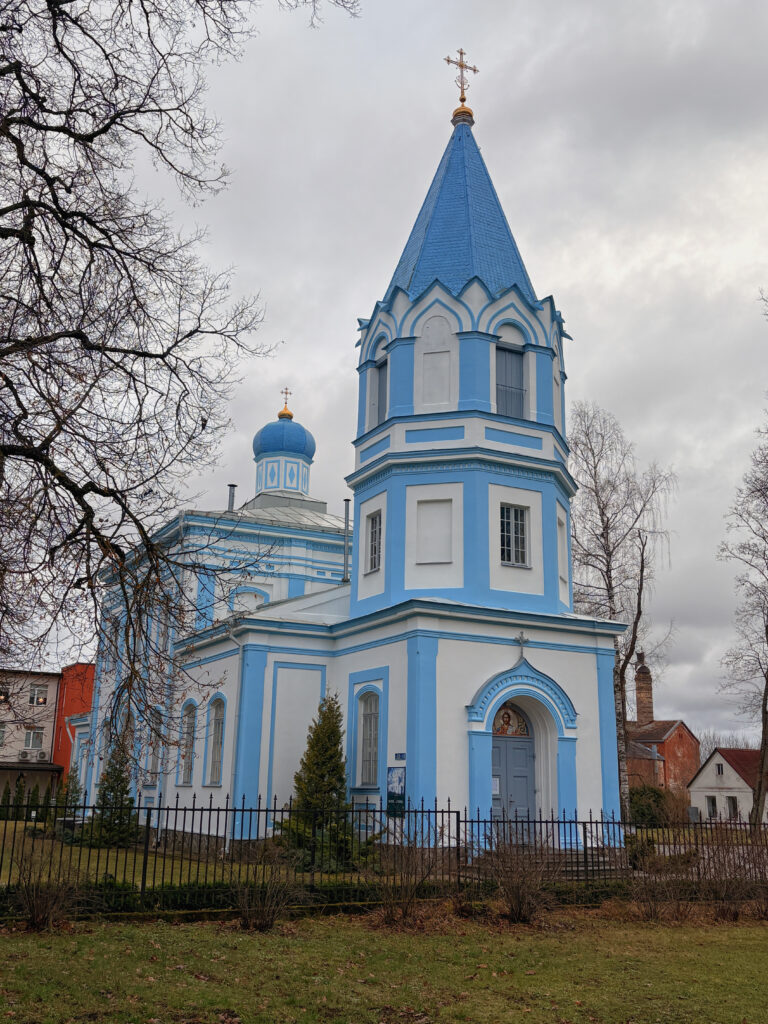
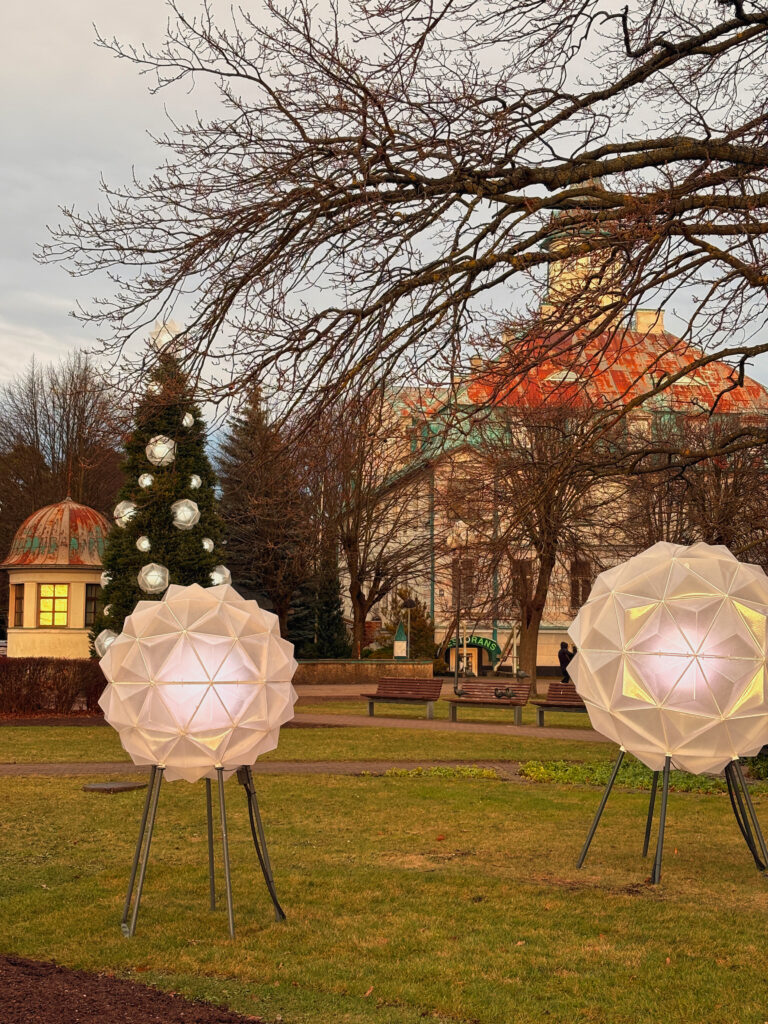
Jūrmala is a nice city next to the beach, extending along the coast for 32 km. It has an enormous white-sand beach, which makes it an outstanding resort in summer. Jūrmala has quite a few attractions that you can conveniently visit on foot if you park your car next to the information center. We got a city map and a few recommendations from the tourist office, and headed down the Jomas iela, a very long street with many restaurants, cafés, and stores. At the end of the street, one can see an orthodox church and the statue of a globus. From there, we headed towards the beach, with the wind blowing on our faces. It was extremely windy, and we later got alerts on our phones due to strong winds.
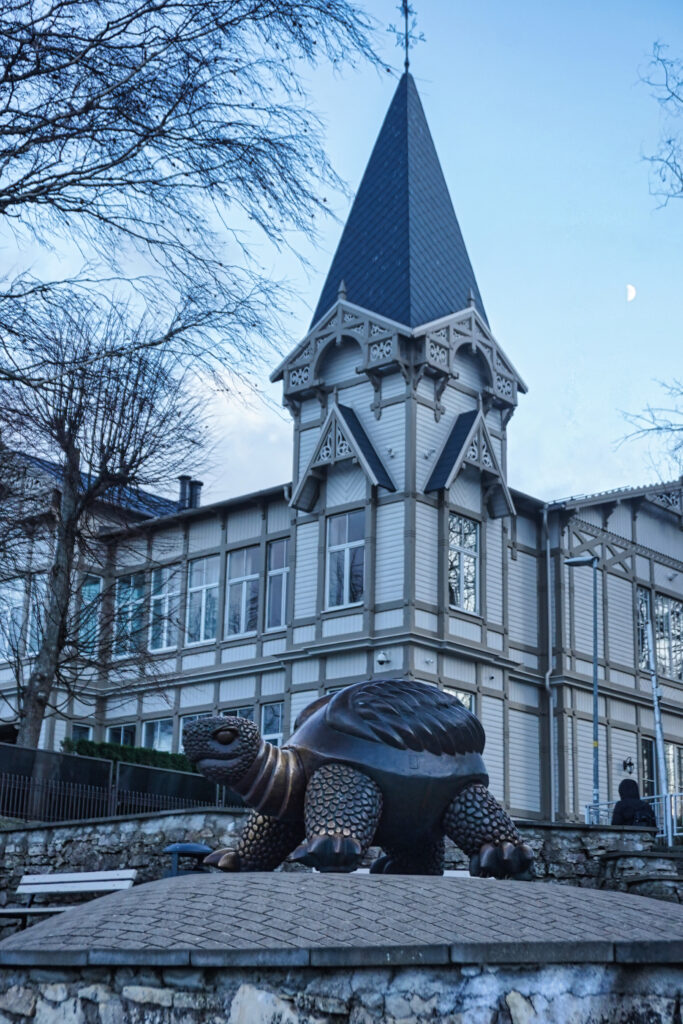
We walked along the beach until reaching the Jūrmala sign, and then entered the city, stopping at the turtle sculpture. Heading back into town, we stopped at the Inner Light Art gallery, where for 5€ we could enjoy the work of a local artist, who painted with paints invisible under normal light, revealing drawings when the white light was switched to black light.
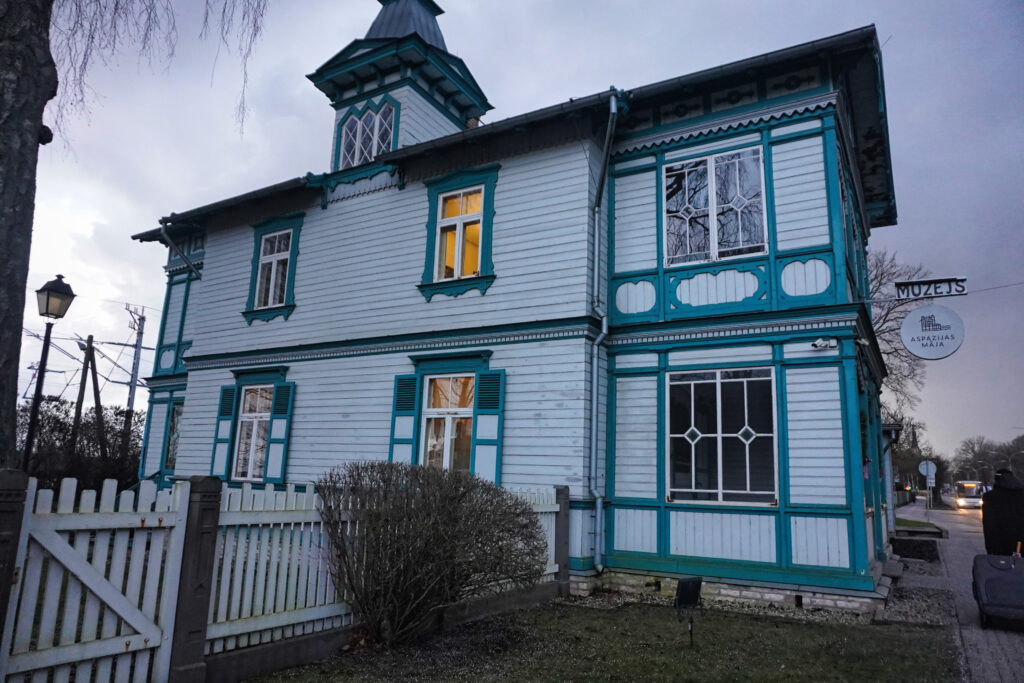
Before heading home, we visited one last stop, the Aspazijas māja, a local museum-house. Jūrmala has quite a few wooden houses from the 19th-beginning of the 20th centuries, and this one belonged to the poetess and feminist Aspazija. The house is largely reconstructed, as it was partially destroyed during WWII, but it’s always exciting to learn about strong women in history. She liked cats too, so extra points for that.
You should know that as per 2025 there is a 3€ fee to enter the city by car, which can be paid via the app, on machines at the entrance of the city, or in the touristic information office.
Day 3: Gaujas National Park and Riga
Gaujas National Park
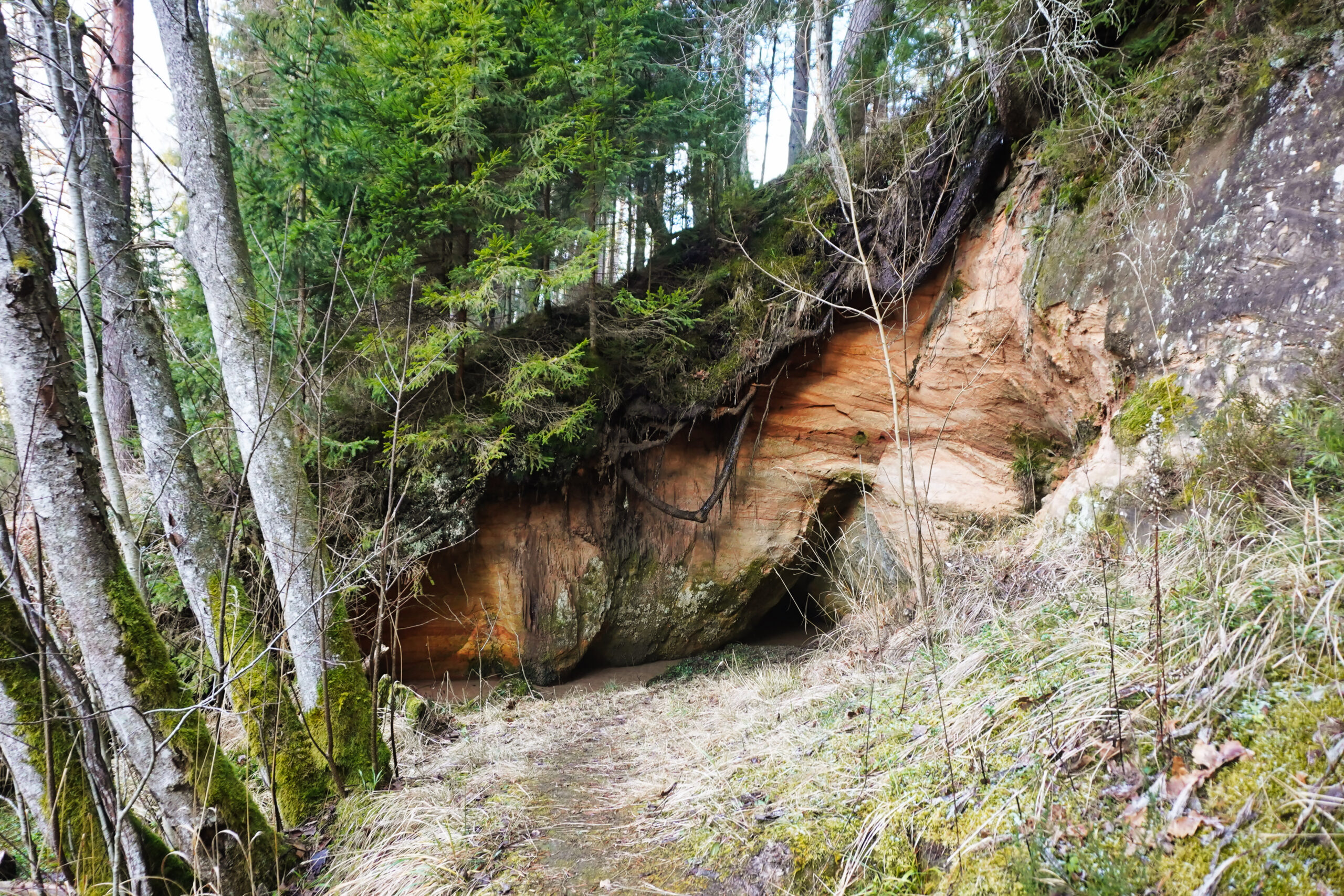
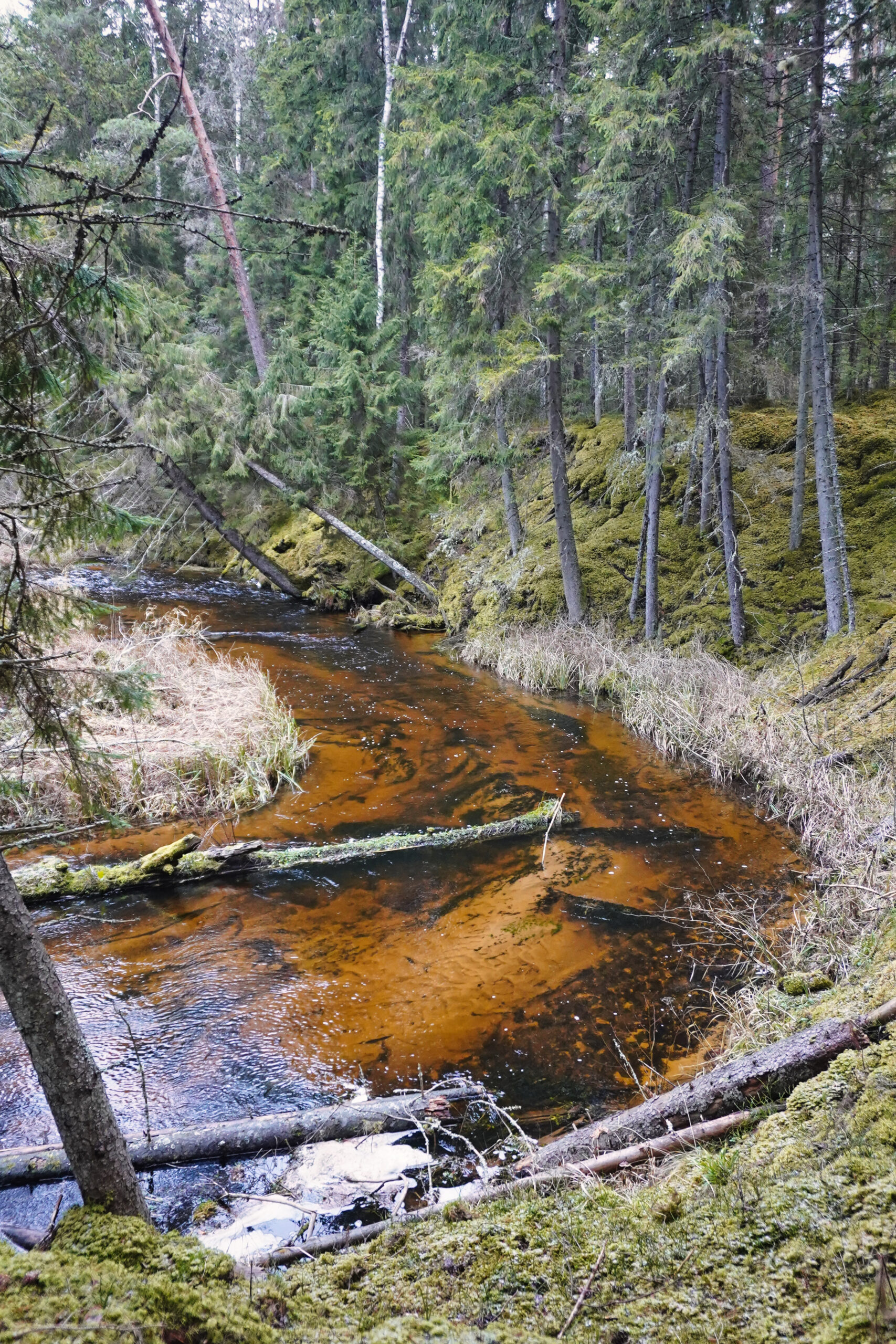
The Gaujas National Park was established in 1973 and is the largest park in Latvia. This park offers different landscapes from Kemeri, with more rivers, rocks, and cliffs. There’s also a few historical building scattered around the park. December is this weird month in which you may or you may not see snow, and in this park we didn’t get any yet. However, the hike we did was really cool – we went to see the Stikupe River until the Stoku Cliffs. Our trail was an 11,3 km in-and-out trail, which we started at a small parking lot nearby the road V288 (check AllTrails for exact instructions). There are many trails in that area, so be sure to follow the river if you want to reach the cliffs.
Riga
After completing the hike, we headed back to Riga to see if we could still visit it with daylight. Unfortunately, we didn’t reach it on time for that, but that doesn’t mean we didn’t get to enjoy the city. Wandering around the nice old town, a UNESCO protected site, where you can see a medieval core and many buildings in the Art Nouveau style, is really a joy, even after dark. We couldn’t visit the museums, but that’s for my next visit to this beautiful city!
Day 4: Heading to Lithuania – Bauska Castle, Rundale Palace, Hill of Crosses, and Kaunas
Bauska Castle
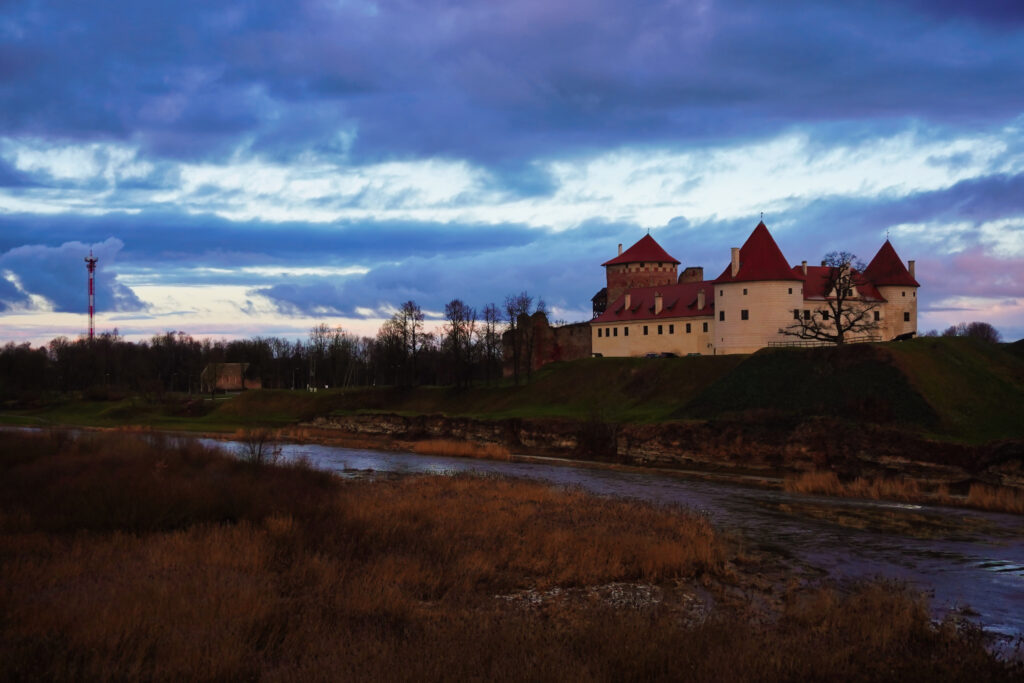
We started our drive early in the morning, before sunrise, to try to optimize our sun hours. One hour drive south from Riga, you can find the Bauska Castle. The Bauska Castle is a 16th century fort built on a hill next to a river. You can freely walk outside the castle, and there’s a parking lot right in front of it. You can visit the inside of the castle from 11 to 17 in winter (they do have longer hours in summer), which was too late for us to wait, so we headed to the next point, the Rundale Palace.
Rundale Palace
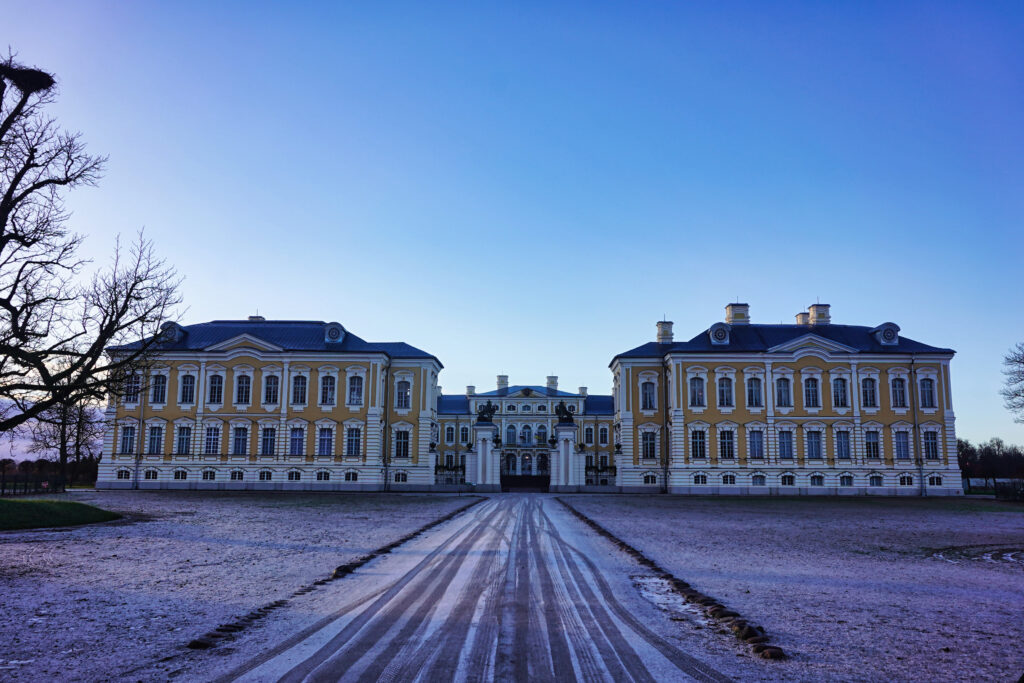
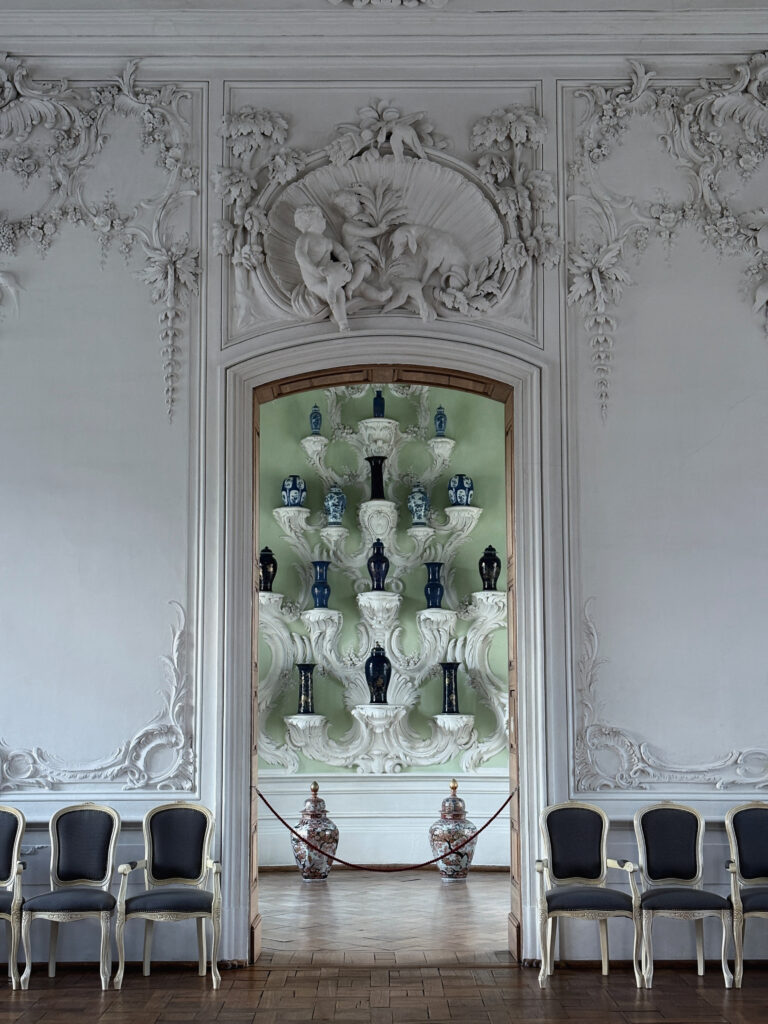
At only a 10 min drive from the Bauska Castle, you can easily check out the Rundale Palace built in the 18th century for the Dukes of Courland. We arrived at the opening time, 10 am, and bought the tickets for 12€ per person. One of the advantages of visiting in winter is that there’s less tourism. In this case, this meant that we had this Baroque gem for us for almost the whole visit. I’ve never been to a palace where I could see the rooms without any other guests, it was awesome! When we finished, around 11, more people started to come by. The disadvantage of visiting in winter is, of course, that the gardens are not particularly nice.
One of the things I like the most in this palace is that they left one room without restoration. It really highlighted the impressive job that restaurators do in museums.
Hill of Crosses
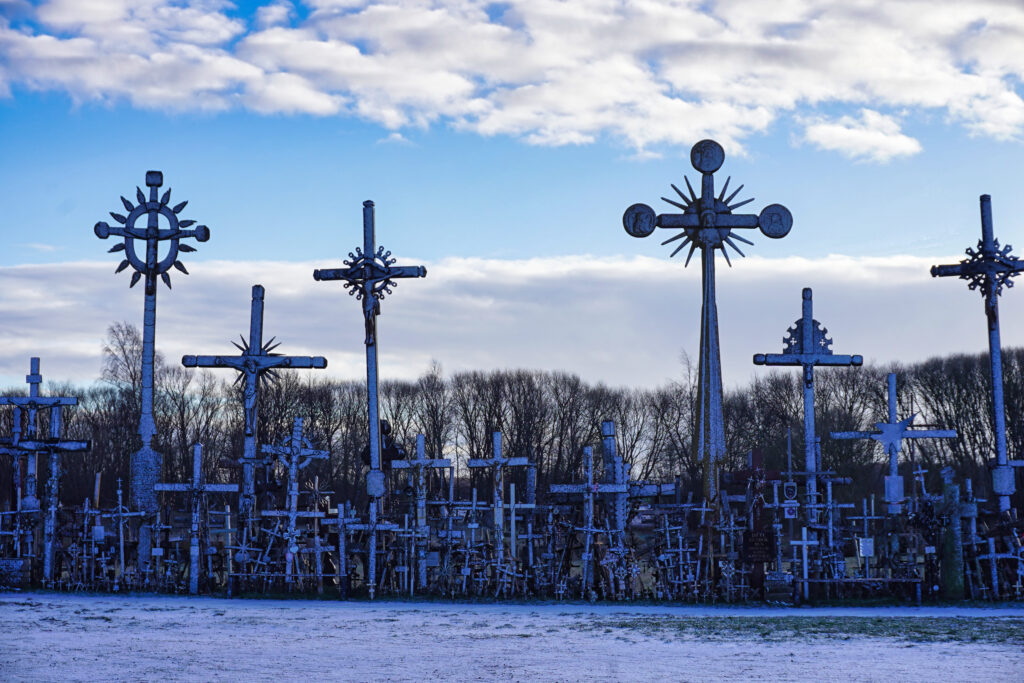
This is one of those points that are really mentioned in all guides – the Hill of Crosses. The story that I read about its origins (there seems to be a few circulating) said that due to repressions of some tsar, people started putting crosses on a hill. Anyhow, if you come in now, you’ll see many many crosses and other religious symbols. It’s an interesting place as it’s really messy, with crosses on top of crosses. The more uphill you go, the messier it gets.
The Hill is located 1 h away from the Rundale Palace. There’s an official parking lot for 3€ the vehicle (don’t pay on arrival, you have only 20 min to leave the parking after payment), a few stores and a public restroom for 1€. There’s also a less official parking behind the hill, where we saw quite a few cars parked.
Kaunas
From the Hill of Crosses, we drove to Kaunas, the second largest city in Lithuania. The atmosphere of the city is really cool, although it was quite late and dark and we didn’t get to visit so much, as we still needed to reach Vilnius.
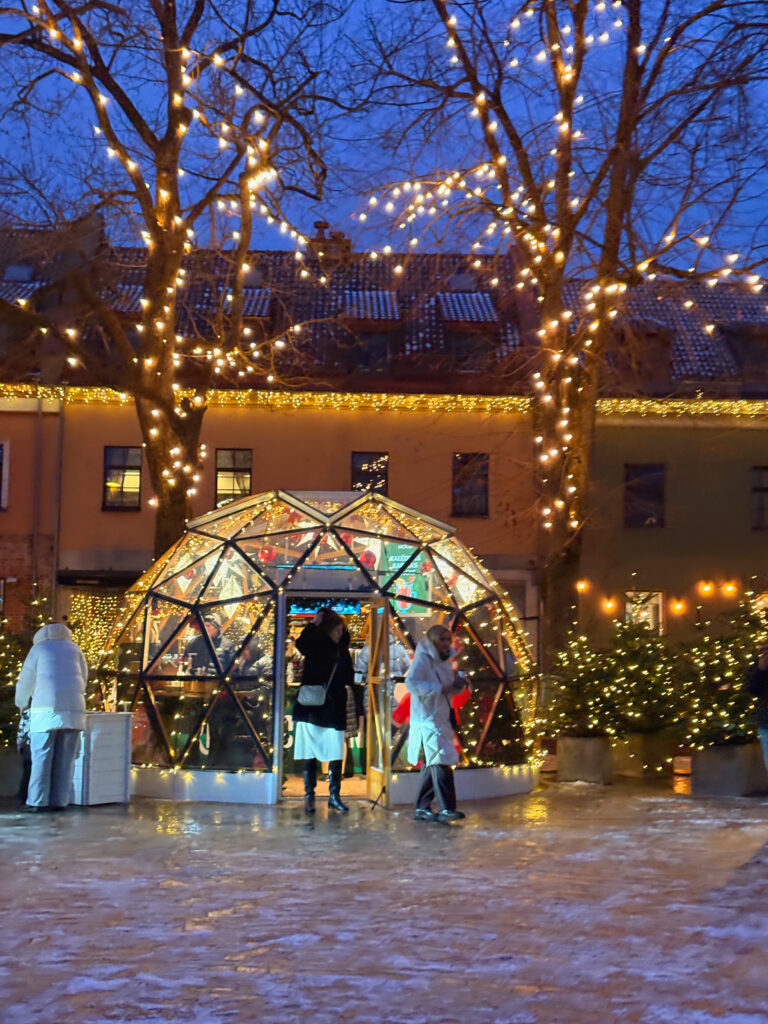
There’s a few parking areas in the city center, including along the river and next to the castle, the Kauno pilies žvėris. The castle is a small fortress, which you can climb to get some views of the city (it’s not very high up, so moderate your expectations). Not too far, there was a nice Christmas market with glass igloo stalls around the main square, surrounded by a few restaurants.
A highlight of Kaunas is the Devil’s Museum, a collection of devils from around the world. Sadly, they are closed on Mondays and we were there on a Monday, so we didn’t get to visit it.
Day 5: Aukstaitijos National Park and Labanoro Regional Park
Aukstaitijos National Park & Labanoro Regional Park
The Aukstaitijos National Park and Labanoro Regional Park are located really close to each other. There was quite a lot of snow, although we still got lucky and could see the sun. For the hike, we drove to Ginuciai, a small town in the middle of the park, and from there took the Piliakalnio road to reach a parking lot. There were a couple of cafés in Ginuciai, but they seemed closed for the season, so don’t count on them and bring food and drinks with you.
We hiked up Ladakalnis, which is one of the highest peaks around. It’s quite an easy climb, as there are stairs built for convenience. It’s not too high, only 176 m above sea level, but it gives you a nice view of the lakes around the park. In summer you can differentiate 6 lakes, but in winter they were mostly frozen, so I could count 3. The rest were under the snow. We then continued all the way to Salos and then back, in what turned out to be an 8 km hike and took us 2 h to leisurely complete.
Wanting to walk a bit more, we drove a bit towards the Labanoro Regional Park, stopping next to Mindunai. There’s an ethnographic museum you can visit there, but we decided to go for a short 3.5 km walk towards the observation tower. It’s a 36 m tower, and I’m going to say it’s a bit scary to get all the way up, especially when it’s windy. You do get nice views of the lake though. On the bottom of the tower, there was a coffee machine, in case you get too cold or too tired. There’s also a parking lot right next to the tower, in case you don’t feel like walking there.
Day 6: Trakai and surrounding areas
Trakai
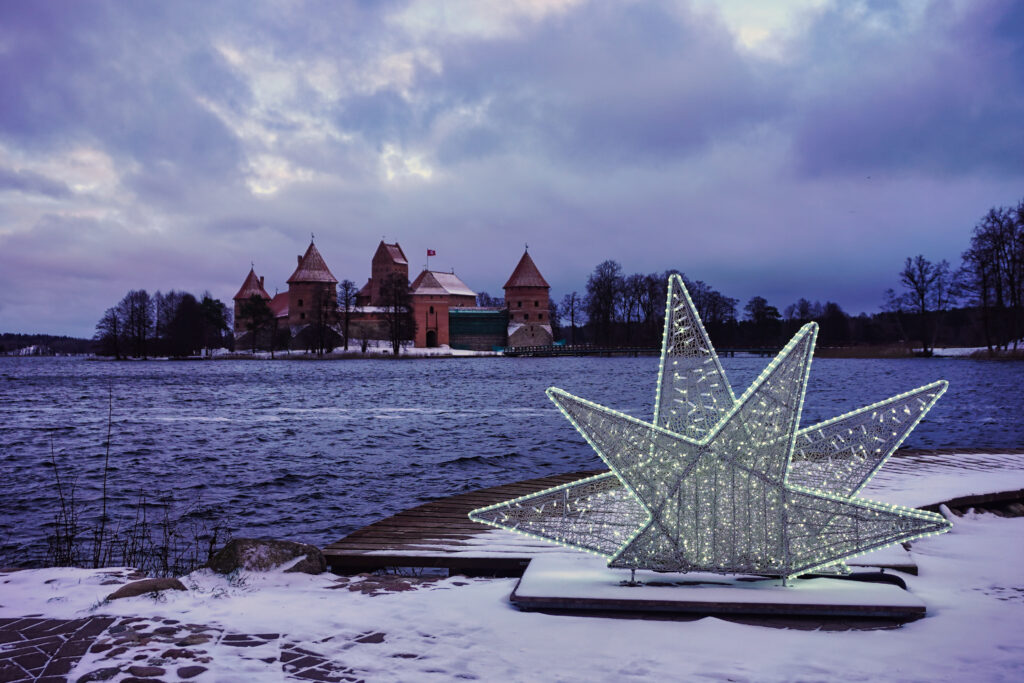
This is one of the most famous sights in Lithuania – a medieval castle surrounded by waters. It reminds me a bit of the Lake Bled in Slovenia, but the castle here is so much closer to the town, you can actually go there by foot, as there’s a few bridges connecting it. It was extremely cold too, with freezing wind blowing over the water. This made the castle visit much shorter, as all the cafés were still closed (or maybe closed until summer, we didn’t stay long enough to check).
The castle is really beautiful, and it’s nicer to see from the distance than it is from close. It opens 10-18, but you don’t need to wait until opening to go around the building. I can imagine that the boat tour around the castle is also really nice, but I would wait until spring to do it.
Hill of Angels
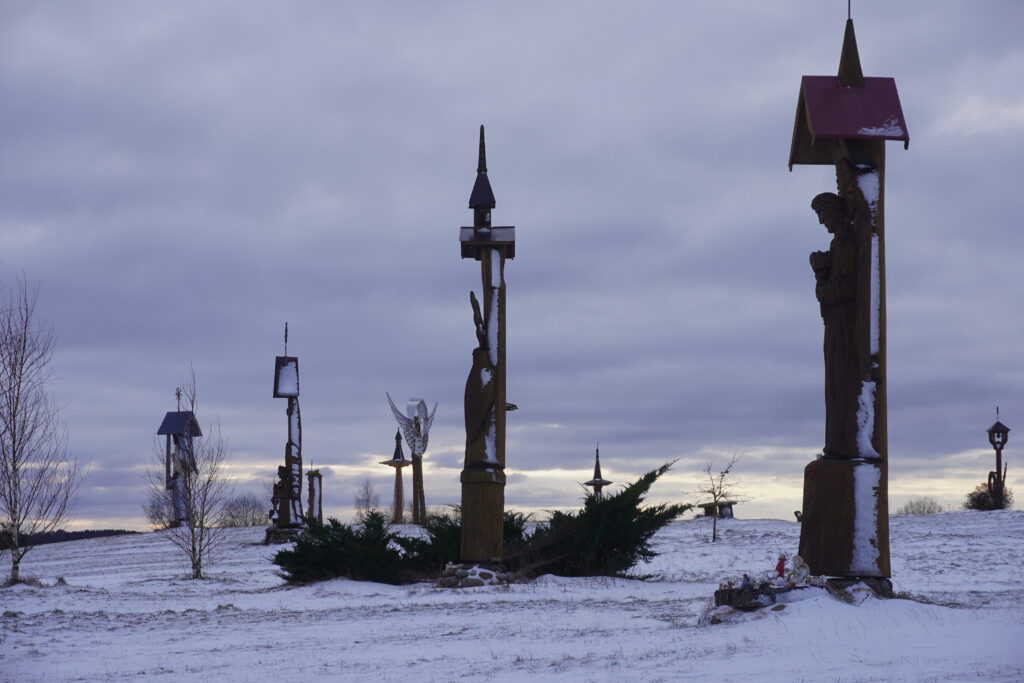
If you enjoyed the Hill of Crosses, this is the next destination for you – the Hill of Angels. It’s less famous than its counterpart, but it’s also really close by Trakai, so we decided to give it a go. This place features wooden sculptures of angels located along a road. This was a planned art exhibition by Dominyka Dubauskaitė-Semionovė and Lolita Piličiauskaitė-Navickienė to celebrate the 1000th anniversary of Lithuania. There’s a small parking next to it, and it’s free to visit.
Center of Europe
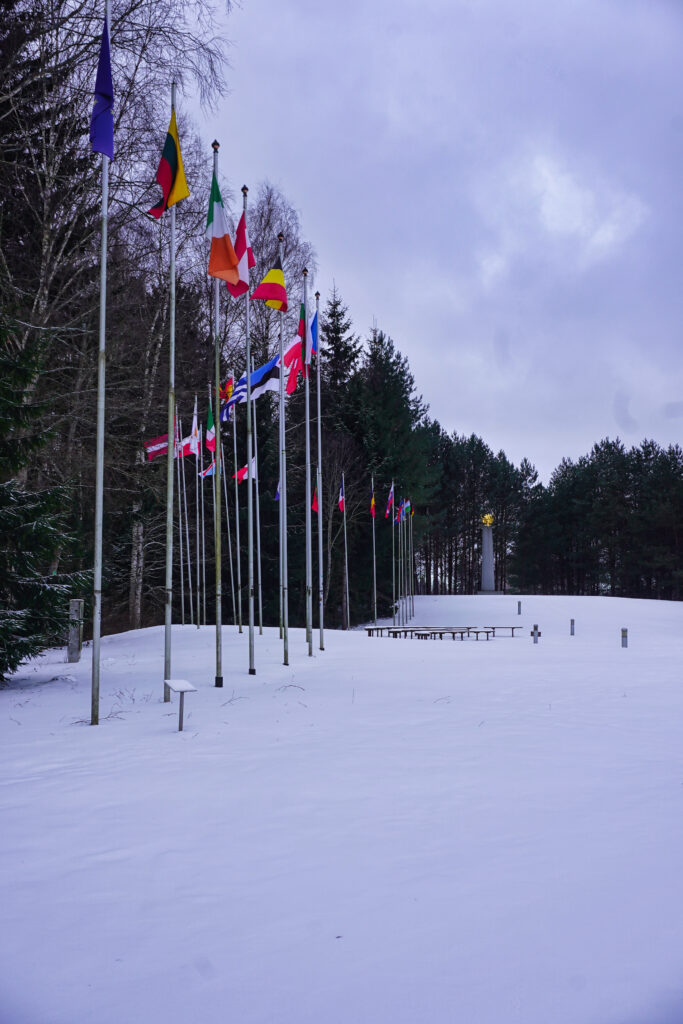
If you’re a geography enthusiast, this place is for you. Nearby Purnuškės, 26 kilometres from Vilnius, you can find this point, determined by French Scientists from the French National Institute of Geography. It now has a small monument and the flags of EU countries. As they say themselves in the information panel, this is not the only place to claim to be the center of Europe, but nonetheless it’s a nice visit. Nearby the Center of Europe, you have the Park of Europe, with many sculptures of European arstists around a park. Given the temperatures (too cold), and the price of the park (14€), we skipped that one, but it might be nice in summer.
Back to Vilnius for New Year!
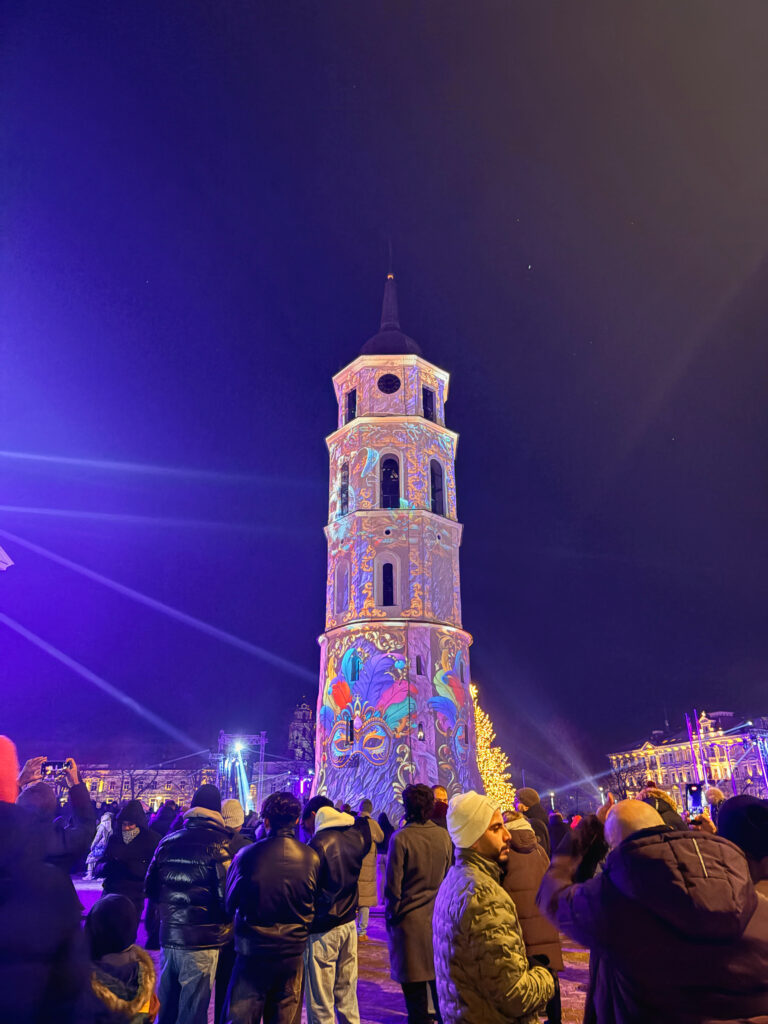
The 6th day of our trip coincided with the 31st December, so Vilnius was our choice to celebrate the entrance of the year. We went to the Cathedral Square, where many people were looking at the light and laser show on the Vilnius Cathedral Bell Tower. After 12, many people celebrated by throwing fireworks. It was a fun and energizing experience.
Day 7: Vilnius and back home
Our last day was dedicated to the city of Vilnius, the historic center of which is a UNESCO Heritage Site. The historic center is quite large and has building from all the different eras, from medieval ones, to Gothic, Renaissance, and Baroque, creating the beautiful sights we see today. While museums were mostly closed on 1st January, walking around the streets already gave us a great overview of the city.
Short city hikes
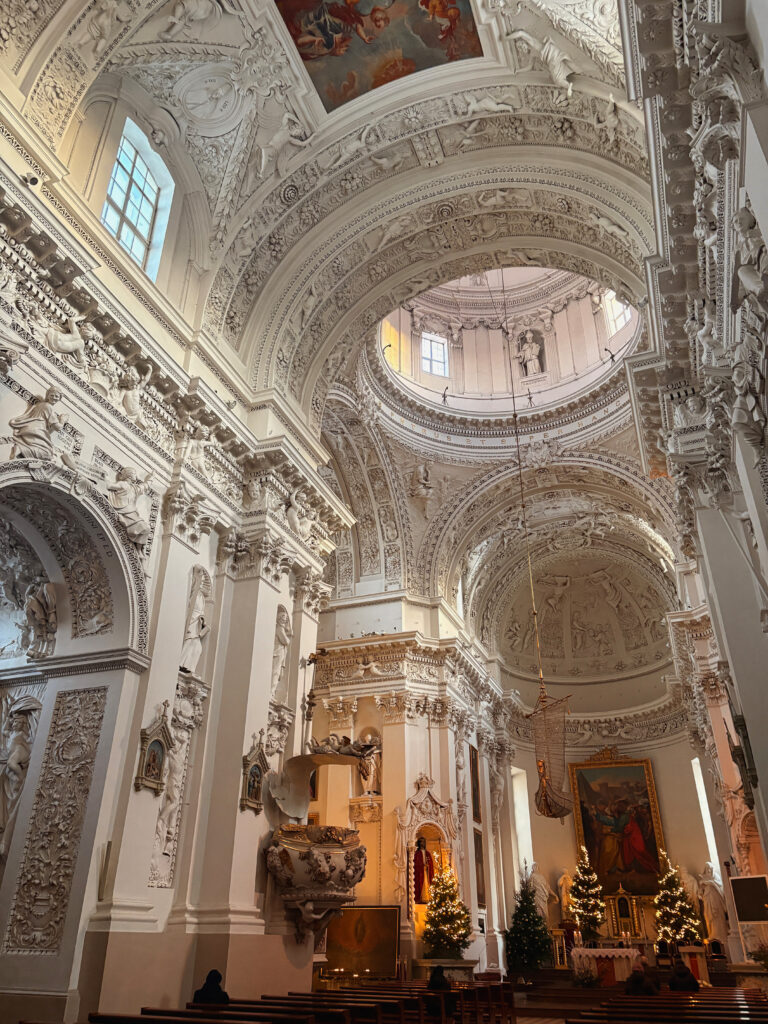
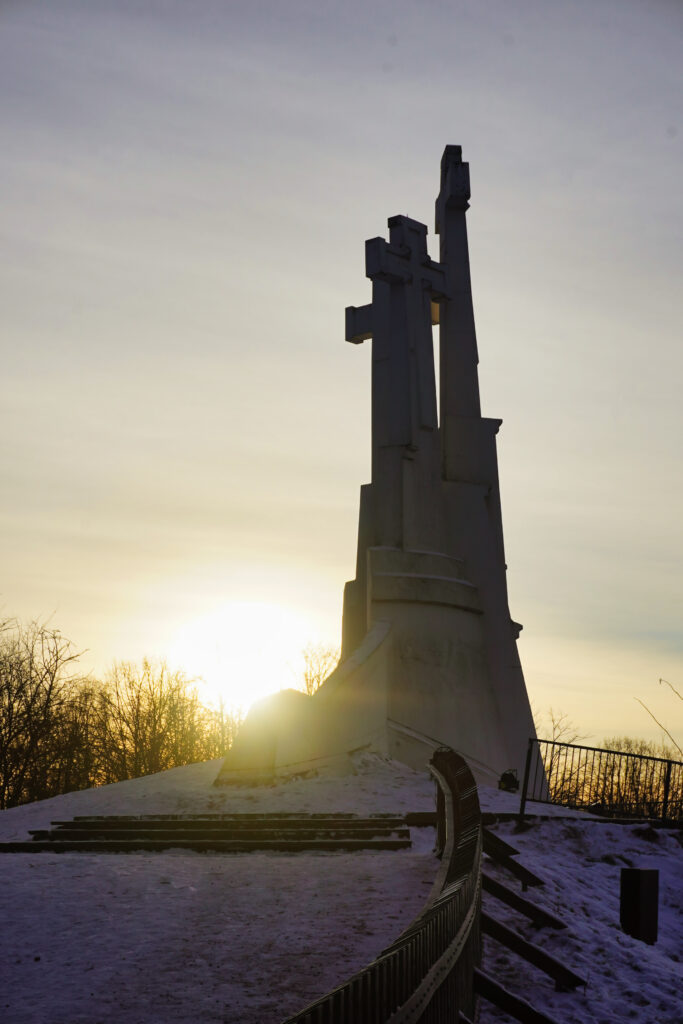
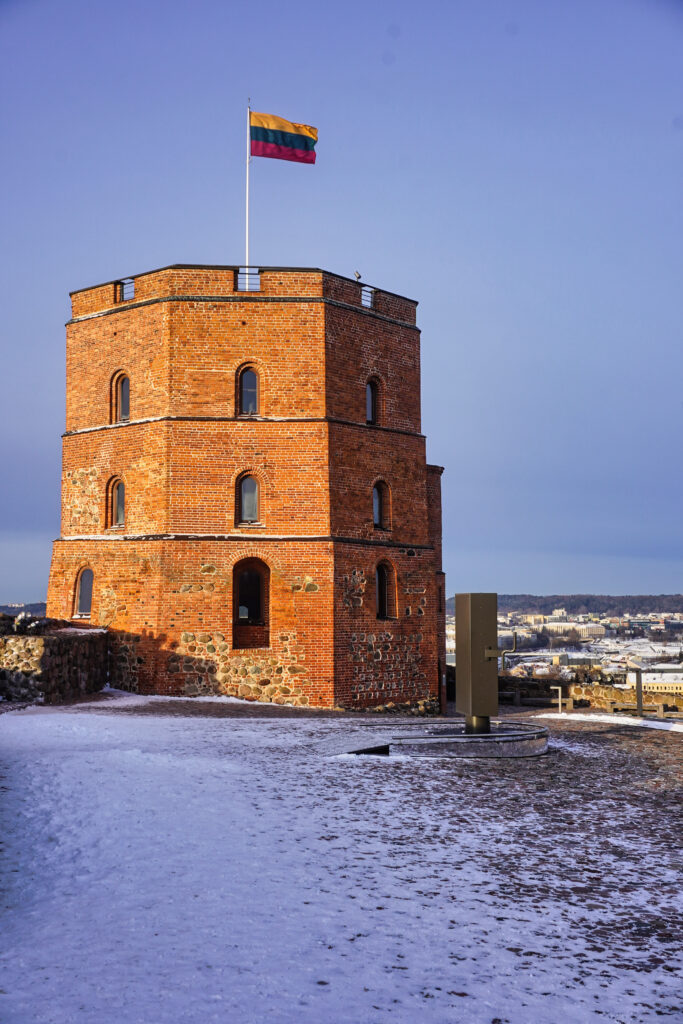
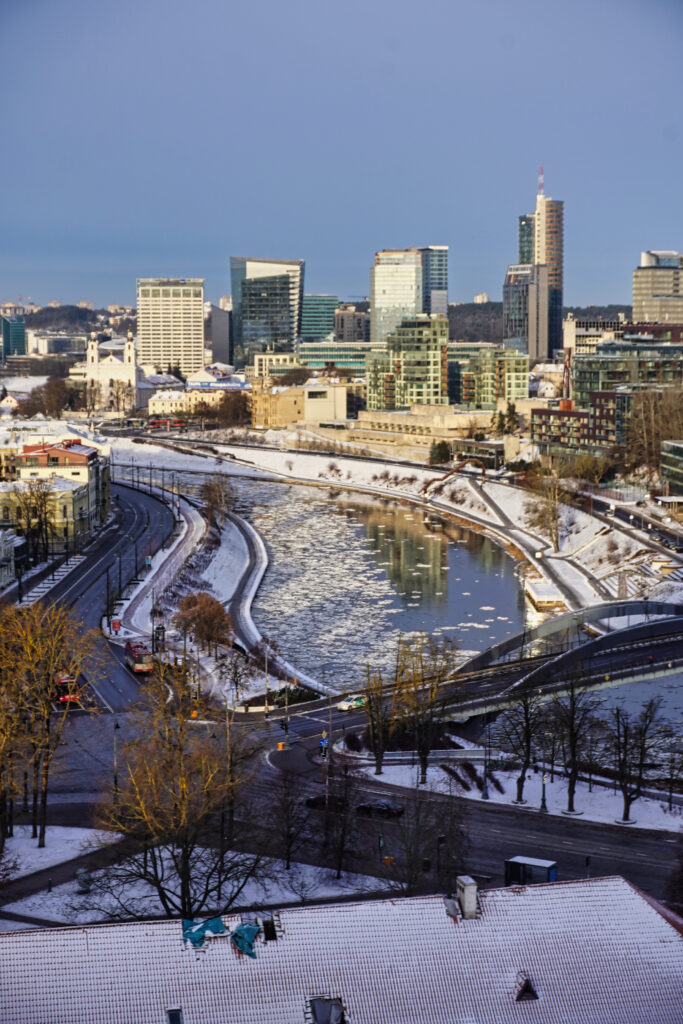
We started walking from our hotel to the Church of Sts. Peter and Paul, which is really beautiful inside, with a Baroque decorations, all in white. It’s a bit further from the city center, so we then headed back and climbed to the Three Crosses Monument, from where you get great views of the city. There used to be a castle there in the 14th century, but it got destroyed, and the cross addition has been pretty recent. If you continue your way to the city, you’ll find the Gediminas Castle, which also gives nice views of Vilnius. This castle can be climbed on foot or by taking a short cable car ride to the top.
Exploring different neighbourhoods
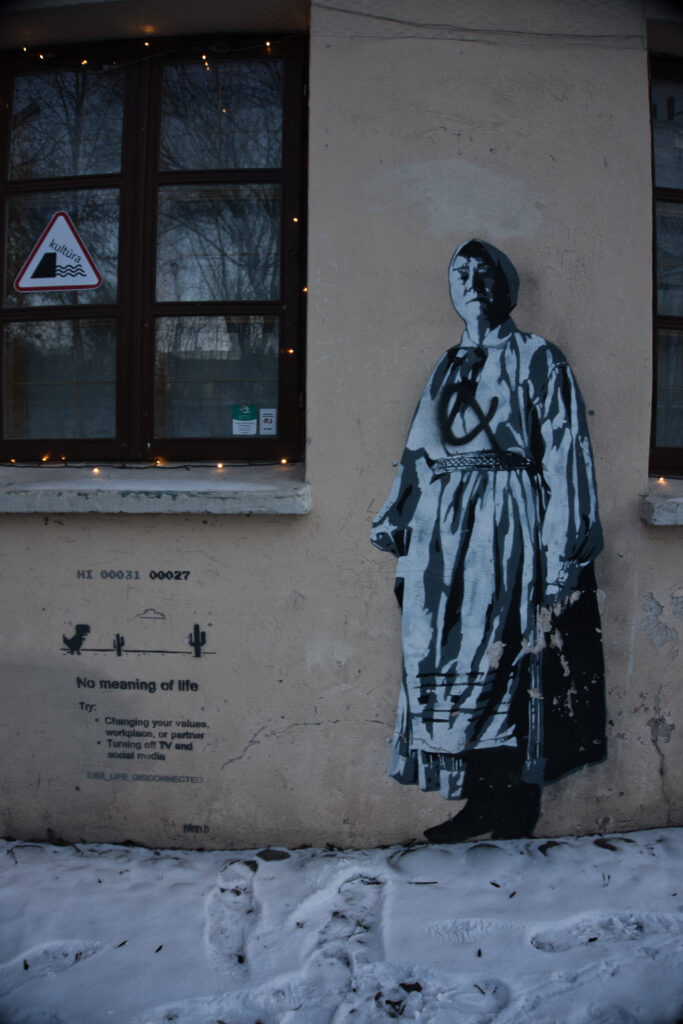
We descended towards the Vilnius Cathedral square, where we had seen the fireworks the day before. From there, we strolled to the Town Hall Square, where there was a huge ice skating rink. There’s a small Jewish Quarter hidden among the buildings behind the town hall, with some rocks from an old synagogue. We continued towards Uzupis, a region of Vilnius that “jokingly” declared independence on 1 April 1997. While its political status may be unclear, it’s a cool neighbourhood with many artsy places to visit.
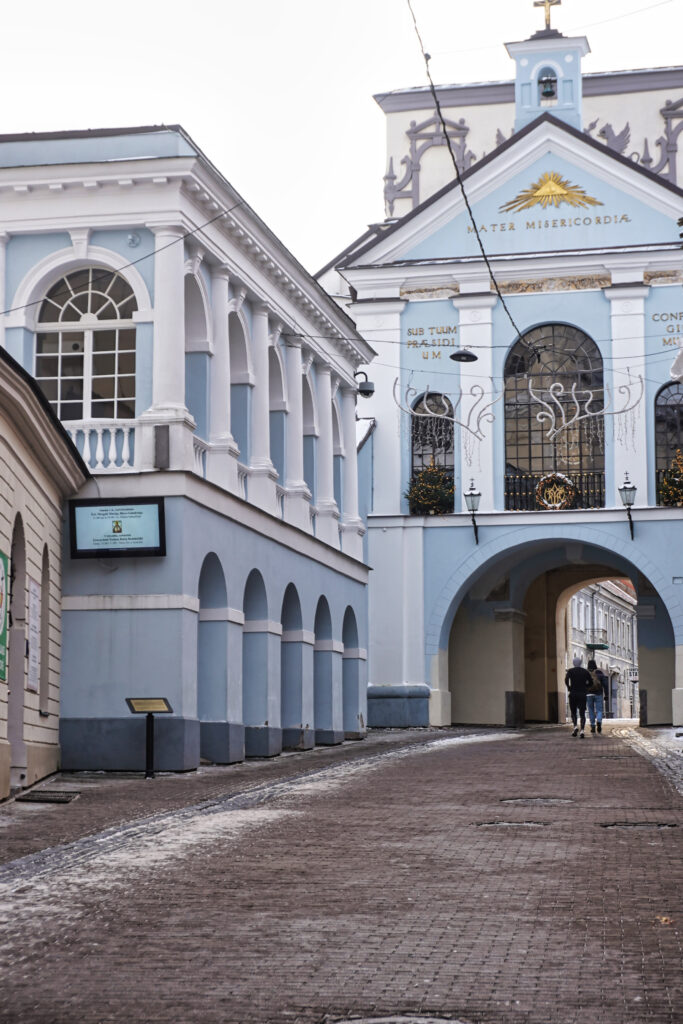
We continued our tour to the Gates of Down, a small chapel hosting a Virgin Mary. We then went north and got to the Vokiečių street, a nice street with many bars and restaurants, which you can find next to the Town Hall Square. From there, I headed towards a bus to the airport, while my friend still had some extra time and got to see the KGB museum from the outside.
Personal highlights
As always, I’ll finish with some personal highlights:
- Both the cities of Riga and Vilnius are really nice, clean, and well-organized. I was impressed that even when we went on the hill after new year, all the trash was inside of the trash cans. Kudos to the citizens for taking care of their city.
- Kemeri National park: I thought a bit on which was my favourite park, and I think I’ll take Kemeri. It’s the one I found more special, as I haven’t been to that many bogs.
- Rundale Palace: It’s nice inside, and being in one of those Baroque castles when there’s no people was a really cool experience. I can imagine that if it gets crowded part of the magic is gone, but it was certainly special when I visited it.
Where to stay?
Congress Hotel in Vilnius
This 4-star hotel is located really close to the city center and the river, offering nice views and a comfortable stay. It’s also right next to the opera theater and the concert hall. Make sure to book a car parking with them if you have a car, as the parking spots around are quite expensive (2-2.5€/h).
Mercure Riga Center
This 4-star hotel, inside an Art Nouveau style building, is also located conveniently at a 10 min walk from the city center. It has a parking in front of the hotel, which gets full fast, but there’s another one in the shopping mall next to it, which has a similar price. The hotel rooms are comfortable and nice.
What to eat in Latvia and Lithuania?
My apologies in advance in case I mix up the traditional foods from each place. The restaurant scene in both countries was awesome, with many fine dining options as well as amazing street food.
The teas and drinks
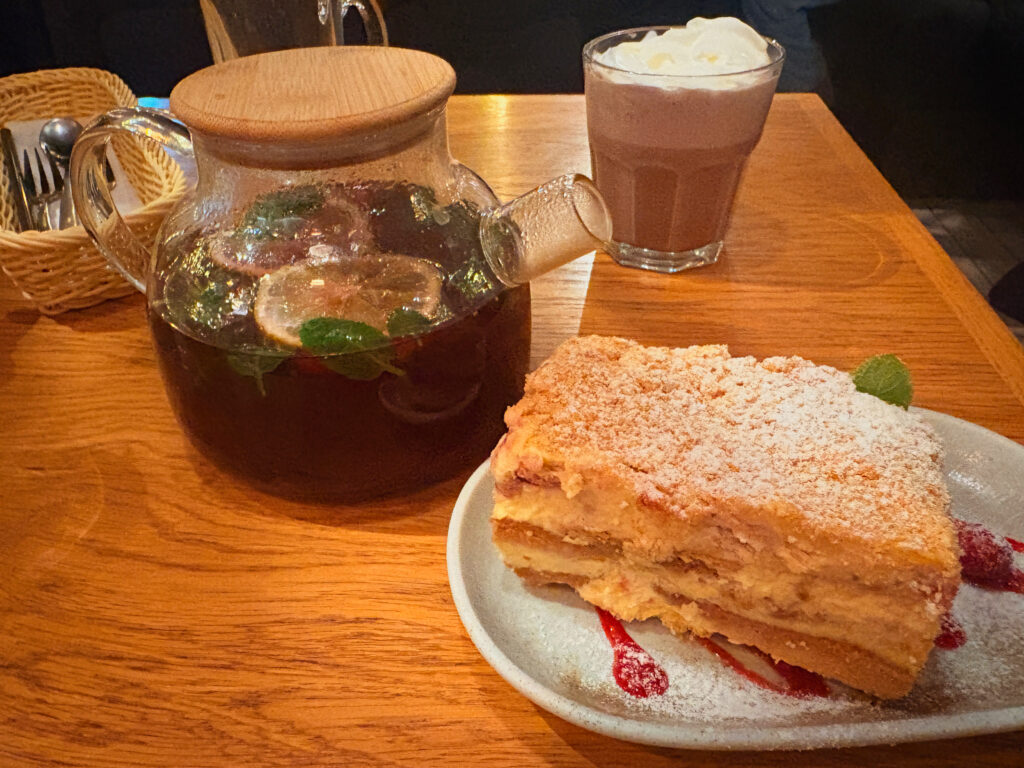
I loved the selection of teas/drinks that both countries had. Often, when you order a tea, you don’t just get the typical teabag but a whole experience. My personal favorite was the sea-buckthorn tea, and after trying it, I just didn’t want to drink anything else and had to check for the recipe to bring back home.
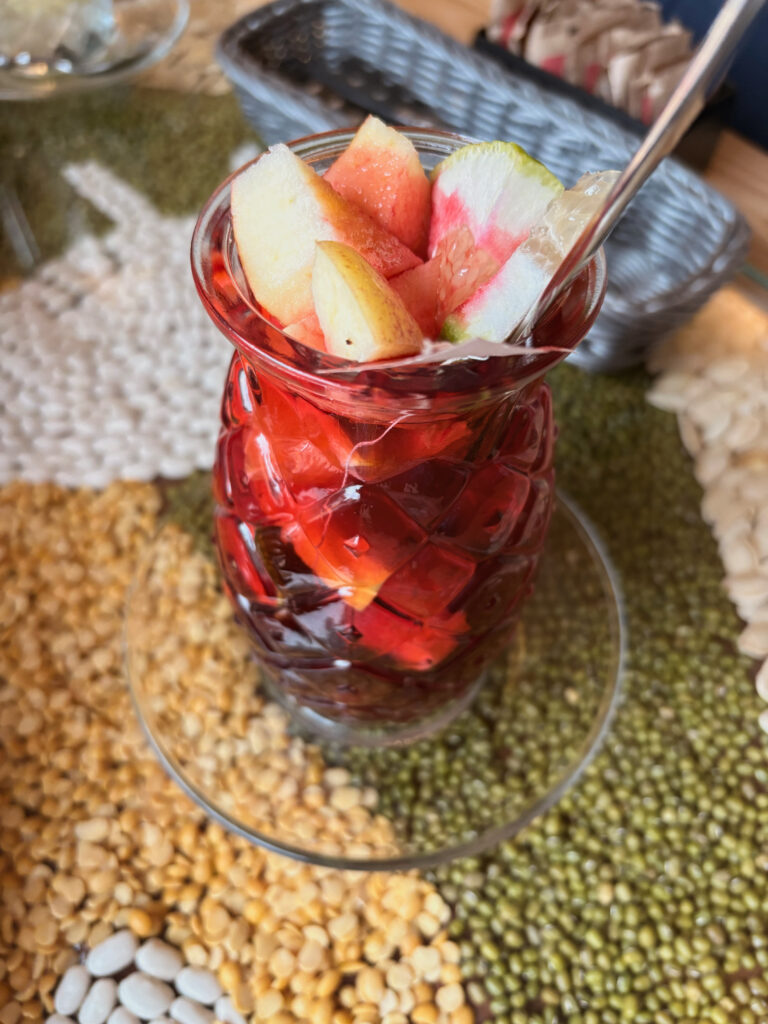
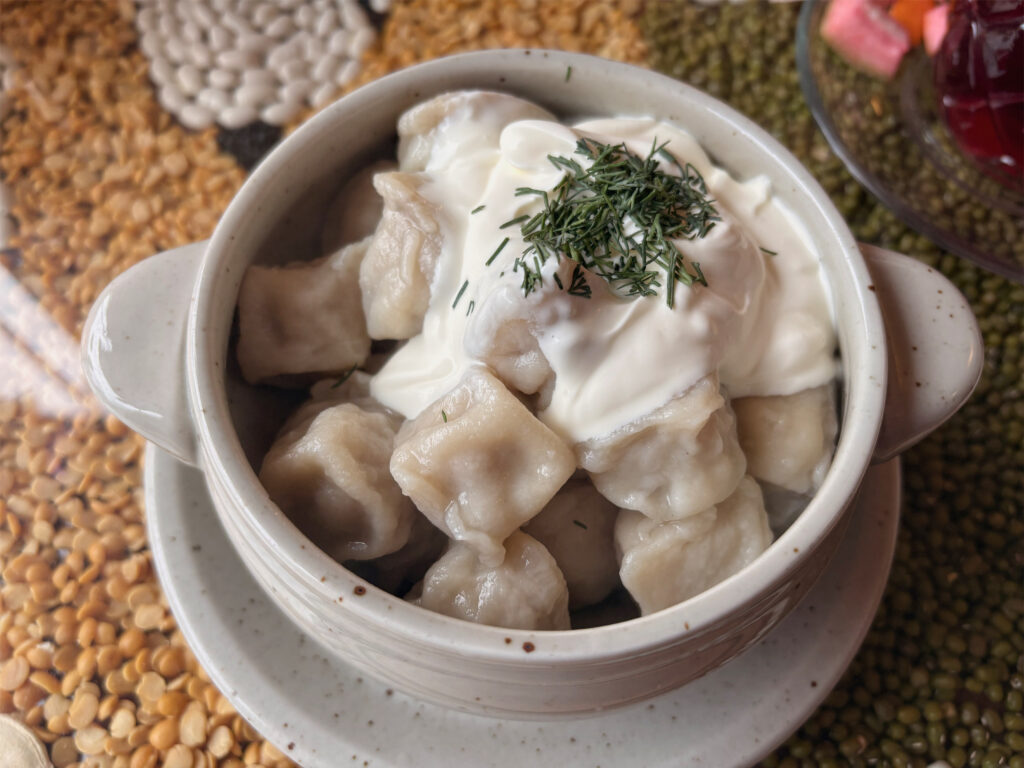
Pelmeni
I don’t think that’s necessarily a typical food from here, as it seems more pan-Eastern European, but you definitely have them in many restaurants and they’re yummy!
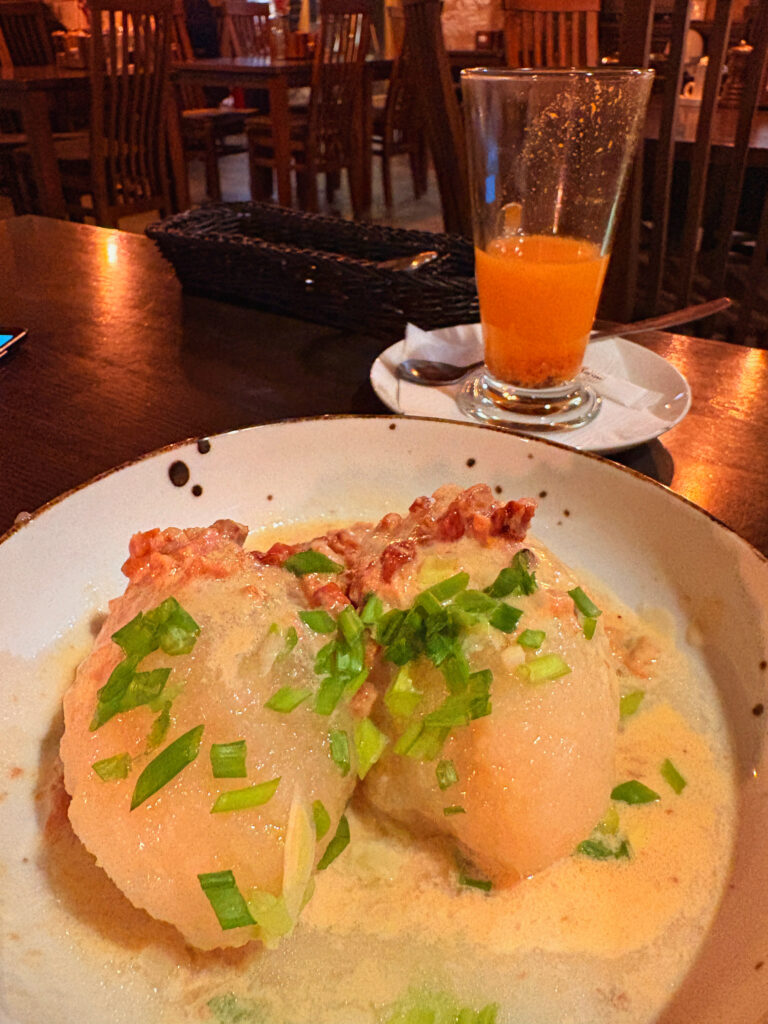
Cepelinai
These potato-based dumplings filled with meat are perfect to fill you up on a cold winter day. We tried them in the One for All restaurant in Uzupis.
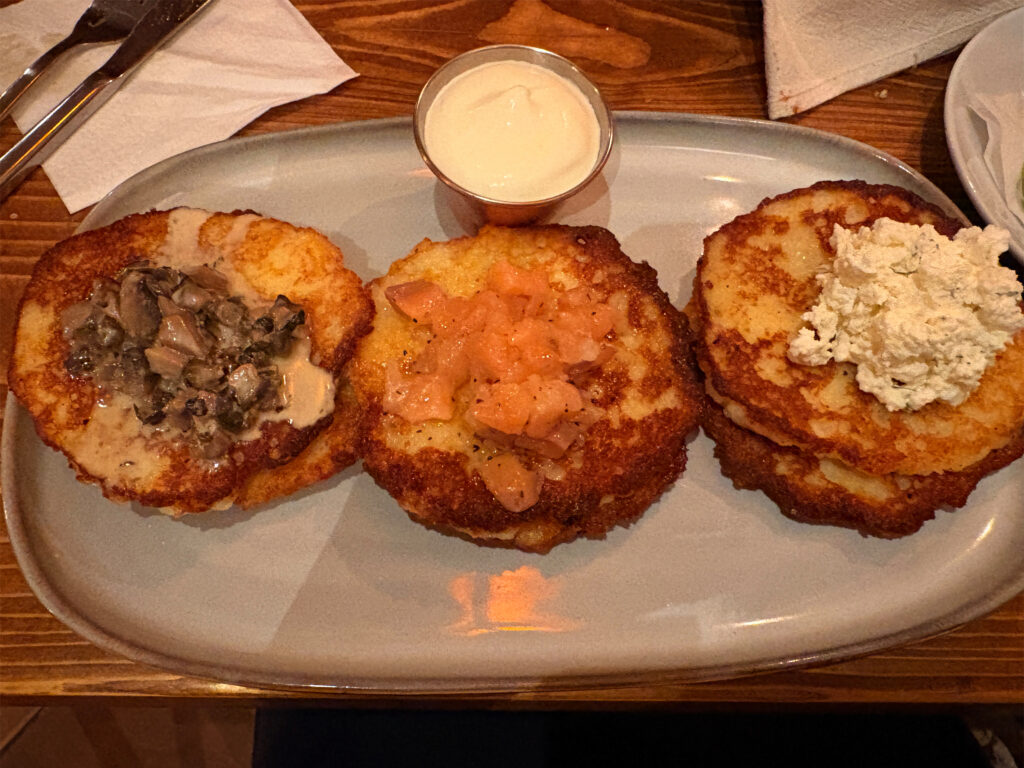
Potato Pancakes or Draniki
The name is quite descriptive of what they are – pancakes made of potato. Perfect comfort food, also very typical in Belarus. We tried them in the Karchma 1863 restaurant, which offered nice traditional dishes in the city center of Vilnius.
Napoleon cake
This layered cake filled with a cream made of condensed milk is amazing. It’s also one of those pan-Eastern European foods, and I’ll totally recommend it.
Practical info
Should I visit in winter?
Winter is cold and is dark, but otherwise it’s a great time to visit the Baltics! First, you’ll avoid the crowds. We had some museums for ourselves, that doesn’t happen often. Second, you’ll get the chance to enjoy the Christmas markets, which are really cool! And if you’re lucky, there might be snow, which makes the landscape very magical. That being said, it’s cold and windy. Oh well, life is all about compromises.
Is there enough light during winter to see anything?
Absolutely! Of course, it’s not like summer, when you have never-ending days. However, you do get your 6-7h of sunlight. The best part are the sunrisets, i.e., sunrises that become sunsets without you noticing. Golden hour lasts forever here.
Can I survive with English?
Absolutely, everyone seemed to speak English very well. I can imagine that if you go to more remote places you may still need to use your phone translation device, but in the cities it’s very easy to get around.
How’s the public transport?
Both Vilnius and Riga had an amazing network of public transport. Very easy to use too. In Riga, you can use the vending machines or buy the ticket through the app (not from the driver though). For Vilnius, you can tap your bank card, or you can also use the app. In the app you can buy the 30-min ticket, which is a bit cheaper than the standard 60-min that you get tapping your card.
Looking for more inspiration?
One week in Latvia and Lithuania in winter
Exploring Latvia and Lithuania in Winter: A One-Week Itinerary Visiting Latvia and Lithuania in winter…
1 week in Siberia
1 week in Siberia: Novosibirsk and the Altai Republic Politics aside, Russia is a diverse…
4 Days in the Alsace region
4 Days in the Alsace region from Switzerland: Strasbourg & small towns Strasbourg and the…
All you need to visit the Batu Cave
All you need to visit the Batu Cave in 2025 Batu Caves remains one of…
A weekend in Penang
A weekend in Penang Penang is one of Malaysia’s most vibrant destinations, known for its…
A weekend in Taiwan
2 Days in Taiwan: The Perfect Weekend Itinerary I did Taiwan as part of my…