Two Weeks in China: A Travel Guide to the Country’s Top Sights in Summer [2026]
China is becoming the leader in tourism in the Asia-Pacific region. This country has a rich culture, 55 different ethnicities, an incredible variety of foods, and a rapid technological development. In this 2 weeks guide to China, I’ll share some tips on how to be prepared to visit this country and a suggested itinerary that covers some of its marvels.
- Itinerary
- Day 1 – Arrival to Beijing and visit to the Summer Palace
- Day 2 – The Great Wall of China
- Day 3 – Main attractions in Beijing
- Day 4 – Travel to Hangzhou and visit a tea plantation
- Day 5 – Around Xi Hu Lake in Hangzhou
- Day 6 – Xixi National Wetland Park and city walk
- Day 7 – Train to Zhangjiajie
- Day 8 – Zhangjiajie National Forest Park
- Day 9 – The Grand Canyon Crystal Bridge and Huanglong Cave
- Day 10 – Tianmen mountain
- Day 11 – Trip to Chengdu
- Day 12 – Pandas in the Chengdu Research Base of Giant Pandas Breeding
- Day 13 – Leshan Giant Buddha
- Day 14 – Flight back to Beijing and visit to parks
- Day 15 – Drum Tower and flight back home
- Personal Highlights
- Where to stay?
- Practical information
- Need more travel inspiration?
Itinerary
Day 1 – Arrival to Beijing and visit to the Summer Palace
Summer Palace
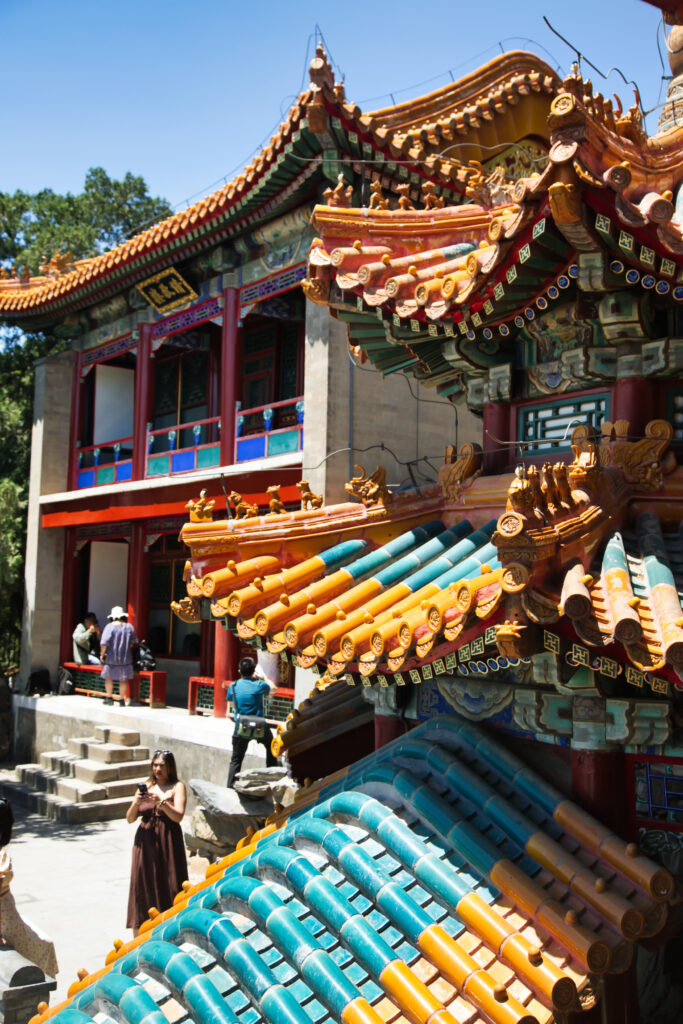
We had an early flight to Beijing and arrived at 5:45 am, which left a whole (albeit jetlaggy) day ahead. We spent the morning going to our friend’s place, from where we drove by car to the Summer Palace. The Palace is located in the outskirts of Beijing, and was first built in 1750. In 1888 it was reconstructed to serve as the summer vacationing place for the Chinese Empress Cixi. It was inspired by the gardens of the South of China and was inscribed in the UNESCO World Heritage List in 1998.
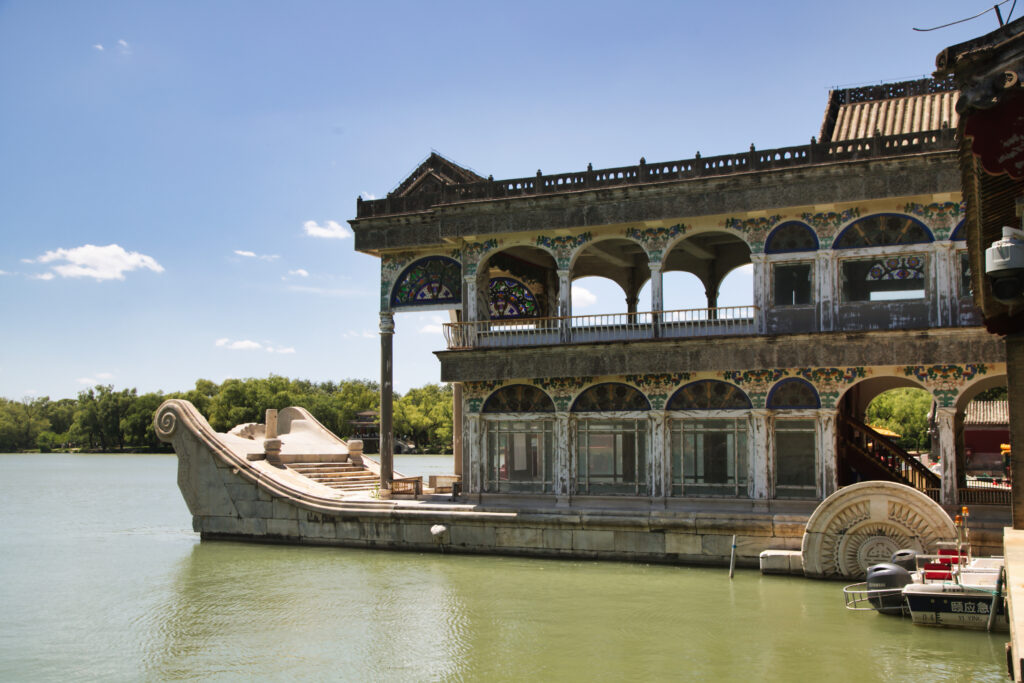
The park is really extensive, and we spent the rest of the day wandering around it. There’s plenty of historical buildings, places to grab some food and souvenir shops. One of the highlights of the palace is the Marble Boat, which is not a real vessel (marble would not be the best material for that anyway), but served as a decorative structure in the lake. In summer, the palace works from 6:00 to 20:00, with some of the attractions closing a bit earlier. The combined ticket costs RMB 60.
For dinner, we went to the Jinquan Plaza Shopping Centre, to a restaurant called Beipinglou Roast Duck Jingcai, to have a Peking Duck. Awesome dish and a very cool place too!
Day 2 – The Great Wall of China
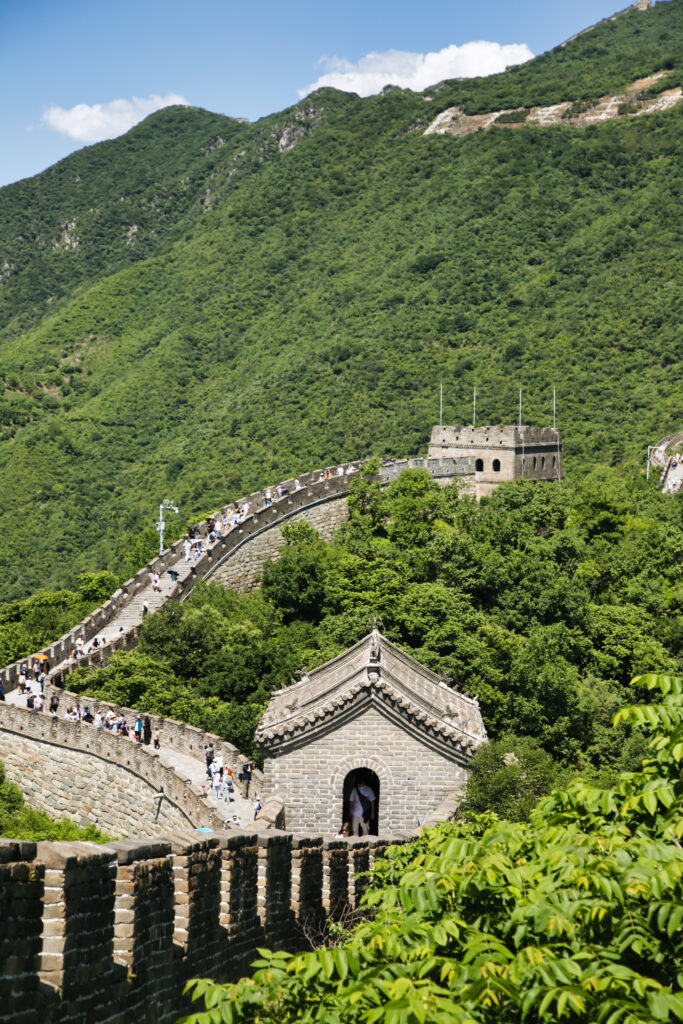
The second day was dedicated to one of the most famous images of China: the Great Wall of China. This was my second time to the Great Wall of China. The first time was over 10 years ago on a day when no one seemed to want to be there. This time, we visited on a Friday and it was crowded. And really hot. Be aware that there’s not many shade areas on the wall, so bring hats and sun protection.
Visiting Mutianyu
As you know, the Great Wall of China is, well, long. Also, not all areas of the wall are restaurated. Thus, before visiting, one needs to decide which area to visit, which will depend on your personal preferences: some areas are more crowded but also more accessible, others are less crowded but not restored. We visited the Mutianyu part of the wall, which is located approximately 70 km away from Beijing (the link includes the public transport options to reach from Beijing).
We parked our car in the underground parking, and walked towards the ticket office. The ticket including the ticket, a shuttle bus and the cable car up and down costs RMB 200. The shuttle bus brings you from the ticket office to the bottom of the cable car, while the cable car helps you go up the wall. In principle, both are hikable areas, but it’s quite some distance, so allocate more time to it if you plan to walk it.
The wall in this section goes up and down a lot, and has little shade (mostly inside the watch towers), so get ready for that, and bring enough water. We went up using the cable car, and while the option to go down the same way exists, we hiked until the toboggan (tickets sold separately). It was quite fun to go down that way, and at the end one can buy a photo of themselves going down. The toboggan (and cable car) leave you in an area with many souvenir stores, restaurants, and cafés, so you can relax after a warm day in the wall.
Day 3 – Main attractions in Beijing
This day was dedicated to the capital’s main attractions. What I noticed is that starting early does not necessarily reduce the amount of people you’ll find in a touristic place, like it happens in many other locations. Just accept it’s going to be crowded, and perhaps you get a happy moment if it’s not. Another tip: distances may seem relatively short on the map, but they’re not. One of my earliest memories of my first China trip is to walk through the Tianmen Square and having the feeling that I would never get out of there. Thus, I’d recommend taking some form of transport between the different attractions and plan the days to visit spots that are relatively close by. This way you’ll also have more time to actually enjoy what the city has to offer.
Olympic Forest Park
Given that we were staying nearby the Olympic area, in the morning we went to the Olympic Forest Park. Going there at 6 am feels like the only way to visit the park, as during the day it gets extremely hot. The park is huge, but has plenty of shade and pleasant paths to walk around. In May, we could see many duckling that were really cute! After some walking, we reached the main lake, which has the shape of a dragon (check the map to see how it looks like from a bird view!) and saw many people feeding the carps and the ducks, so we joined them for a bit.
The Lama Temple
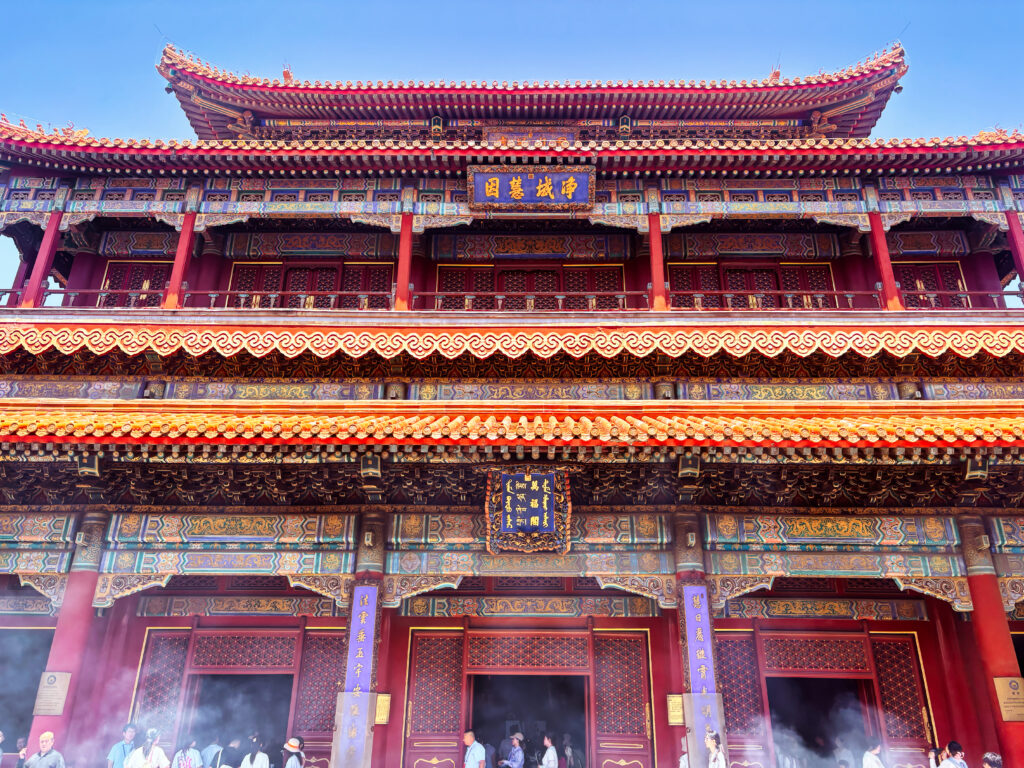
The Lama Temples is a Tibetian Buddhist temple located in the center of Beijing. It’s also Beijing’s main Buddhist temple, the construction of which started in 1694. The temple opens 9:00-17:00 in summer and costs RMB 25 to enter. The temple consists of five main buildings, and many more side ones. One of the highlights of the temple is the statue of Maitreya, made in 1750. The statue is 18 m high and it’s supposed to have been craved out of a single piece of white sandawood. Pretty impressive! Be aware that taking photos in some of the buildings is not allowed, and this was one of those places.
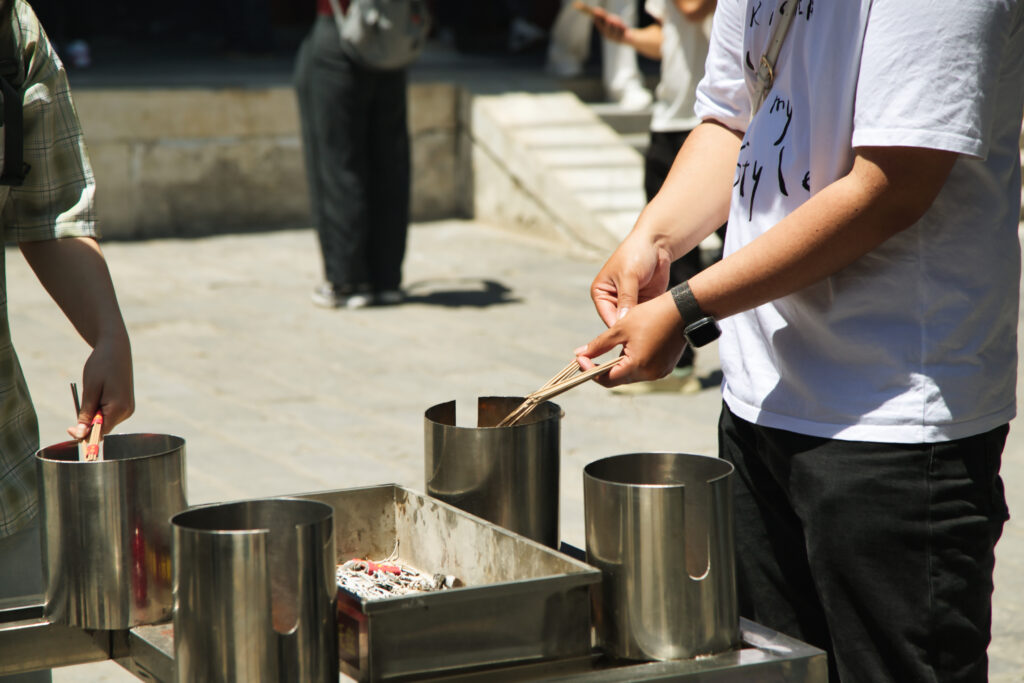
Next to the temple there’s some commercial streets that have very cute souvenir stores and pleasent refreshment stands. While the street facing the temple sells mainly religious stuff, once inside the other streets there’s plenty of other types of souvenirs.
Wangfujing
A famous spot for shopping is the Wangfujing Pedestrian Street. There’s some history about it, if you’re into that, but it’s mostly a shopping place. If you visit Wangfujing during the evening, you can find stands selling you exotic things, such as insects. I was told that it’s more of a touristy thing rather than something that locals would actually snack on. There’s a huge bookstore (Wangfujing Bookstore), which apart from books sells cute souvenirs. The only book options you get in English and other languages, however, are manifestos and the history of the Chinese communist party, so hopefully you brought your light reading from home.
The Temple of Heaven
The Temple of Heaven was heavily used during the Ming (1368-1644) and Qing (1644-1912) dinasties to pray to heaven. Its religion is Confucian. It’s also a World Heritage site from 1998. When visiting, I highly recommend buying the combined ticket. The simple ticket only includes the park, and you can barely see the Temple of Heaven from there. The temple consists of two parts: the outer part, which is the gardens, and the inner part, containing the temple structures. The main building (the famous blue circular one) is called the Hall of Prayer for Good Harvests.
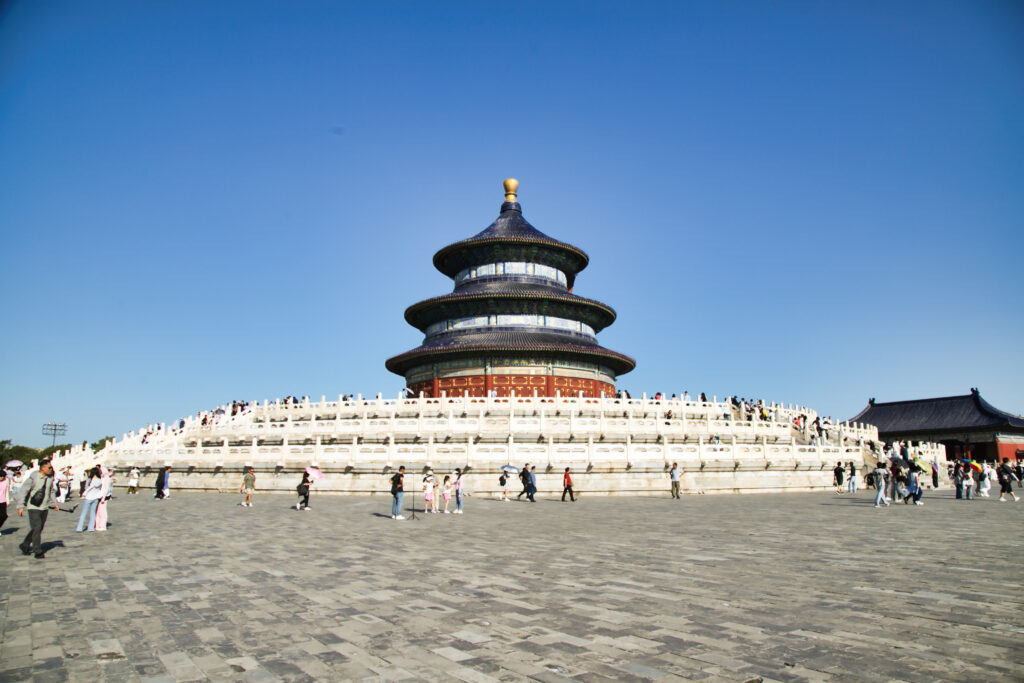
Jingshan Park
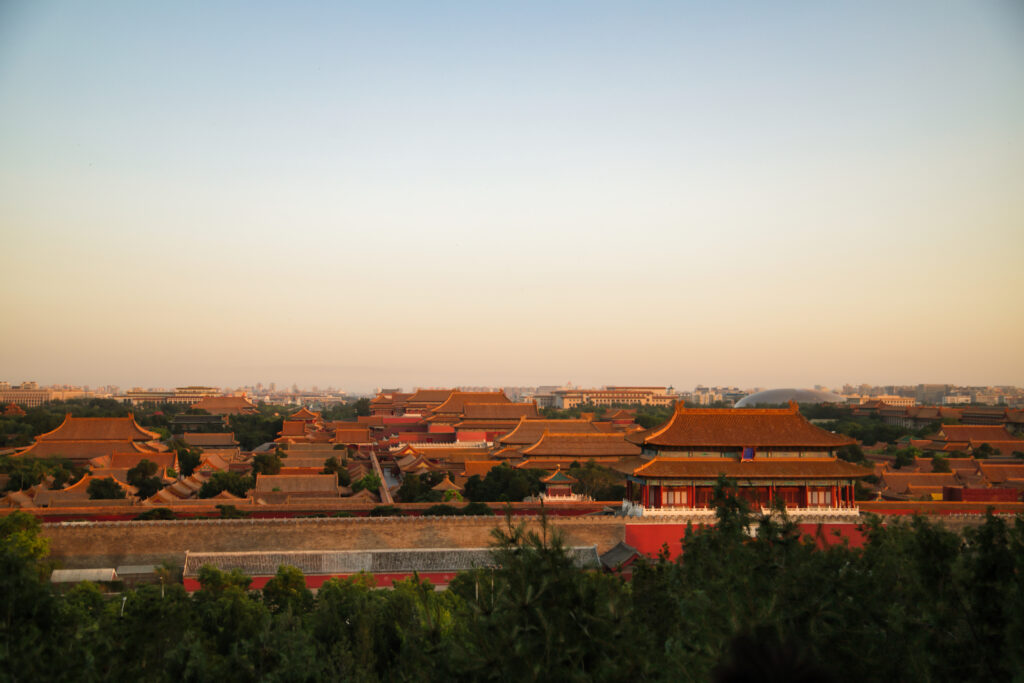
I’ll be honest and admit I didn’t particularly liked visiting the Forbidden City when I visited Beijing 12 years ago, so I was not very interested in going again. Instead, we decided to see it from uphill, and the best for that is Jingshan Park. The park is open until 21 in summer, and it’s only 2 yuan to visit. I don’t know if it’s a common thing, but the north date was closed, so we had to walk to the east gate to enter.
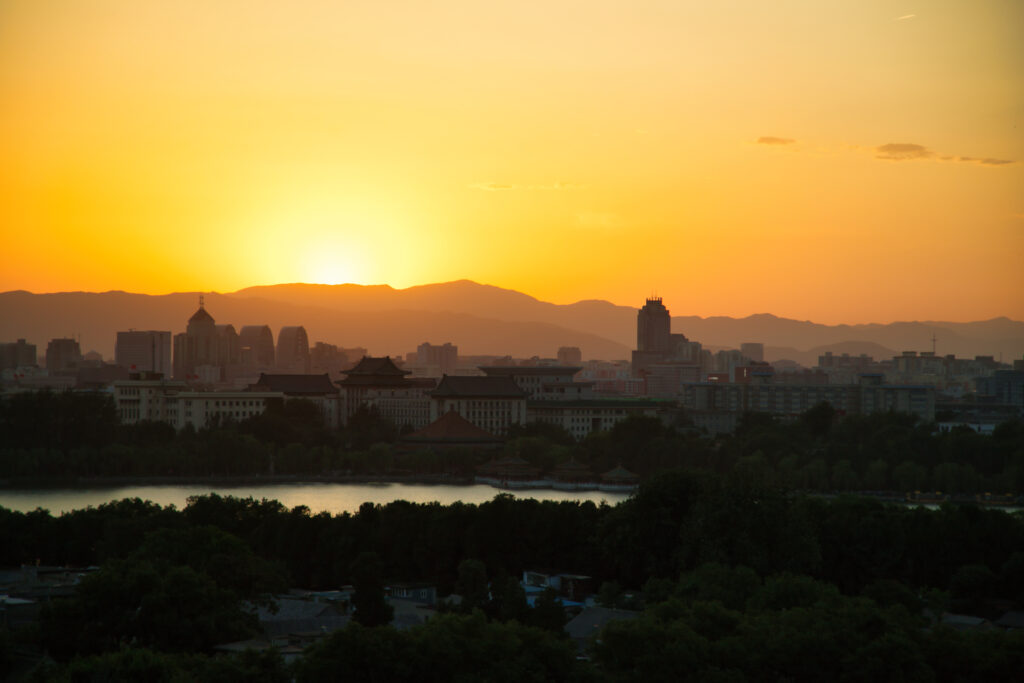
The highlight of the Jingshan Park are the views of the Forbidden City, especially during sunset. That means that it’ll be crowded. However, it’s a view that it’s worth it! To enjoy the views, just follow the arrows that they have inside the park. It’ll involve getting up some stairs too. While the views are the main attraction, the park itself is beautiful, and has an area with bonsais as well as some additional buildings that are worth checking.
Alternative options: Tianment Square & the Forbidden City
I didn’t go to either of those places since I already was there in my last visit and they didn’t end up in my list of must repeat activities.
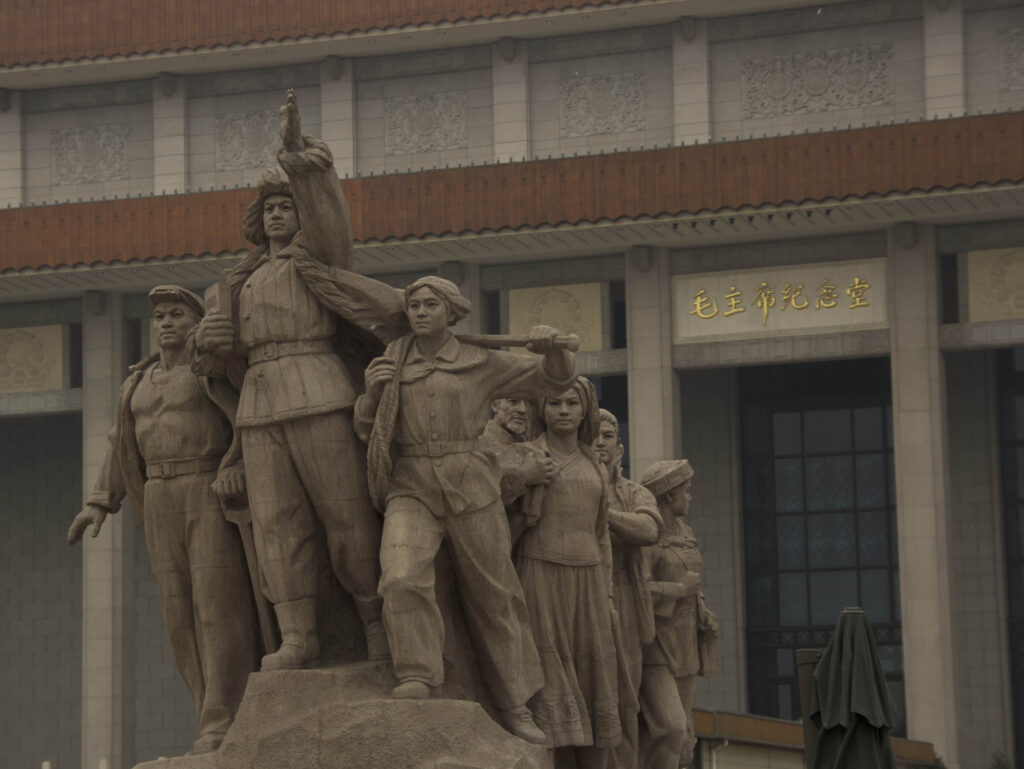
The Tianmen Square used to have a free entry, but currently one needs to go through security to access it (it’s still free of pay). It’s certainly a culturally relevant place, containing the National Museum of China, the Mausoleum of Mao Zedong, and other administrative buildings. It’s also huge.
The Forbidden City has also a big footprint in terms of enterteinment and cultural significance. It’s also huge, and I’m going to say something controversial here, but I liked it more seen from the top than going inside. The Forbidden City is next to the Tianmen Square, so it makes sense to combine them both. It costs RNM 60 to visit during summer.
Day 4 – Travel to Hangzhou and visit a tea plantation
After a few days in Beijing, we headed towards Hangzhou. For that, we took the fast train from Beijing, which drove us to Hangzhou East in 4,5 h.
From there, we took a taxi to the hotel, located next to the Xi Hu Lake, but still in the city (around 30 min by car). We came to the city without a plan – which is apparently typically Chinese. When my friend told me not to plan too much, I was very stressed – international travel without a plan?! But she was right, of course. Spontaneous travel (outside holidays and weekends) is very feasible. Thus, when we reached the hotel, my friend chatted with the hotel reception and they suggested a tour to a tea plantation. Not gonna lie, speaking Chinese or traveling with someone who speaks Chinese helps a lot. However, there’s definetly tours with English-speaking guides in websites like trip.com.
Tea plantation
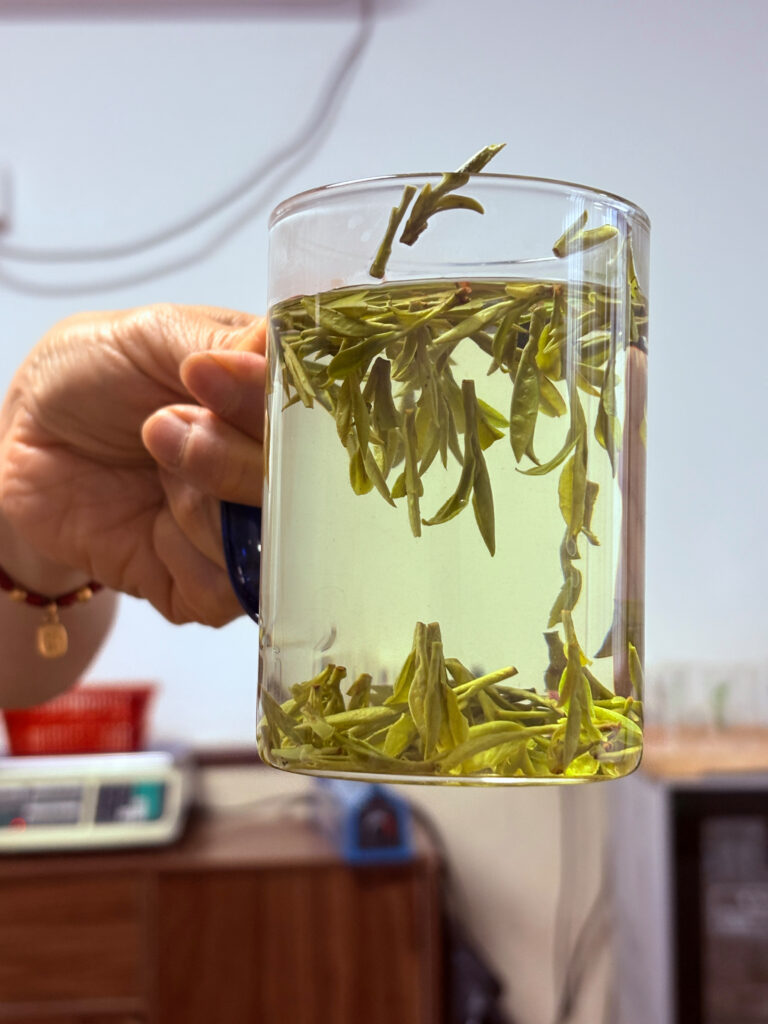
A thing to do in this area from China is to visit tea plantations. A driver brought us to a tea plantation, around 45 min away from the hotel. The plantation was very interesting to check. We could walk around the tea plantation and looked at the plants. Then, we went inside the small building and a lady explained us about the teas. She told us that the black and green teas where frim the same plant, but they undergo different processing, th black tea being fermented while the green one is only dried. The green teas also differ from each other – depending on whether the leaves were picked first or last, the quality of the tea differs, and so does the price. Overall, it was a really cool experience. To pay, we could either buy a tea or pay a flat rate for the tea experience. Since the teas were good and Hangzhou is a famous area for tea, we bought ourselves a package of both a green and a black tea. Something to consider is that Chinese teas are not cheap. We paid RNM 600 for both, which is roughly 90 USD.
For dinner we went to the Grandma’s Home, a nice restaurant in a shopping mall nearby the lake. We tried several types of meat, veggies, and shialongbao. All delicious!
Day 5 – Around Xi Hu Lake in Hangzhou
Xi Hu lake
Before breakfast, we took a walk around the Xi Hu lake. The air was still fresh, so it was a pleasant to walk around. We could also see many elderly people practising sports, especially Taichi.
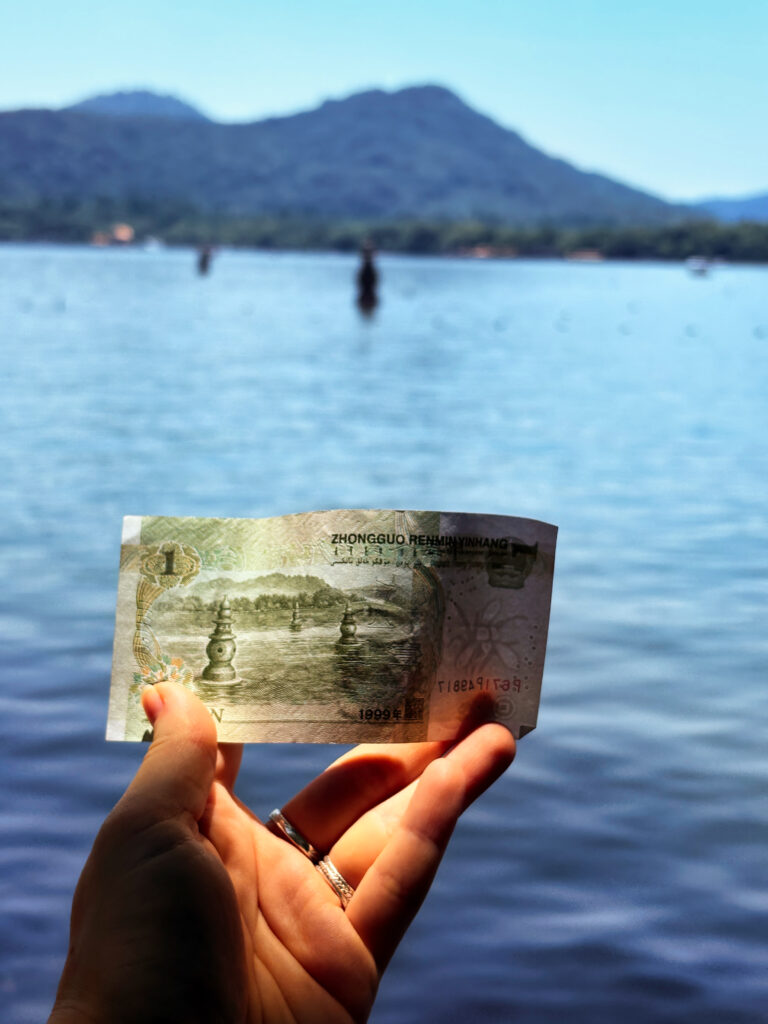
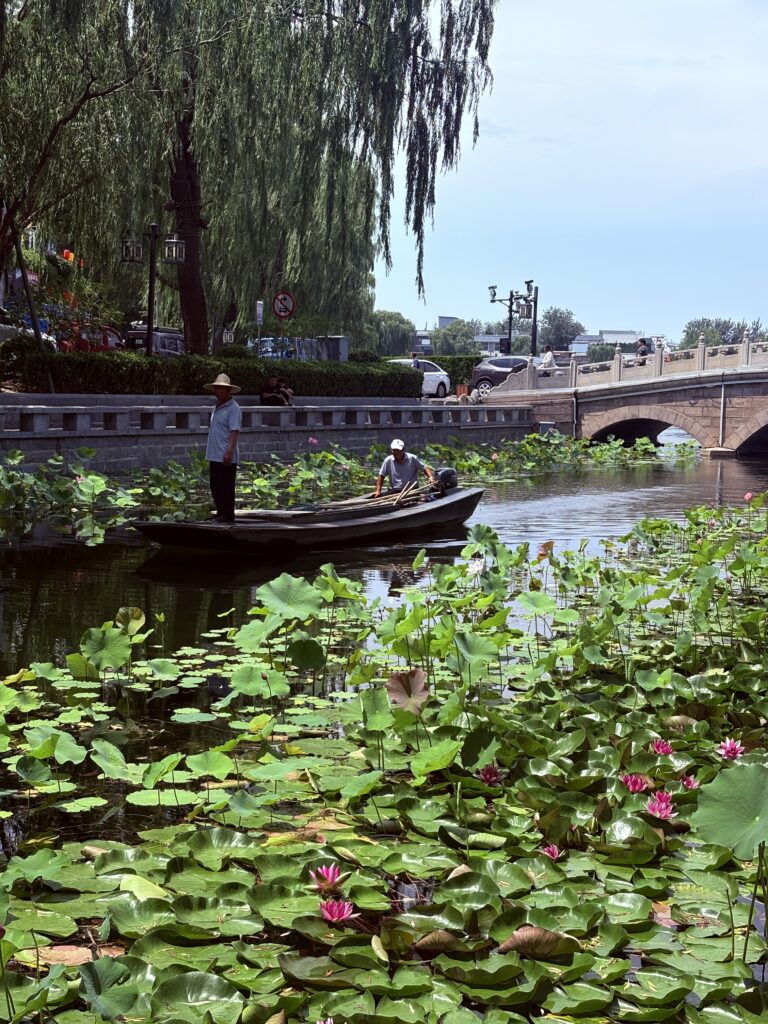
After returning to the hotel and having breakfast, we headed towards the Huanbi Bridge, where we walked for a bit. The bridge is 3 km long and is a nice walk, as it’s covered with trees. There nearby, we took a boat for RNM 70/person to go to the “Three Pools Mirroring the Moon” island. The shape of the island is very funny, it being a circle separated in 4 parts by a bridge (technically it’s three, thus the name). The island has lots of shade and it’s pretty touristy, so there’s plenty of activities such as gift stores, restaurants, and rental places for traditional dresses. One of the highlights was the blooming lotus flowers – beautiful! Another very famous spot is where you can see the lanterns in the lake which are represented in the RNM 1 bill.
Leifeng Pagoda
From the island, you can take the ferry back to different locations around the lake. We took the one heading to the Leifeng pagoda. We walked around, but to access the area close to it, one had to pay a 40 yuan entrance fee. During our boat ride, my friend heard a lady commenting that the pagoda wasn’t worth visiting, so we skipped it and only took a look from the outside. Not that you can see much of it from close by, as even to approach the building you have to pay. However, the pagoda is visible with some distance from many spots in the city and we were happy with that.
From there, we headed towards the Silk Museum, passing by the Changqiao Stream Eco-Restoration Area, a nice garden that had almost no people, in great contrast to the park around the lake. However, when we reached the museum, we realised it was closed, because it closes on Mondays. It was too late to drive anywhere, so we just went to the shopping area next to the lake to walk atound there and look into the many silk stores of the city. Hangzhou is the silk capital of the country, so if you want anything made of silk, that’s the place to do it.
Night Show
For dinner, we went to Xinzhouji, a crowded restaurant with many traditional dishes. My personal favourites were the okra dish and a Chinese root in a sauce.
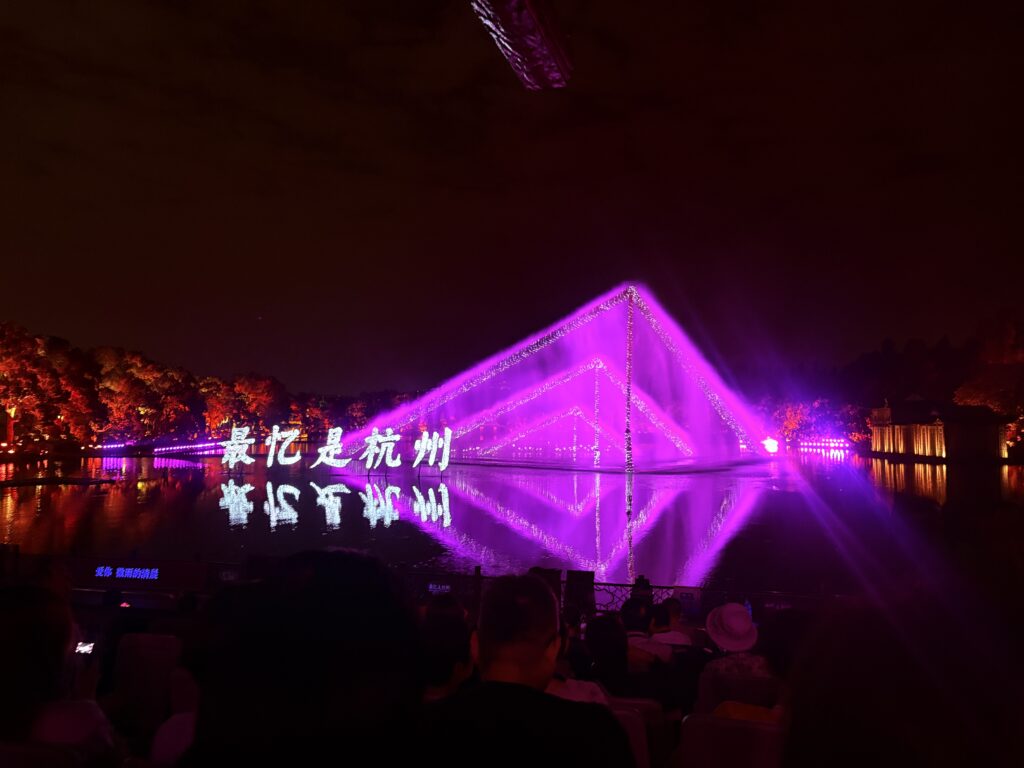
After dinner, we went to see a show in the lake. We had been in the same area of the lake in the morning, and were impressed to see that out of the nowhere, the employees had built all the seating and ticket control stations. The show, called Enduring Memories of Hangzhou (最忆是杭州), made by the famoud director Zhang Yimou, was impressive. Upon entry, we were given a device to hang on our necks that was providing smells to enhance the show. The whole area of the lake in front of us had been converted to a scenary. Once the dancers started coming in, it felt that there was a whole army of people performing the dances. There were also musicians singing and playing instruments, and more amazingly, at the end a whole structure emerged from the water. Really cool show. I’d totally recommend going, and no Chinese is needed to understand what’s going on (there’s some basic English subtitles too).
Day 6 – Xixi National Wetland Park and city walk
Xixi National Wetland Park
In the morning we went to the Xixi National Wetland Park. The park has two areas, a paid and a free area. The paid one is 80 yuans, and has a boat ride that costs 60 yuans, which felt quite expensive. Since we had additional plans, we decided to stay in the free area, but many of the viewpoints are in the paid one.
We started the visit at Gao’s mansion. Gao was a government official during the early Qing dinasty. He had an impressive house with beautiful Chinese-style gardens surrounding it. There’s some explanations in English about the history of the place, which is very well-worth a visit! This lovely park must be even more beautiful during fall, but was already spectacular in summer.
After our stroll through the house, we headed toward the bird watchtowers. The wetlands are great places for birding, so if you’re into that bring in your binoculars, because the biodiversity you can see is great. Inside of the watchtowers there were panels showing the different types of birds one could see, and the names were translated to English as well. A few hobbyists were waiting to see their favourite birds with giant cameras, and we also sat there for some time just to contemplate nature.
Silk museum
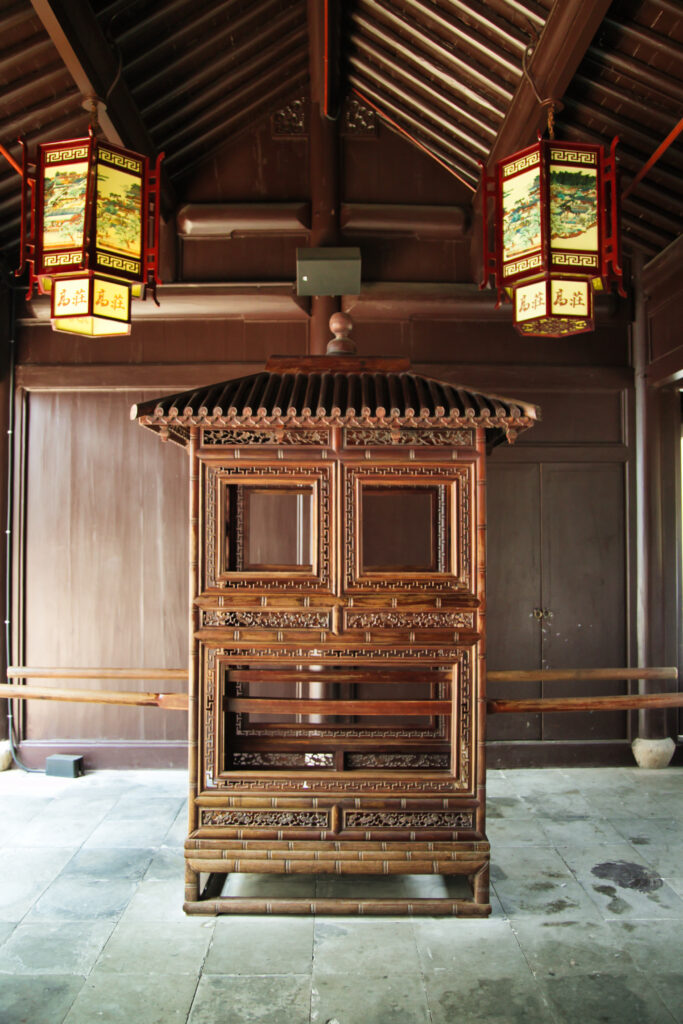
After enjoying nature, we gave our second chance to the Silk Museum. It’s a free museum, with description in both Chinese and English (although not everything is translated). The museum was really large, but the contents were not that many. There’s a big hall showing ancient silk dresses and explains how silk is made. In a different pavillion they had old machines used to wave silk. In a final building there are some costumes. While the museum had all the elements it needed to, I was not impressed by it.
Old town streets
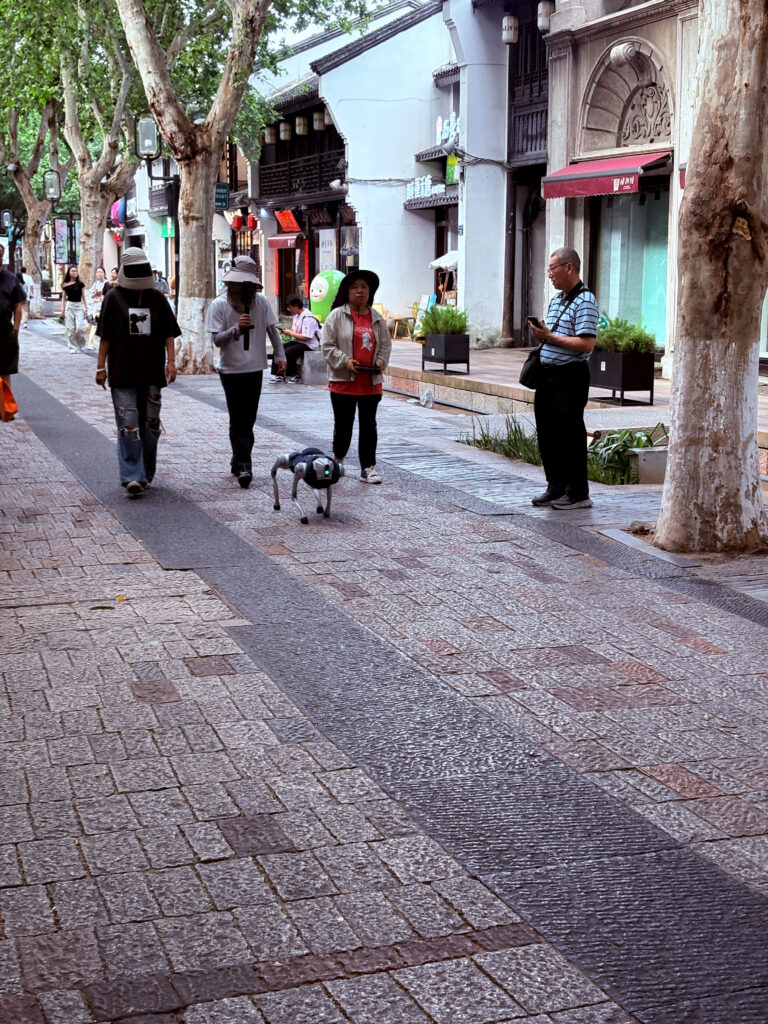
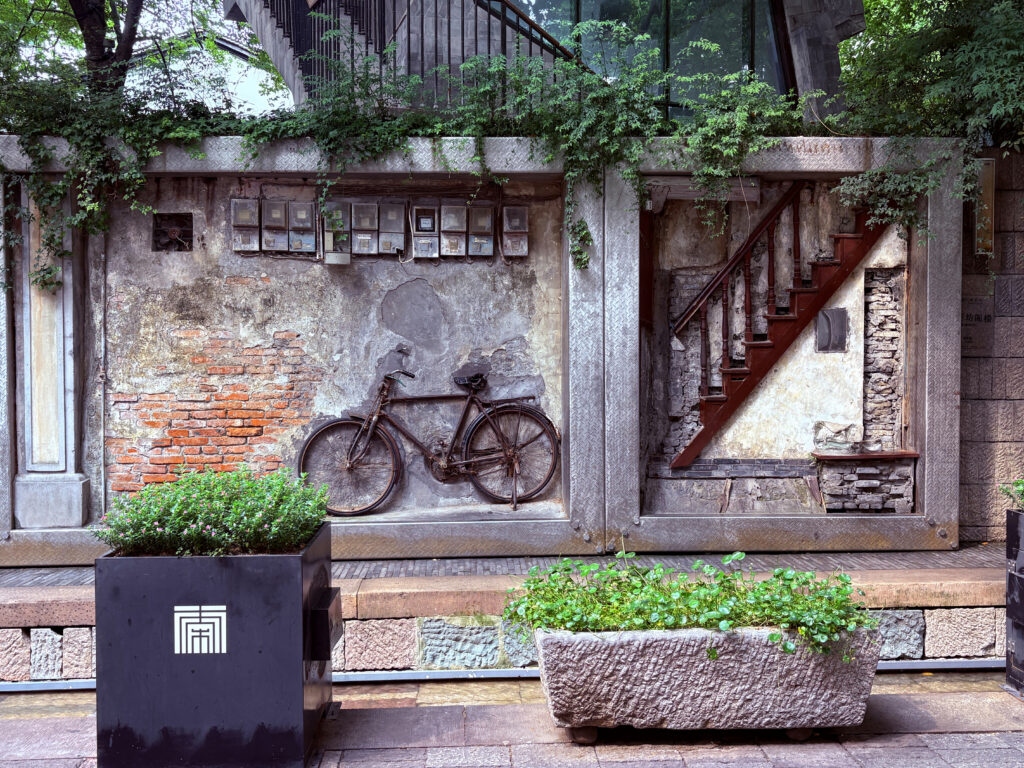
After the museum, we went to Hefang Street, an old style cute street with many small shops and restaurants. On our walk through the street, we met a group of Chinese TikTokers walking their robot dog, which started speaking with us. A very fun and surrealist experience. Next to Hefang Street there is Nansongyu Street, which also looks very nice and it’s pleasant to walk. There’s many cute stores around, so if you’re looking for souvenirs it’s a great place.
Day 7 – Train to Zhangjiajie
We woke up early in the morning and went to Hangzhou East Railway station to catch the 7:52 train. When we went, early June, it wasn’t too crowded, so we could get in very quickly. However, from what we were told that’s not necessarily the most common experience, so it’s better to go with some time to spare. After buying something for lunch, we got into the train and rode 6:30 h to Zhangjiajie.
Wulingyuan
Our first hotel was in Wulingyuag, due to its closeness to the East Entrance to the park. We took a DiDi to the hotel and reached in around 30 min.
We didn’t have plans, so we asked the receptionist what to do in the town, to which he replied that there was nothing beautiful to see during the day but it was great for nightlife. That’s a very good description of Wulingyuag. We walked a bit around during the afternoon, but the town was quite ugly and boring. However, once the sun started to set down, the town acquired a totally new vibe. Many street merchants opened their little stores and restaurants were buzzing with life. There was live music and beautifully illuminated decorations all around the city center, with the bridges being the main attraction, as they had music and light shows.
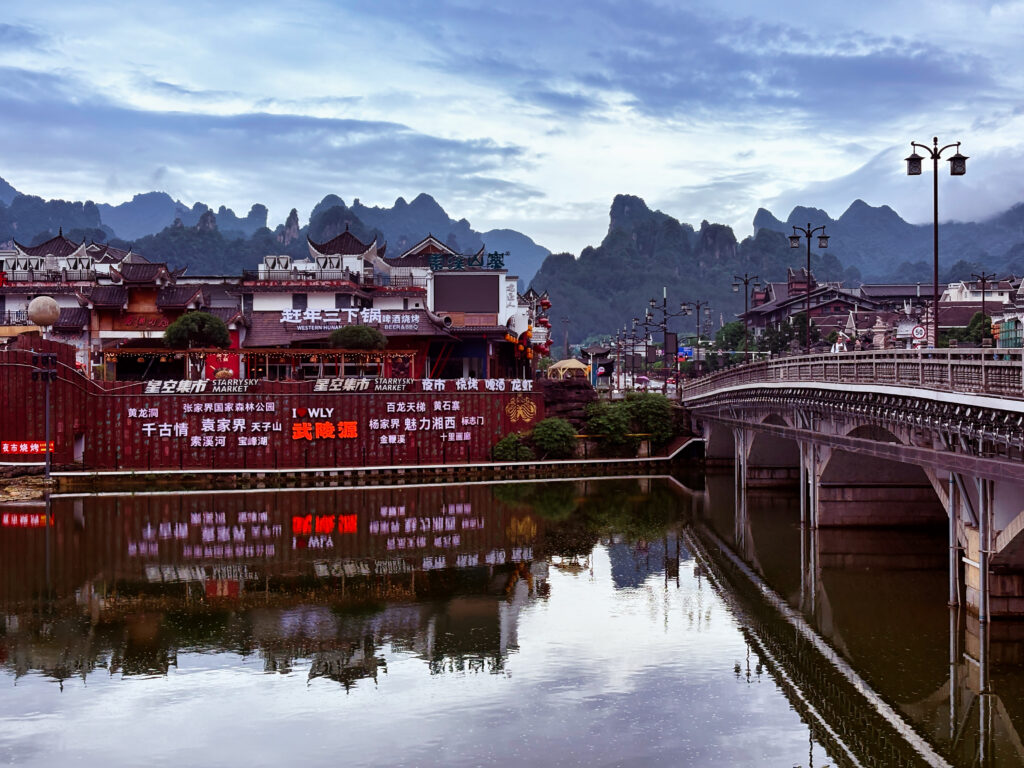
Wulingyuag is in the region of Hunan, which is home to some ethnic minorities. While we kept to touristic places and didn’t get to see the real people from these minorities, you can see their influence in the decorations and souvenirs. The most common to see are some female headsets that are absolutely stunning, which many waitresses and actresses in shows wear. They belong to the Miao minority. You can also rent a traditional costume in one of the many stores in town.
Day 8 – Zhangjiajie National Forest Park
This was a bucket list item for me, so we took the ticket at 6:30 to avoid crowds to the maximum. Surprisingly, the day wasn’t too hot nor it rained, and even more surprisingly, crowds were quite small for what I was expecting.
Our itinerary in the park
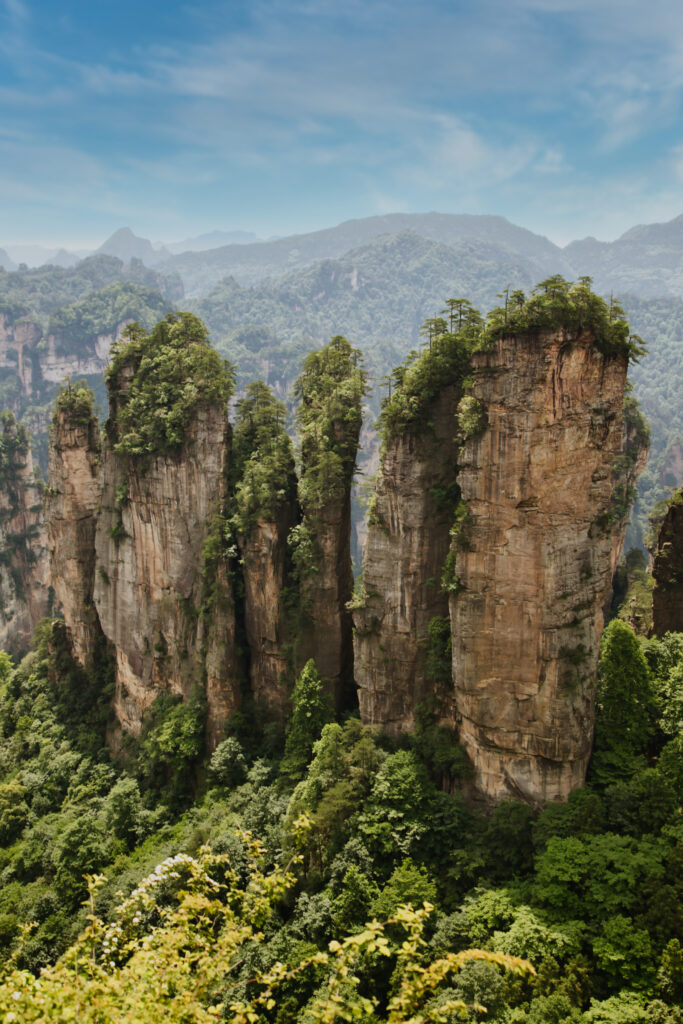
There’s several ways to enter the park, and we took the route B. Thus, right after entering, we sat on the bus and it drove us to the station where we took the famous Bailong elevator. Once we reached the top, we walked a bit until the next bus station. The bus brought us to the Enchanting stop, where we started a walk that lasts around 1 h. This was the first place where we saw the famous pillars.
Once we finished enjoying the views, we took the bus in Tianquao station, which drove us to the Yangjiajie cableway. There’s a some hiking routes one can take there (we visited the Natural Great Wall, which was similar to what we saw previusly, and pretty close to the cableway) and then there’s the cableway downhill.
Downhill, there’s a bus that dropped us in a path. We walked the path, which took us around 15 min, to reach your next bus. It’s very straightforward and well taken care of. This second bus carried us to the Huangshi Village Cableway. There, we took the cableway and visited the Huangshi Village. From the whole day, I think this was my favourite spot. There’s great views of the pillars, and if one takes the long route (180 min accourding to the map), there’s not many people around. There’s also a shorter route that takes around 60 min and already allows one to get some panoramic views. In that area there’s plenty of monkeys trying to steal your food, and they get aggressive if you come too close.
After finishing the route, we came down with the same cableway, and took the bus to Laomo Wan. From there, one can take a walk to see the pillars from the bottom. We took the walk to the Golden Whip Rock, which is very pleasant and in the shade. From there, we came out of the park and drove back to our hotel.
One of my main “issues” with Zhangjiajie was the same as with the Grand Canyon – with good weather, there is no feeling of depth, so the picture collapses and the result is less impressive than expected. That’s why one of my favorite parts of the day was go down with the gondola, which allowed the depth perception. Now, issues is a really strong word there. The place is obviously gorgeous, and we were lucky enough that it was not extremely crowded, getting some areas for ourselves. If you have the chance to visit this region, it’s totally worth it.
Day 9 – The Grand Canyon Crystal Bridge and Huanglong Cave
The Crystal Bridge
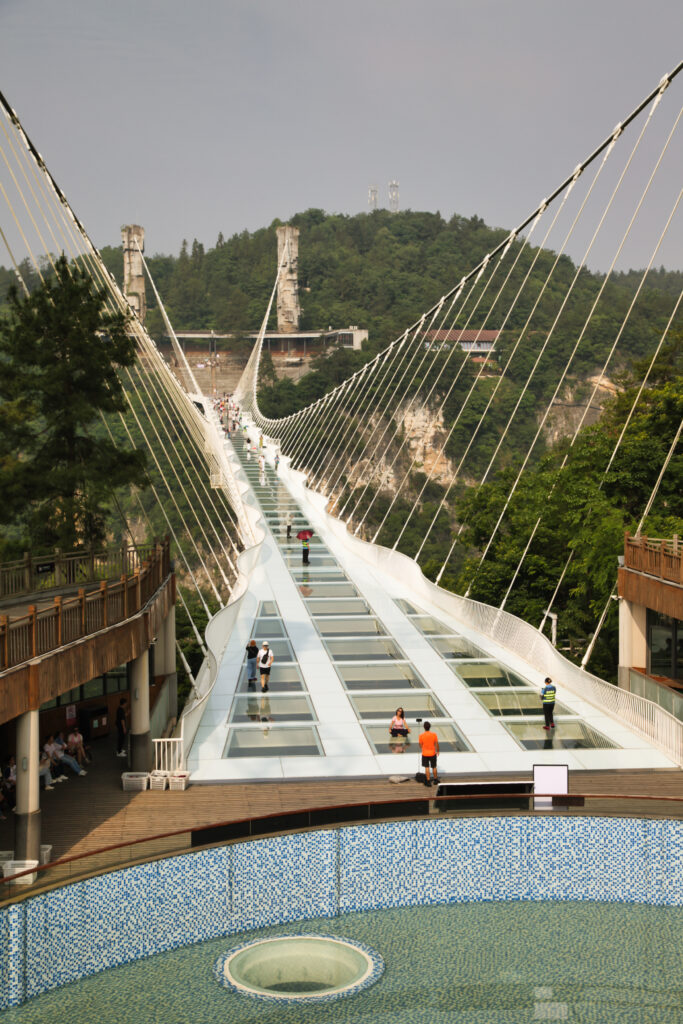
In the morning we took a DiDi to go to the Crystal Bridge. The main highlight of the area is the bridge, which is famous for its glass floor (although it’s not glass everywhere!). I heard many people commenting that it was less terrifying than they were expecting, so if you’re on the verge, consider going nonetheless. There’s plenty of areas in the bridge that are not transparent, in case you really don’t like walking on the glass.
Before reaching the bridge, we entered in a room where we got some anti-slipping slippers to walk in them. Now, we were ready to get into the bridge! I came on a Friday at around 8:30 and it was not very crowded (opening times are 8 to 16, with last entry at 15). After crossing the bridge, we reached a souvenir store/café, from where we headed to a platform tha has a VR activity and also the two ways to go down: a zip-line and a panoramic elevator. If you want to, you can also walk downstairs instead.
We took the VR experience, which was nice enough. In this experience, you were flying in a hot air balloon around the bridge are through different seasons.
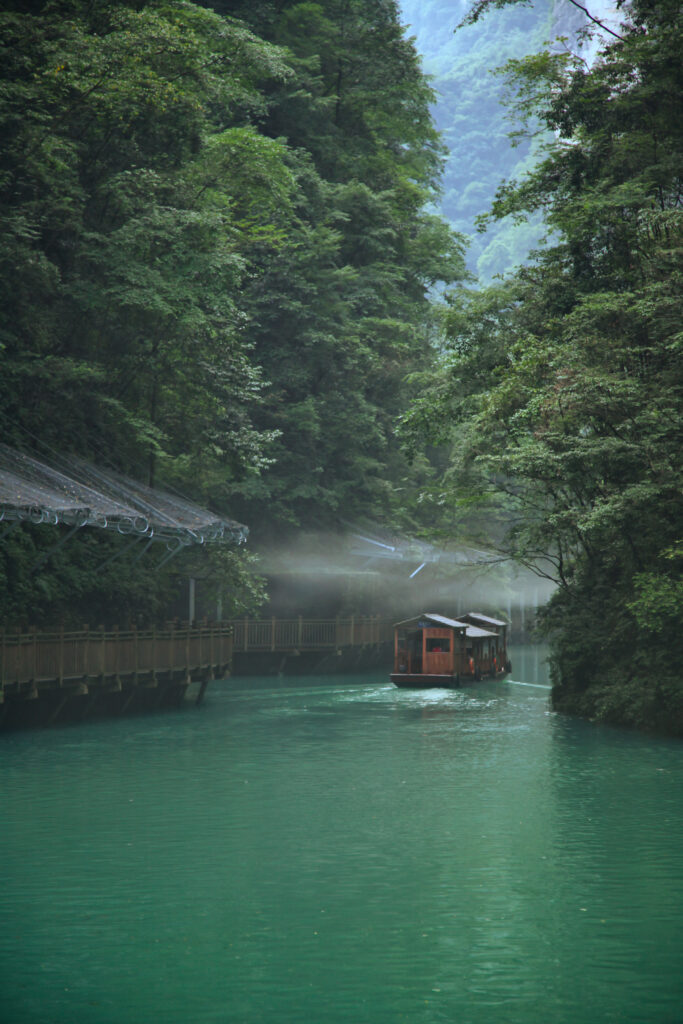
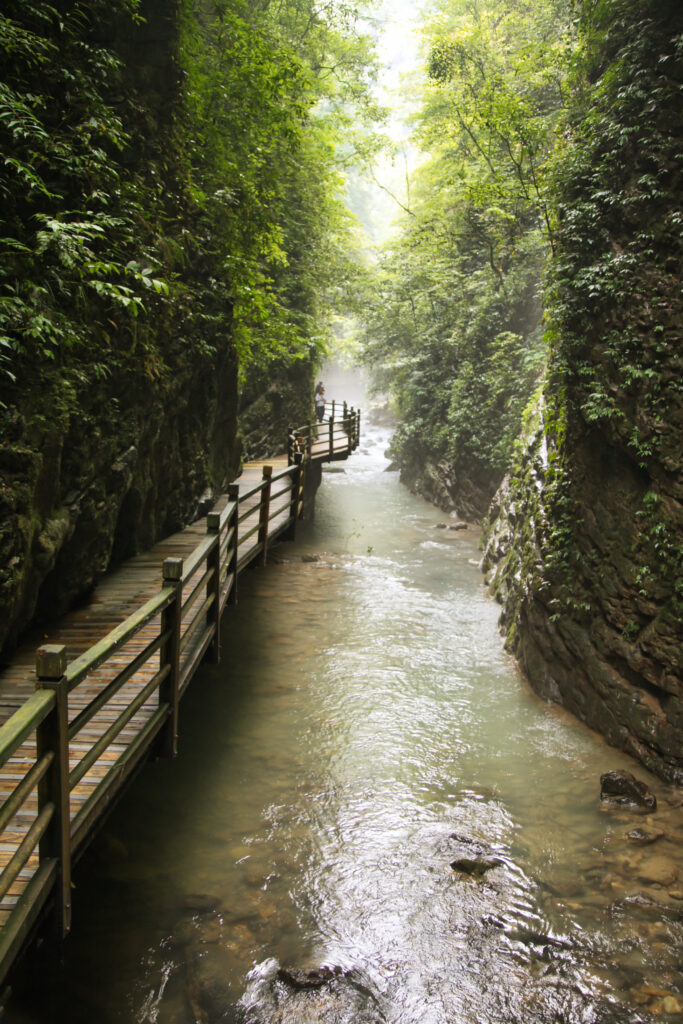
After that, we took a combination of elevator and walking downstairs to reach a pier, where you can take a short boat trip. After that, there was a 2 km walk through the gorge, passing by a small cave and reaching a second boat ride. That ride was already the last part of the trip, which took around 4 h.
For those more adventurous, this park also offers the possibility if bungee jumping and climbing.
Huanglong Cave
From the Crystal Bridge, we took a Didi towards the Huanglong Cave. Beware of where to buy the tickets! I believe we got scammed and paid more by buying the tickets in a “ticket” office right next to the parking lot, where the taxi driver pointed to. However, if you follow the arrows to the cave, you will reach a much more officially looking ticket office, which surely has more reasonable prices.
The cave offered tours, but only in Chinese, so as a foreigner you can just enter by yourself (no need to make the tour queue, we made this mistake too).
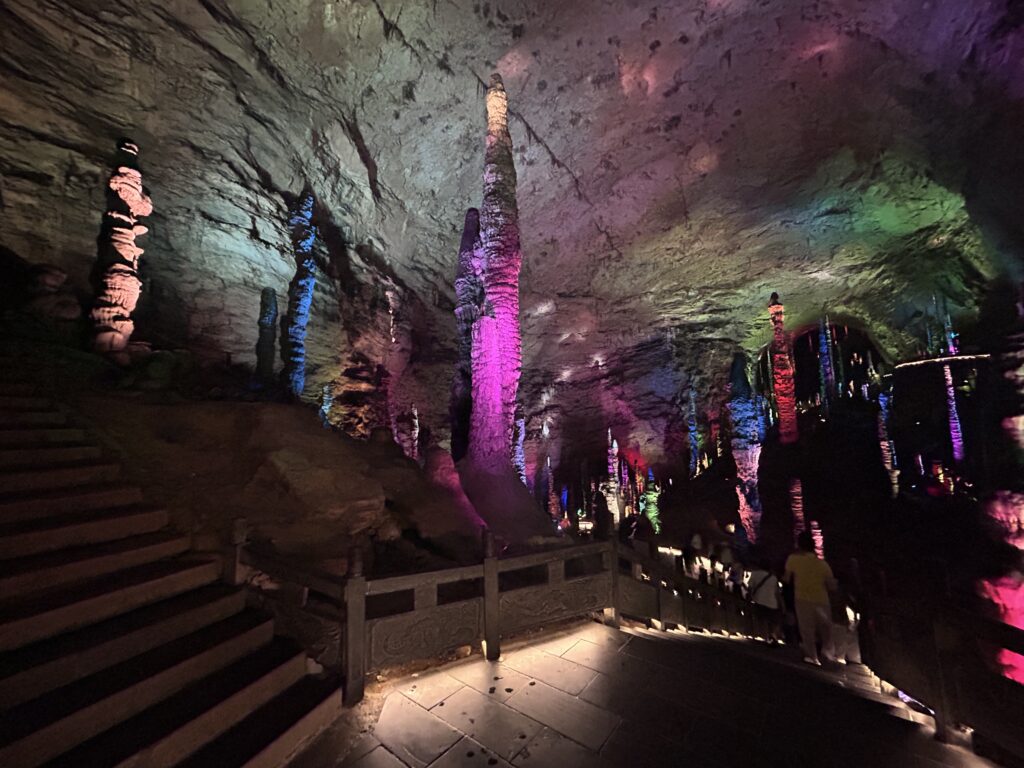
The cave itself is really cool. It’s huge, with enormous stalactites and stalagmytes, that are illuminated with lights of different colors. There’s two themes to the cave, one of which is dragons and the other is giant salamander, that are a typical animal from this region (and which you can try in local restaurants). You’ll see illuminated images of dragons all around the cave and sometimes some cute salamander cutouts. The cave excursion takes around 1,5 h, and it includes a boat ride through subterranian waters. My personal recommendation would be to avoid wearing your favorite clothes: something dropped on my pants and left a permanent mark on them!
In the evening, we changed hotels: Wulingyang is very convenient for Zhangjiajie National Forest, but less so for Tianmen mountain, which would require a 45 min ride. Thus, we chose a hotel 10 min away from the cable car that drives you up the mountain. The area is not the nicest, but the hotel was good and very conveniently located for the trip.
Day 10 – Tianmen mountain
We headed to the cablecar station to start our route. There’s 3 routes, depending on how you go up and down.
- Route A starts with a cablway ride from downtown. However, the upper section of the cableway is, as of June 2026, closed, so there’s a bus going up instead. The bus ride has almost 80 turns, so not the best option if you get dizzy in the car. The official way down is a different cableway that goes to the Fox Theater, followed by a bus ride back to the city
- Route B is basically the opposite of route A.
- Route C uses the Fox Theater cable way to go up and down.
Once you’re up, no one seems to check how you go down, so they seem to be interchangeble. Similarly, the time of entry was not very relevant, and we could enter at a different one that was marked. This might be different if it gets crowded though.
We booked the tickets with the hotel, and the receptionist recommended us doing route B, which worked well for us. Officially, they open at 8 am, but the buses seem to start leaving sooner.
The Tianmen Cave
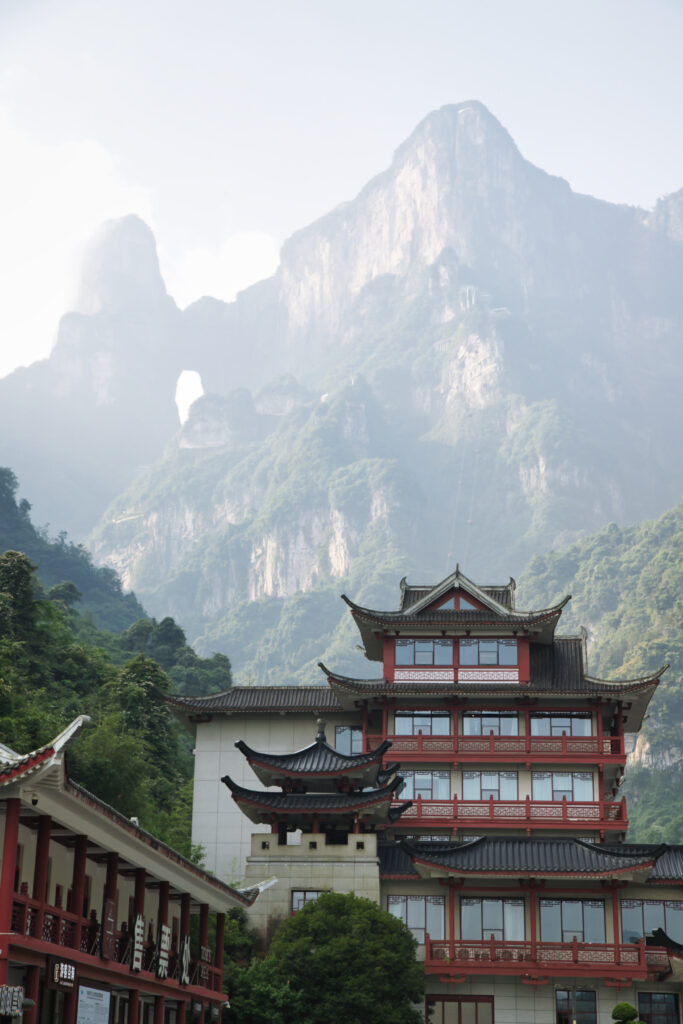
Once you reach the too with the cable way or the bus, you’ll be directed to the square in front if the Tianmen Cave. There’s a couple of restaurants and other services there, but the highlight is to observe the Stairway to Heaven, with its 999 steps. The stairway goes directly to a hole in the mountain, making it an impressive way up. For those like myself, who don’t want to go through the torture of going up 999 steps, there’s an escalator that goes up instead, for 25 yuans. The escalator had 5 platforms of 60 m before it reached the top. Once there, and after a few stairs, we resched the same place as the Stairway to Heaven. That area is quite small, having only a small pond under the large home inside the mountain. Then, there’s a second stretch of escalators, this time with 7 platforms (if I didn’t miscount). On the walls, you can see athletes doing extrem sports on the mountain. I discovered some new types of sports I didn’t know existed by looking at those pics. Redbull must have a crazy revenue judging by everything they’ve sponsored.
Finally, after what feel like fowever, you reach the top. There, you can decide if you want to go east or west. In principle, you can walk all the way around the top, doing both west and east, or you can do only half and take a chairlift and a tunnel to help you go down. After doing both, I’d say that the West walk is more spectacular, although they are quite similar.
The West loop
The loops are well indicated, so there’s no loss. Follow the signs to the West loop. Currently, the Upper station of Gianmen Mountain Cableway is under construction, so the first part of the hike is not too nice, as you’ll be passing by the construction zone. Once you pass the construction area, you’ll reach the Western Glass Bottom Cliffside Path, which costs 5 yuans per person. It’s one of those glass hanging bridges that you see around the internet. I’d say that they are less scary than I thought they would be. I have a mild fear of heights and could walk there without any issues. Here, similarly to the Crystal Bridge, you’re required to wear slippers.
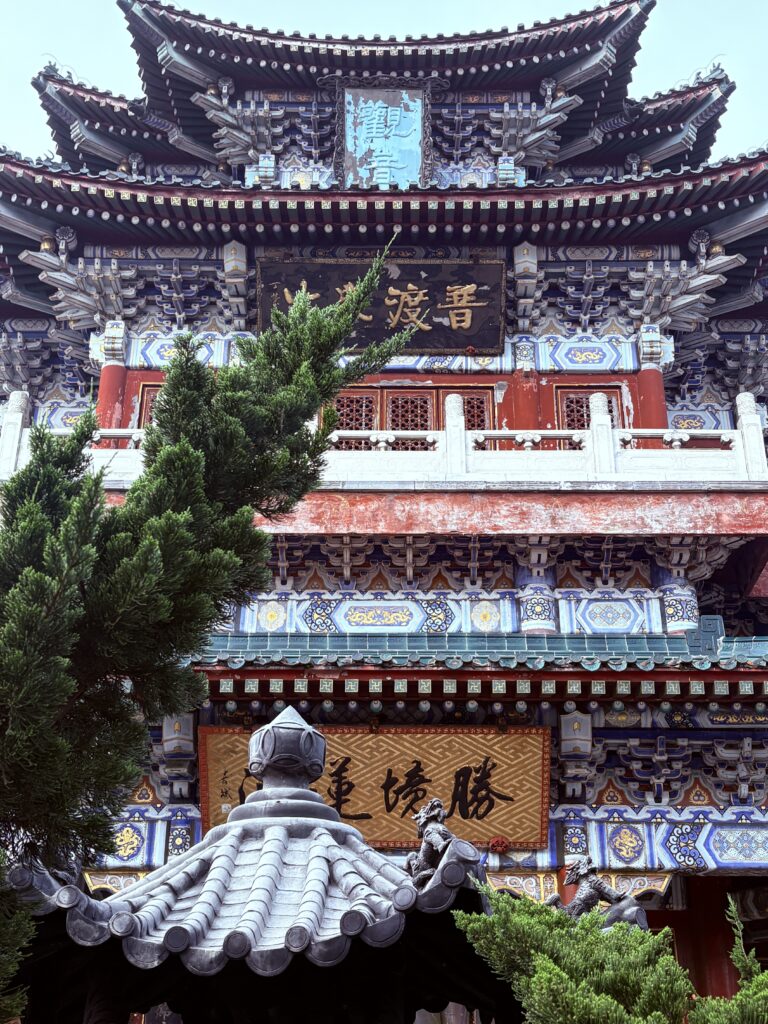
After the bridge you’ll go through the Forest of Wishes, a shrine decorated with red bands. Then, there’s quite a stretch of a path that hangs on the side of the va mountain, that allows you to see the beautiful landscape. Following a suspention bridge, there’s another small temple that hands locks on the walls, and then you ‘ll reach the Tianmen Mountain Temple. I really like this temple: it was large, had beautiful plants around, and was not crowded at all. Next to it, there’s a square with a restaurant/souvenir shop, where you need to make a decision. You can either continue with the East Loop, or take a chairlift to the Yunmeng Fairy Peak.
The East loop
We took the path to the East loop. The cliffside path was quite similar to rhe West loop, and the Glass Bottom bridge was under repair, so I’m happy we did the one on the West side. We then took the long way to go through the Cloud-Buckling Barrier to reach the Yu Hu Peak, but I wouldn’t say the views were much better than what we saw in other areas. From there, it’s already pretty close to the transmountain escalator, which was the end of the tour for us.
Surprisingly, despite going to the mountain on a Saturday during the first week of June, there were not many crowds. We were also lucky and the weather was relatively cool but sunny, despite the forecast saying it could rain. That made it the perfect day for such a trip!
The Fairy Fox Romance Show
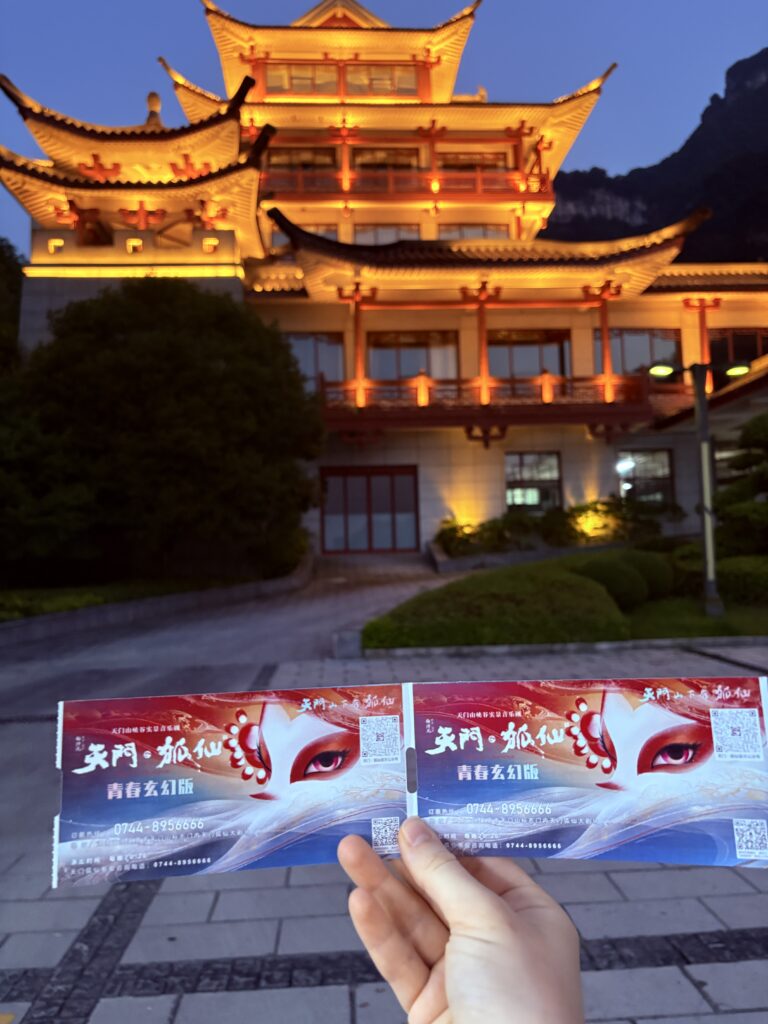
After spending the hottest time of the day in the hotel and having some dinner nearby, we went to see the Fairy Fox Romance. We had seen the theater during our ascend to the mountain, and got convinced to join with the images they put during the elevator rides. The show happens in a theater nearby the cable car entrance (like the start of route B). We bought the tickets through our hotel and they had pretty good discounts.
The show shows the romance between a mythological fox-lady and a villager, with dances, traditional songs, and great visual effects. No worries about following the story – there’s a screen translating some of the lyrics to English and to Korean. The show ends (spoiler alert) with the mountains being iluminated when the lovers reunite. The engineering behind these shows is really be spectacular, so I recommend seeing at least one during your China stay.
Day 11 – Trip to Chengdu
We took the morning train from Zhangjiajie to Chengdu, starting at 9:55 and arriving at 14:20 to our destination. After dropping the bags in the hotel and a quick lunch, we headed towards the shopping area in Chengdu, the Chunxi Road Pedestrian Street, and in particular Taikoo Li. There’s plenty of stores, restaurants, and enterteinment areas in this pedestrian area. If you’re interested in big (and expensive) international brands they have a huge shopping mall dedicated to those only. Not too far from it, there is another shopping mall, this time for slightly more accessible brands. In the basement, they have a huge bookstore, Fangsuo, which not only has books (mostly in Chinese) but also excellent souvenirs.
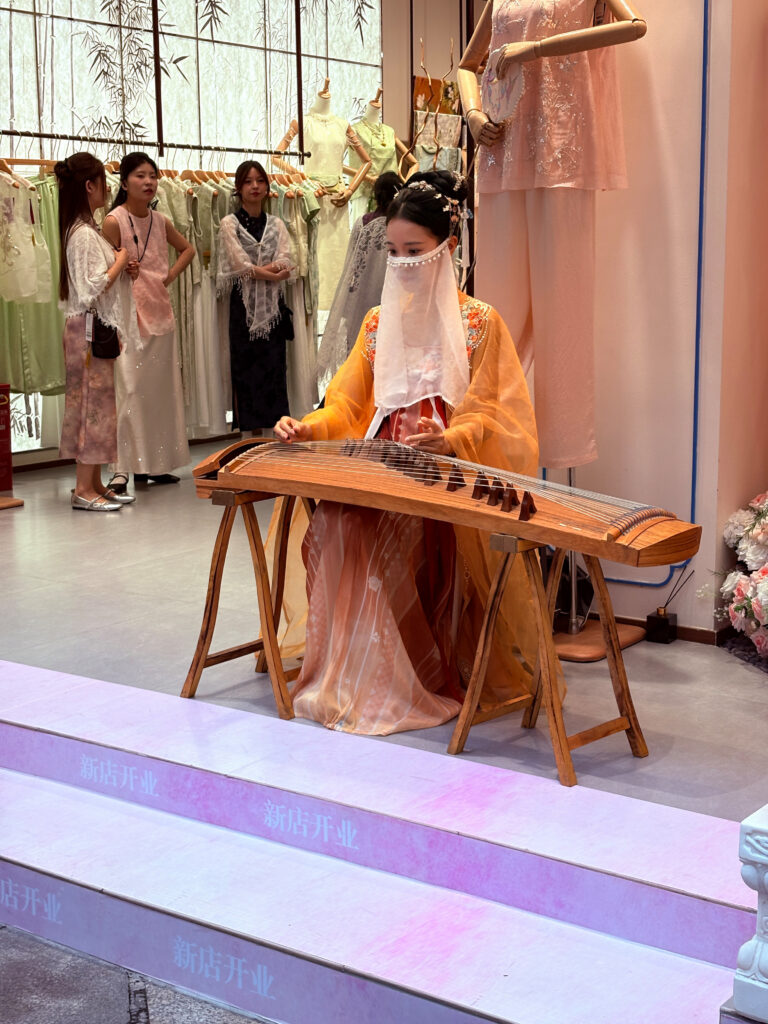
Also, there’s pandas. Everywhere. Pandas exercising, pandas playing sports, panda mascots walking around, panda faces on sweets and candy, pandas on bags, on hats, and T-shirts. Taking into account that there’s only about 1850 pandas left, the number of fake pandas in the city is certainly superior to the number of real ones.
Day 12 – Pandas in the Chengdu Research Base of Giant Pandas Breeding
Chendgu Research Base of Giant Pandas Breeding
In the morning, we drove to the Chendgu Research Base of Giant Pandas Breeding. It’s like a zoo for pandas, where the researchers are trying to increase their numbers. Seeing that all pandas do in a day is eat and sleep, I understand this is not an easy task. The taxi cannot access the area right in front of the door, so it dropped us about 15 min on foot away. There were lots of people trying to offer us a bike ride towards the door. In my opinion, unless you have mobility issues, it doesn’t seem worth the money, it’s really not that far. That’s something I noticed in the whole trip – you would only get offered a transport option in touristic places when the distance was easily walkable.
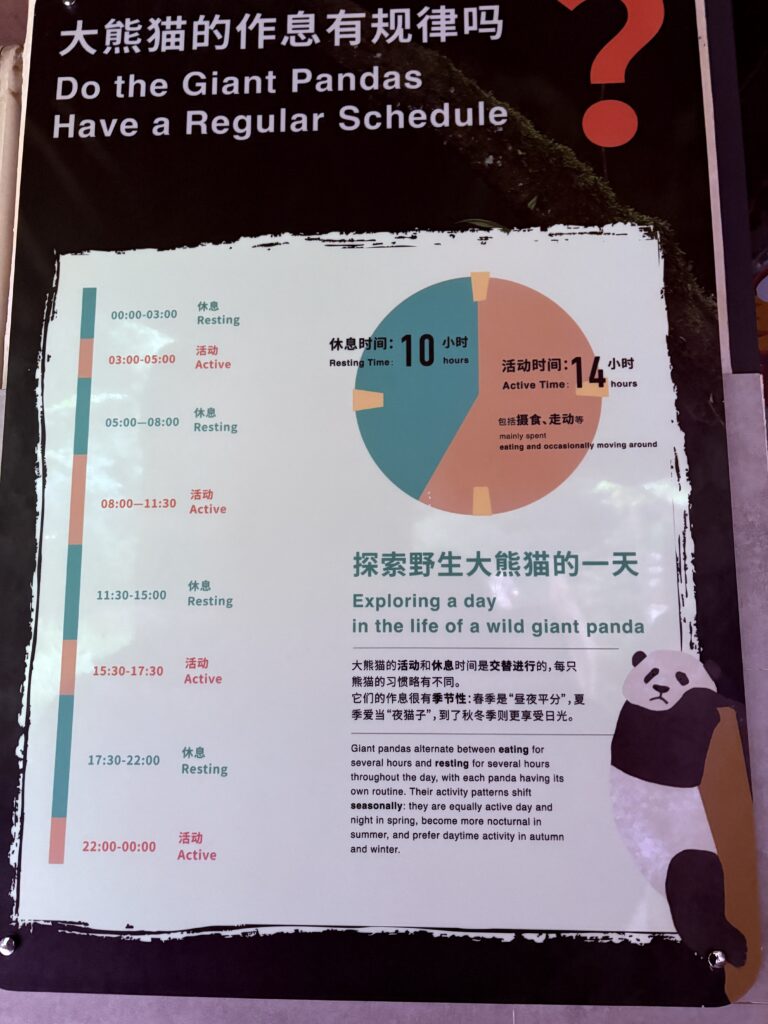
The entrance costs 55 yuan, and if you take the bus inside the park, that’s an additional 30 yuan per person. The park is divided in 4 areas, and while it is walkable, distances are quite large, so I would recommend taking the bus if you want to explore more than one area and don’t plan to spend the whole day in the park. All the areas contain several enclosures with pandas, and also there’s a couple of enclosures with red pandas. Interestingly, giant pandas and red pandas are not phylogenetically related. Giant pandas are bears, while red pandas are closer to racoons. However, both adapted to eat bamboo, and something I also found curious was that both eat with their “hands”.
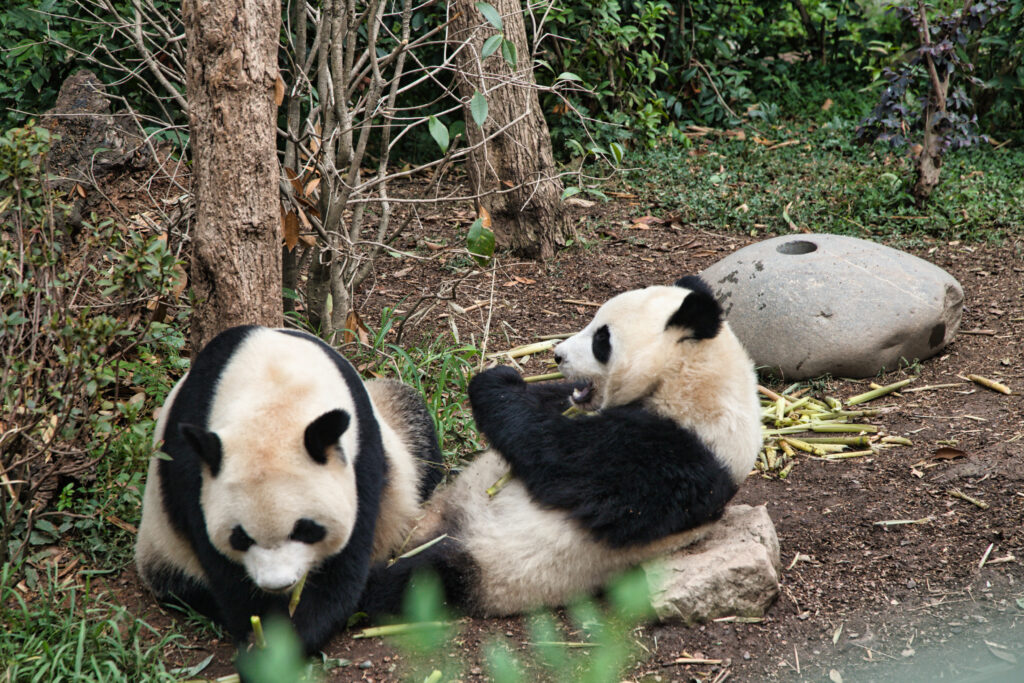
In my experience, the further the enclosure is from the entrance, the better your chances are of seeing pandas without having to queue for it. There’s 240 pandas overall, so plenty for everyone to see. The most active ones are the young pandas, so definetely pass by the nursery. Youngters love sitting on trees and they look very fun there. Unfortunately, there were no new babies when we came, so we could only see them in photos, but if you come after June you may be lucky, as that’s their birthing season.
Du Fu Tatched Cottage Museum
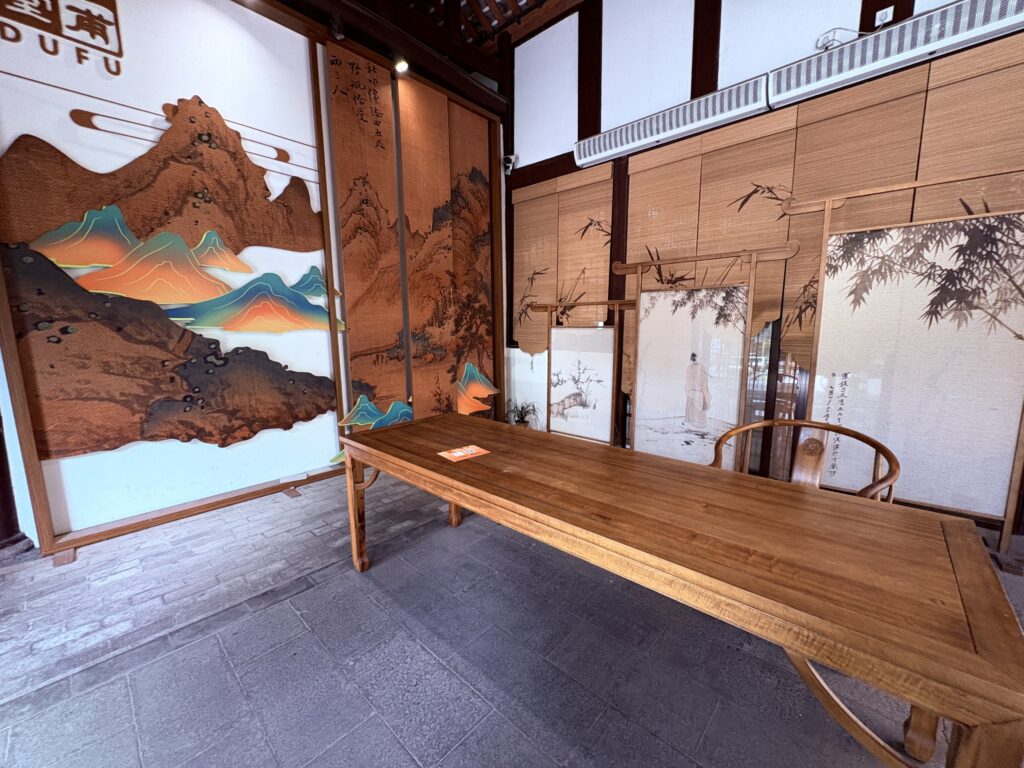
After a panda overdose, we took a DiDi to the Du Fu Tatched Cottage Museum. This museum is in honor of the poet Du Fu (approx. 760), and is currenlty a National Heritage Site. The museum is a beuatiful combination of gardens and small houses filled with artifacts, including Fu’s texts. If you’re interested in the poet, I’d recommend finding a guide, as most of the information available is in Chinsese only. If you’re not much into Chinese poetry (like myself), you may still enjoy the beauty of the place.
Day 13 – Leshan Giant Buddha
We had a free day, so we quickly decided to visit the Leshan Giant Buddha. This Buddha has a height of 71 m and is sitting next to a river. It was carved in 713, in a construction that lasted over 90 years. To visit the Buddha we took a train from Chengdu East to Leshan. The train arrived to the destination at 9:35. Since we didn’t know how long we would take, we didn’t take the train back, which wasn’t a problem. Booking the train on the same day for such a short trip was very easy, although I must admit that the one we did want to take ended up beeing booked out and we had to wait for the next one, about 30 min later, at 14:30.
The DiDi left us next to a large square, where the ticket office was. We had already purchased the tickets the day before thanks to the hotel receptionists, who helped us a lot in purchasing them online (the website for that is in Chinese only). Surprisingly again, there was barely people, so I don’t think buying them on site would have been a problem, but one never knows these things beforehand. There are two alternatives for visiting the Buddha: by walking (80 yuan) or by taking the boat (70 yuan). We took both, and if you have the budget for it, I’d recommend it.
Walking route towards the Buddha
After you pass the main gate (if you start from the North entrance), you still need to walk for quite a but on a relatively boring straight road. There’s buses that can bring you faster to the actual entrance, but you need to pay a fee. I have the feeling they really build the structures to create additional opportunities to charge you for something. After 20-30 min you’ll finally reach the actual entrance. Then, the road will go up, since you’ll see the Buddha from the top first. That was an interesting contrast with Thailand, where one was not allowed to stand above Buddha.
After observing the Buddha’s head, one can approach a bell, which you can ring three times if you pay a small fee. Then, there’s a path downstairs, to reach the feet of Buddha. This is not part of the complete route, so if you don’t want to go down and then up again (it’s 71 m), you can skip it. If you have the possibility, I’d recommend going, it has quite nice views.
Boat route to see the Buddha
If you took the ticket for the boat, you can take one from each one of the two entrances. Both are separated by quite some distance, so make sure to take the boat form the one that’s more convenient for you. The boat ticket is valid for either pier. The boat will go on a round trip to the same place where the boat started.
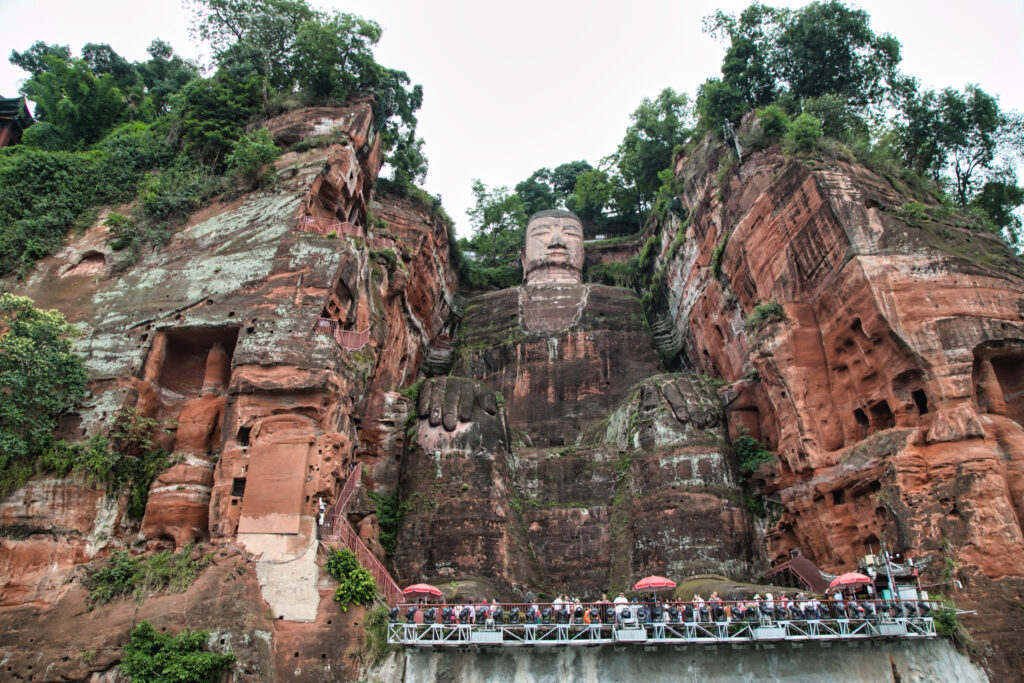
The tour is relatively short but it gives a great overview of the Buddha. Our boat stopped right in from of it, so you can see the whole 71 m structure. Then, the boat slowly drifted away from the Buddha, giving slightly different perspectives, and then it went back to the pier.
Wuhou temple
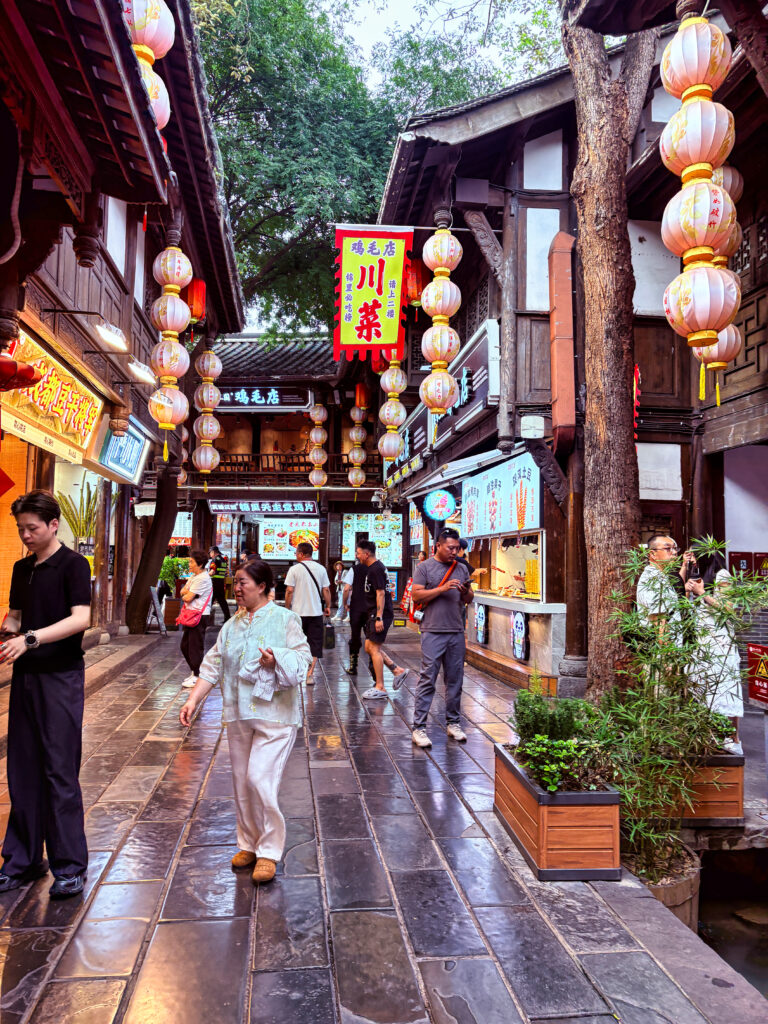
Since we arrived relatively early back to Chengdu, we decided to drive to the Wuhou temple. This temple is dedicated to Zhuge Liang, a brilliant strategist from around 220-280. In the temple, you’ll see several places dedicated to him and another three kings. One of them, Liu Bei, also has his tomb there. The temple is paid, costing 50 yuans. This area has also some nice shopping streets, with many small stores and restaurants, which is very pleasant to walk through. We had some street food there and it was delicious (and affordable)!
Day 14 – Flight back to Beijing and visit to parks
We took a flight from Chengdu to Beijing, which was 2,5 h – much faster than the train ride! From there, we dropped our suitcases at our friend’s place and went to walk around a couple of parks to have a relaxing afternoon.
Beihai Park
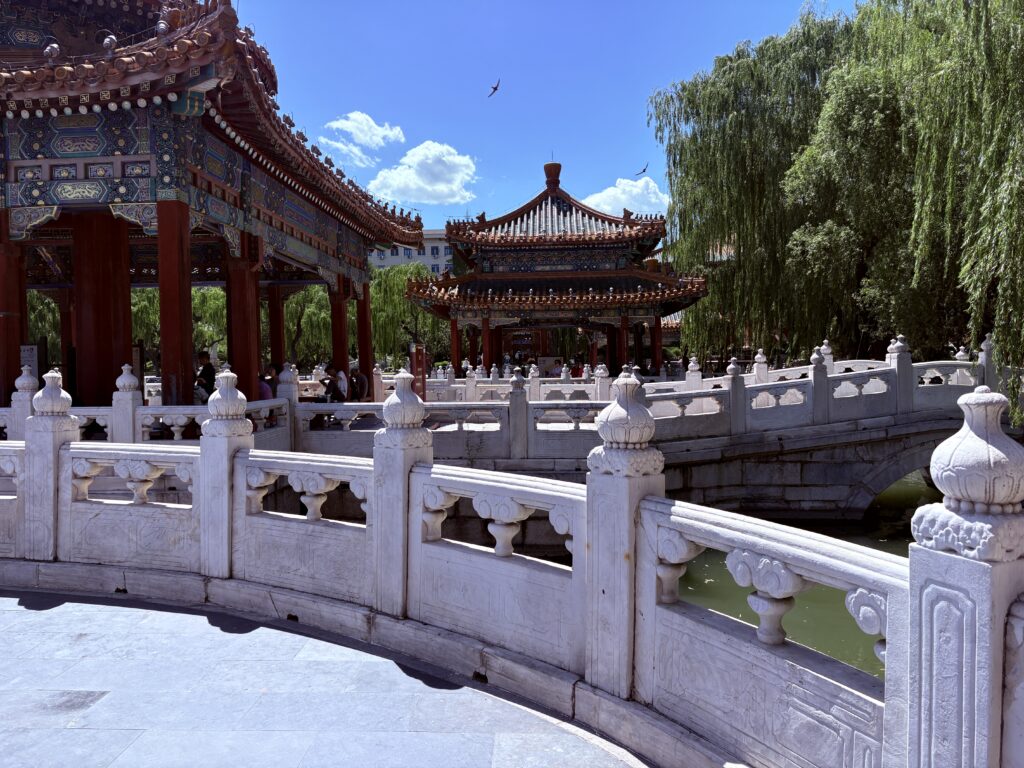
Beihai Park is a beautiful park located next to Jingshan Park. The park was built in the 12th century and its main attraction is a large lake, with the park going around it. Interestingly, you cannot go around the whole lake, as at some point there is a road. There’s a small ferry that allows you to get from side to side of the lake, and you can also take a boat to enjoy the water. One can also see several ancient buildings and pavillions. The park is really beautiful and very relaxing.
Entering the park has a fee of 20 yuans for the combined ticket.
Prince Kung’s Mansion Museum
I will preface this section by saying that we didn’t get into the mansion to visit the history or architecture, but to take photos of ourselves dressed in Qing Dinasty clothes. There’s a few stores that offer this service in the streets between Beihai Park and the Prince Kung’s Mansion. We just went to the one we liked the best, and they did the make up and dress up for us without any appointment. We then went to the Mansion to take photos. There’s plenty of Chinese people (especially women) taking photos in traditional clothes in all the main attractions, as the dresses are absolutely gorgeous! We also noticed that every city has its own dressing style, so if you like a particular one, choose the city carefully. As for having white foreigners wearing Chinese traditional clothes – most people we interacted with seemed to find it amusing and they threw us compliments. We even had a kid taking photos with us.
The mansion itself is a siheyuan-style mansion built in the late 17th century. The gardens are beautiful and are the perfect backdrop for photographers. The tickets costs 40 yuan per person, and on Mondays the attraction is closed.
Day 15 – Drum Tower and flight back home
Since our flight was at night, we still had a whole day to spend in Beijing. Our friend recommended us to visit the Drum Tower, the South Luogu Lane and the Shichahai Park, which are great options to spend a relaxing day. Since they are less famous areas, they’re not particularly crowded and have a very pleasant vibe.
Drum Tower & Bell Tower
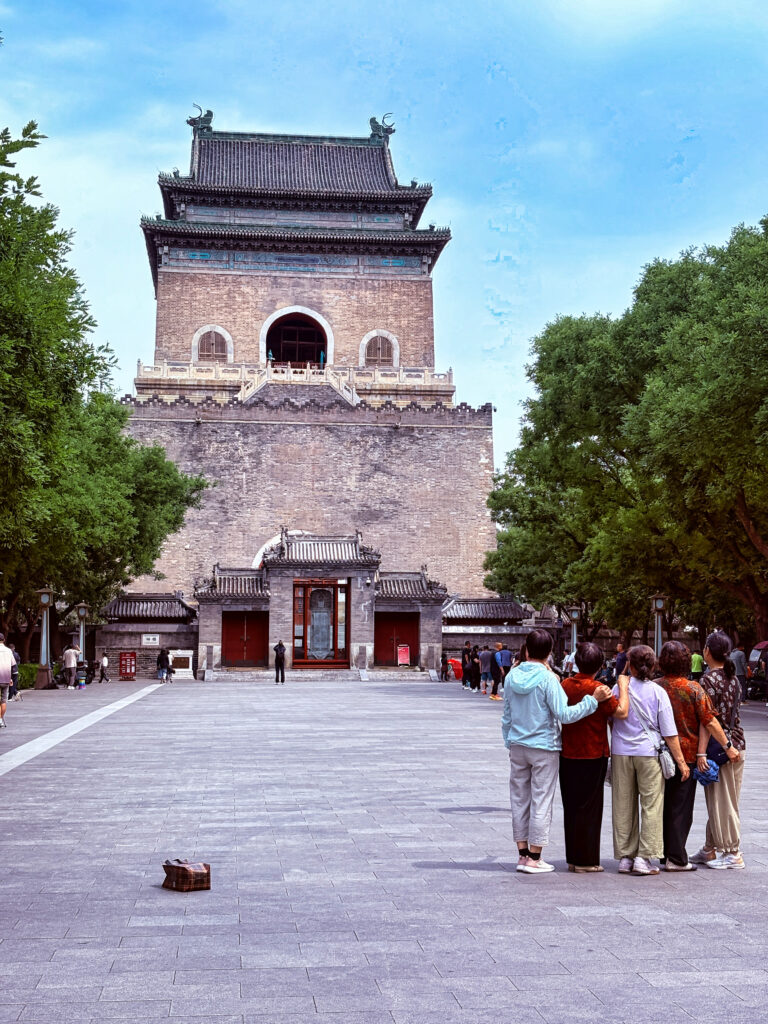
The Drum Tower makes a good start for the tour. The tower was initially built in 1272 to do music and announce time, and is now a tourist attraction. On the same street as the Drum Tower, you can see the Bell Tower. These used to be the tallest buildings for quite some time, and even today there’s not many high buildings around. You can go into each of the towers to see ancient relics, for 20 yuans for the Drum Tower, and 10 yuans for the Bell Tower. They were inscribed in the UNESCO World Heritage List in 2024.
South Luogu Lane
The South Luogu Lane, also known as Nanluoguxiang, is an old alley with traditionally built houses, in small streets known als hutong. It’s quite cool to walk around, being a fresh and curious place to visit.
Shichahai Park
Walking from Nanluoguxiang it’s easy to casually reach Shichahai Park. There’s a street that follows the lakes, with small restaurants, stores, and local architecture. Around the lakes you can also see multiple hutong.
Personal Highlights
This was my second time in China, the first being over 10 years ago, and the China I saw now had nothing to do with my first impression. I must admit I was not particularly excited to visit China again after my first experience – I remember Beijing being dirty, disorganized, and generally unfriendly. My second time there I found a modern and advanced country, well-organized, clean, convenient and efficient. If you loved places like Japan or Singapore, China should be on the top of your list. Personally, my favourites of the trip were:
- The Hangzhou show. The scenary in the lake, the amount of dancers, the engineering behind… stunning! One of my personal favourites together with the opera in Bregenz and Cirque du Solei in Vegas.
- Tianmen Mountain. I expected that the Zhangjiajie forest would be my favourite from the region but I was more impressed with the Tianmen Mountain. Both are stunning places, but I personally liked Tianmen due to its good organization, lack of crowds, and landscape.
- Du Fu Tatched Cottage Museum. I think my memory of the place feels more enjoyable than during the time I spent there (becaue of the heat), but the Cottage Museum is a gorgeous place.
- Beihai park. Perhaps it’s not one of the most famous spots in Beijing, but this park has a really pleasant vibe to walk around and enjoy yourself.
- From the cities I visited, I think I prefer the vibe of Chengdu the most – it’s buzzling with life, very active and colorful. Something we noticed is that in every city, people had their own particular styles and I think personally I enjoyed watching the ones in Chengdu. I find Hangzhou a more tranquil city, perfect for long meditative walks, while Beijing seems more administrative and historical.
Where to stay?
The recommendation I was given was to search for hotels that were renovated or constructed in the las 2-3 years for an optimal experience.
Beijing
I don’t have a particular accomodation to recommend in Beijing as I stayed at my friend’s place. However, neighbourhood-wise I’ll say that the region nearby the Olympic Stadium is a great place to stay, as you can go for pleasant walks and it’s not crowded, although it’s a bit far from the touristic center. If you prefer being closer to the touristic attractions, check out hotels nearby Tianmen Square, or if you prefer a shopping area, check out Wangfujing.
Hangzhou
The classic area to stay nearby the Xi Hu Lake. You can choose staying in the park near the lake, in which case you’ll have more calm, or you can stay in the city side, where the shopping malls and restaurants are. We chose to stay in the commercial area, where we stayed at:
- Zhongshan West Lake Hotel Hangzhou. Modern and well-located hotel. The rooms are not very large, since it’s in the city, but it has all the facilities it needs. The breakfast was quite good too.
Zhangjiajie & Wulingyuag
I did like staying at Wulingyuag better, as it’s a more touristy place, so it had a nice commercial area and it was beautifully decorated. What I’ve seen in Zhanjiajie city did not impress me particularly, so if I were to choose again, I’d stay at Wulingyang only. That being said, Zhangjiajie is more convenient to visit the Tianmen Mountain, as you can stay right next to the cable car station instead of having to take a 40 min taxi. Myself and many others I’ve seen online tend to split the trip in two and stay in both cities. The hotels were we stayed were:
- Lanting Elegant Restaurants Hotel. Cozy hotel, with nice windows from where you can see the river. Not the most modern one, but the staff was really polite and helped with the organization and ticket purchase of the Zhangjiajie Forest trip.
- Wyndham Garden Zhangjiajie. High raise building, nice although small rooms. It’s only a 10 min walk away from the cableway and buses to go to the Tianmen Mountain, so very convenient. It’s nice to see it from the cableway when you descend. I liked that it had an area to sit right next to the window to look at the landscape.
Chengdu
The two main areas for tourist to stay seem to be Chunxi Road Pedestrian Street and the Wuhou Temple. The Chunxi Road has more restaurants to choose from, so we opted for it.
- Lyhn International Hotel Chengdu Taikoo Li. A nice hotel with good breakfast, located very conveniently. The staff was also very helpful when we askeed them to buy tickets.
Practical information
China has a very different organization to what we’re used to. Check out this post to get tips and tricks on how to make the most of your China trip and not get frustrated.
Need more travel inspiration?