Two weeks in South Korea and Japan [2018]
This was my first time in South Korea, but I had been in Japan many times before – that’s why this itinerary might seem a bit eclectic. I’m combining discovering South Korea with some of the must-see places in Japan that I couldn’t do when living there, such as the Mount Aso or the Blue Pond. Take a look to this itinerary to get inspired on all what can be done in two weeks of traveling!
- Two weeks in South Korea and Japan [2018]
- Itinerary
- Day 1 – Seoul
- Day 2 – Seoul
- Day 3 – Suwon & the Hwaseong Fortress
- Day 4 – Seoul Palaces & trip to Busan
- Day 5 – Yangdong and Bulguska
- Day 6 – Fukuoka
- Day 7 – Hells of Beppu
- Day 8 – Kurokawa
- Day 9 – Mount Aso, Takachiho y Nabegataki waterfall
- Day 10 – Kumamoto
- Day 11 – Sapporo
- Day 12 – Lake Shikotsu, Lake Toya, and Otaru
- Day 13 – Blue Pond in Biei and Flower Farms
- Day 14 – Sapporo
- Day 15 – Tokyo
- Personal Highlights
- Itinerary
- Want to get inspired?
Itinerary
Day 1 – Seoul
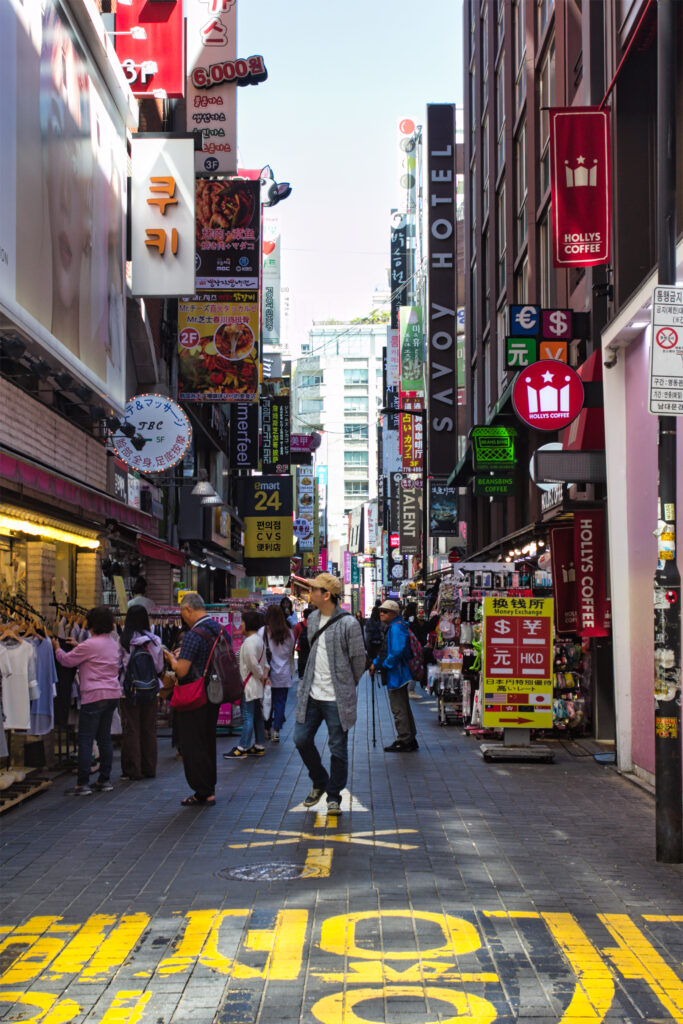
We arrived without issues to the Seoul airport at 7:10. Firstly, we got some money in the airport (1€ = 1270 won). However, we had some trouble with the credit cards, as none seemed to be accepted! After some panicking, we managed to get money out and could grab the bus to the city. It took us around 1 h to get to there, but at least the bus dropped us close enough to the hotel that we could just leave our suitcases and go walk around Myeondong, area in which we were staying. There’s many small stores with socks, glasses, jewelry, and cheap clothes, as well as many restaurants.
Namsam
After lunch, we headed towards Namsan, where we took a cable car for 17,000 won. The line was 40 min and we were falling asleep due to the jetlag. Fortunately, after the ride, I woke up a bit.
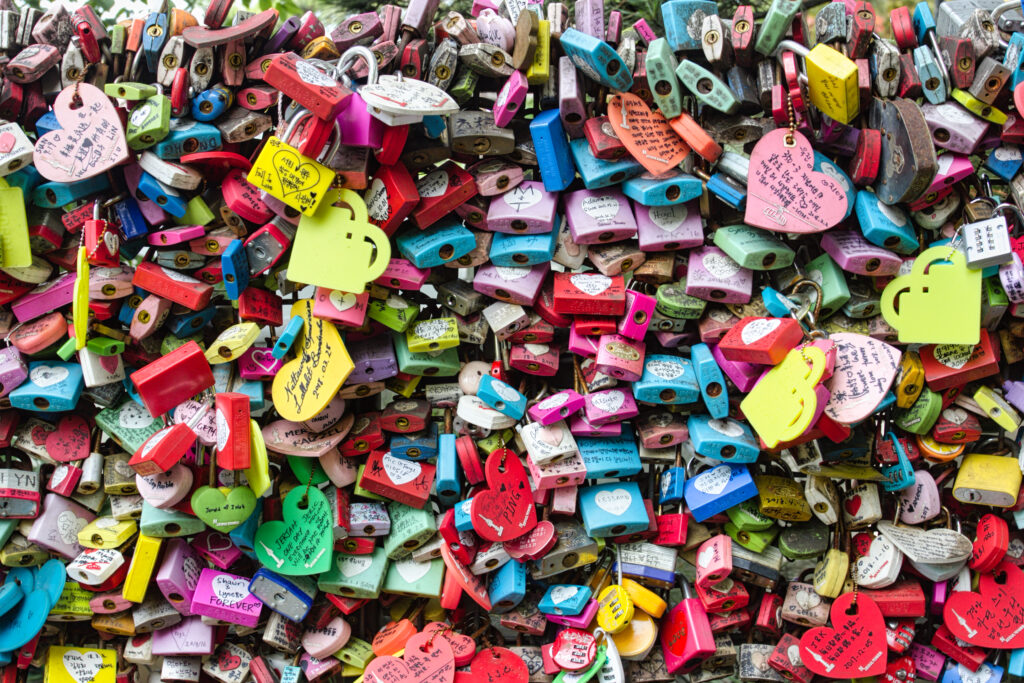
Up Namsan there’s many colorful padlocks, mostly placed there by couples, although I saw someone putting one with their cat. #LifeGoals. If you and your cat (ejem, partner) are very much in love, you can grab a padlock in the store of the N Seoul Tower. From there, we tried visiting the Namsansol Hanok Village, but it turned out to be closed since it was Monday.
After having a quick street food dinner, we ended up in a cat café, although I didn’t like the place too much, as cats didn’t have human-free areas and several had conjunctivitis. Next to the cat café there was a ferret café, but that was enough animals for the day.
Day 2 – Seoul
In the morning we went to a studio called Go Guan, where we could try on beautiful hanboks and take photos in them! We ate nearby, and then went to the Seoul station to buy a tourist transport pass. On our way, we passed by a market, with tasty looking melons. At the end, we couldn’t get the tourist pass as the employees didn’t seem to know about it, and ended up buying a rechargeble transport card, which you can just charge with money.
Temple of Jogyesa
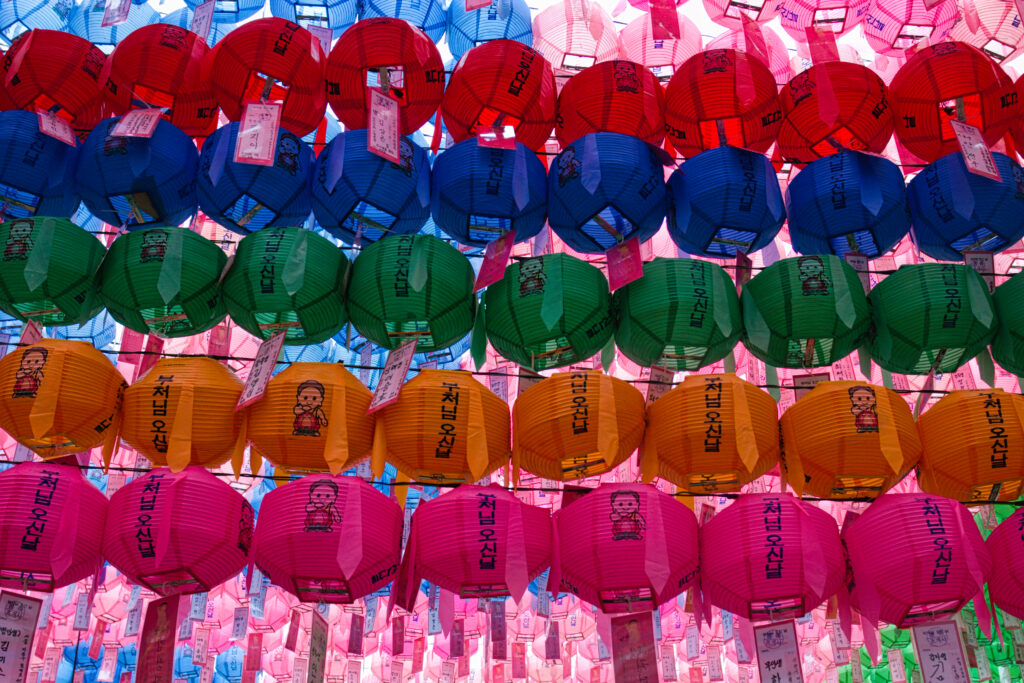
The hotel receptionist recommended us to go to the Temple of Jogyesa to celebrate Buddha’s Birthday. When we arrived there, we saw that the temple had been beautifully decorated with colorful lanterns, forming a sea of colors above in the sky. It was pretty crowded, and by the time we arrived the parade was already over.
Trickeye museum
We then headed towards the Gyeongbokgung Palace. However, it started raining, so instead we jumped into the Trickeye museum, where you could take selfies with optical illusions. It was a fun concept. The ticket included an ice museum, at -6ºC, which contained several ice sculptures. Since it was raining even more, we ended up returning to the hotel a bit early.
Day 3 – Suwon & the Hwaseong Fortress
Hwaseong Fortress & Palace
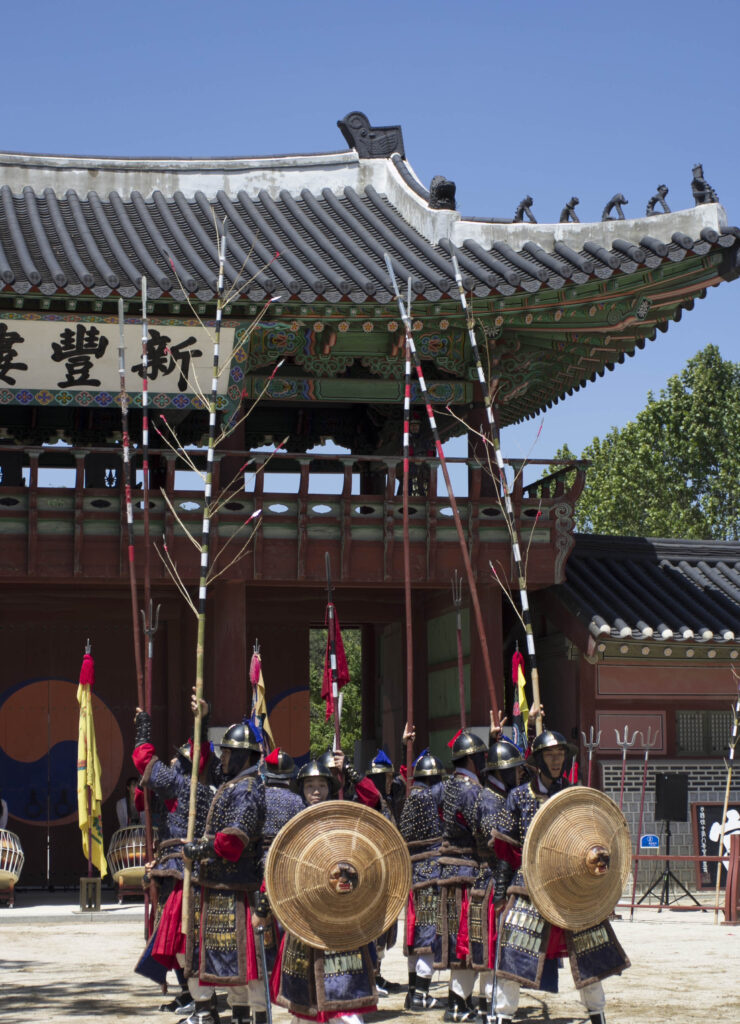
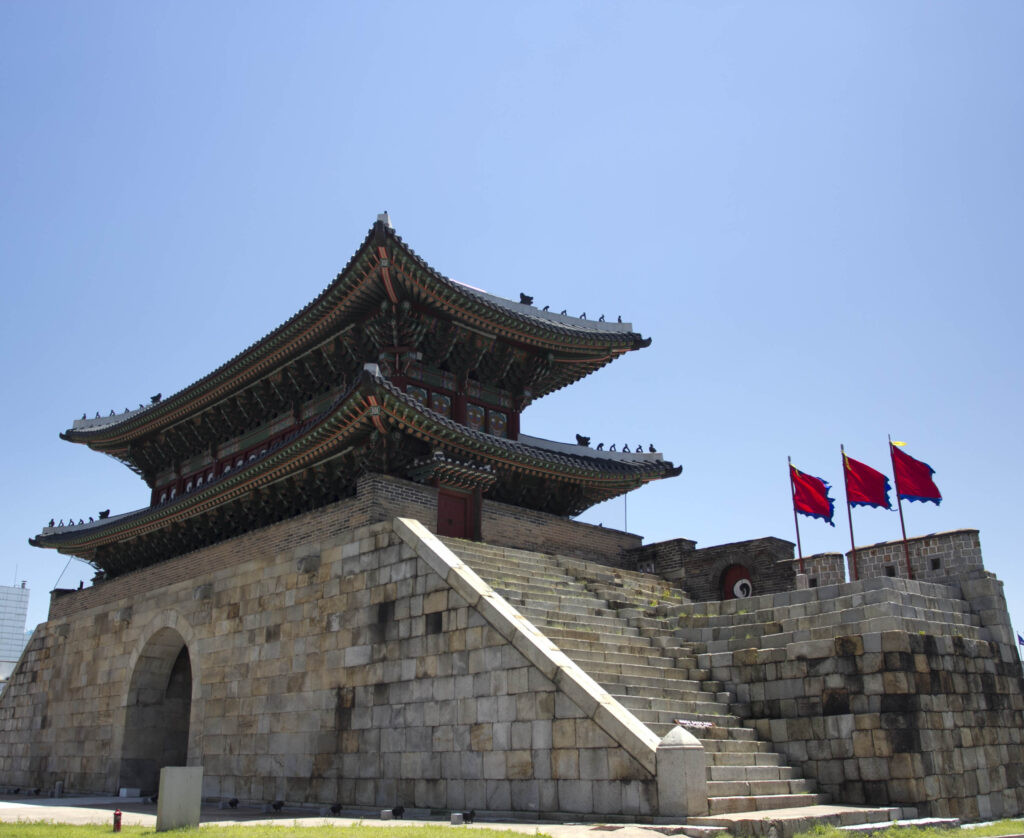
We decided to visit the Hwaseong Fortress, located in Suwon. We took a train to Suwon from Seoul Main Staition for 8,400 won and it took us 25 min to arrive. Once in the station, it was quite easy to find our way, as everyone was going to the same place. We took bus 11 to go to the Fortress first. Life happened and we got distracted, missing our stop. Fortunately, we noticed early enough, so we went down the next one, which was the stop of the Hwaseong Haenggung, the temporary residence of the emperor. By missing our stop, we had actually gotten lucky and could see a representation of marcial arts in front of the palace. A group of around 20 people were representing different kinds of battles and the use of traditional weapons.
After the show, we visited the palace inside, but it wasn’t very interesting, so we headed towards the Fortress. As is typical in a fortress, there were many steps to go up, and eventually my companion got tired, so we went back down.
Folk Village
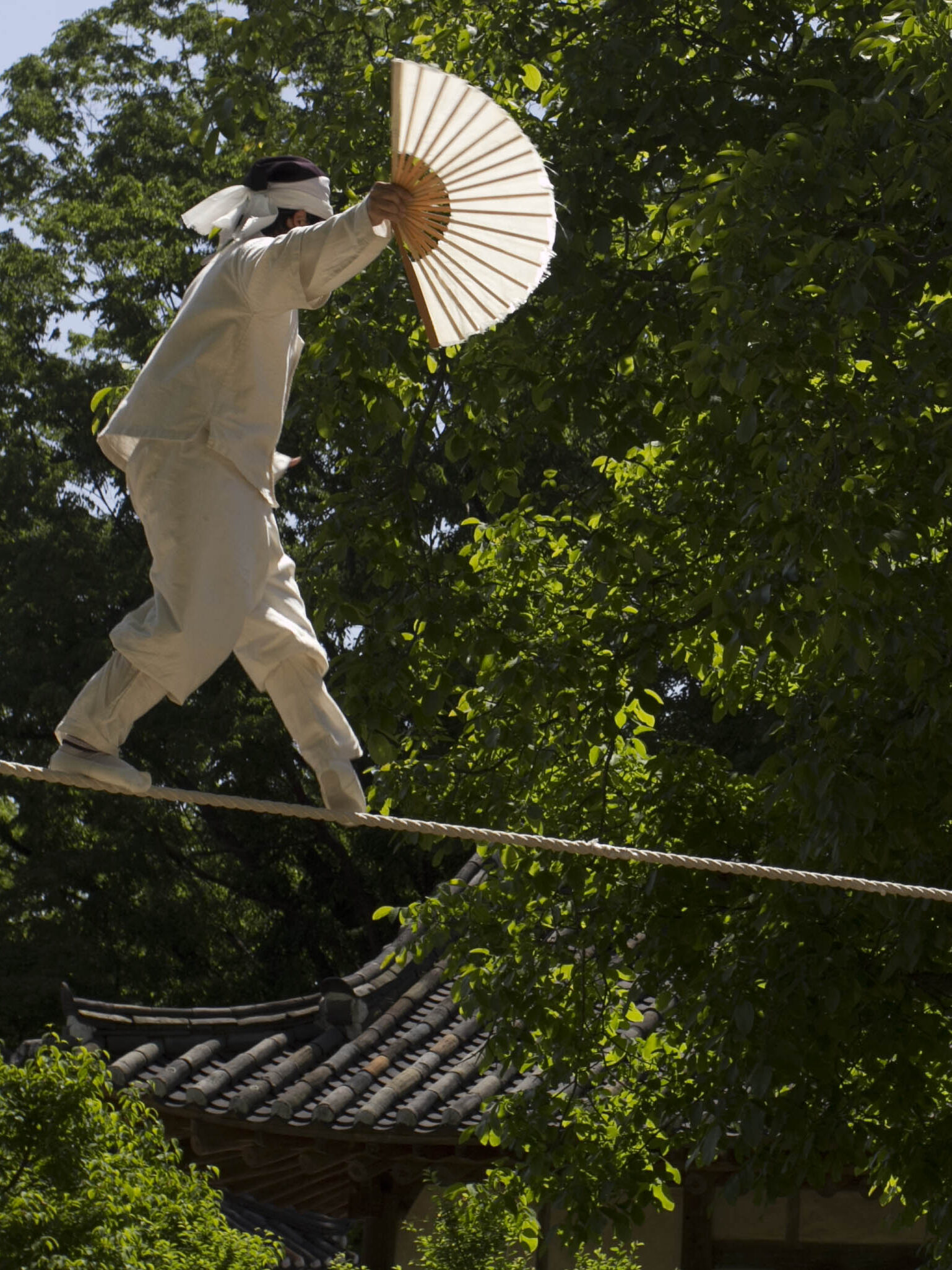
To go to the Folk Village, we had to take the bus 37 and drive until the last stop. We got lucky again with the schedule, and 10 min after we arrived, at 14:00, there was a show of traditional dances scheduled. We bought tickets for 18,000 won and run a bit to get to the show on time. Most of the dances were performed by men, some of whom had musical instruments. They had nice big hats with flowers, others with feathers, and some of them had a tape that they were moving with their heads. There was also a guy walking a tightrope, and a show of acrobacies on horses. After this show, we headed to another one representing a traditional wedding. After the shows, we walked a bit around the traditional buildings, and then we headed back to the station to catch the train back to Seoul.
Anguk
Once back to Seoul, we went to Anguk, a historic district, where we walked around little stores. These stores were more artisanal in comparison to Myeondong, although there were also souvenir stores.
Day 4 – Seoul Palaces & trip to Busan
Gyeongbokgung Palace
We woke up a bit earlier to have time to visit the palaces in Seoul. Our first stop was Gyeongbokgung Palace, the entrance to which costs 6,000 won. We arrived there so early that the palace was still closed and we had to wait in a café nearby until opening time. Once inside, the style reminded me a bit of the Forbidden City in Beijing, although I liked Gyeongbokgung Palace a bit better because it was smaller and in my opinion better taken care of. The structure is again squares surrounded by buildings, but we could not get inside the buildings, so eventually it started getting repetitive.
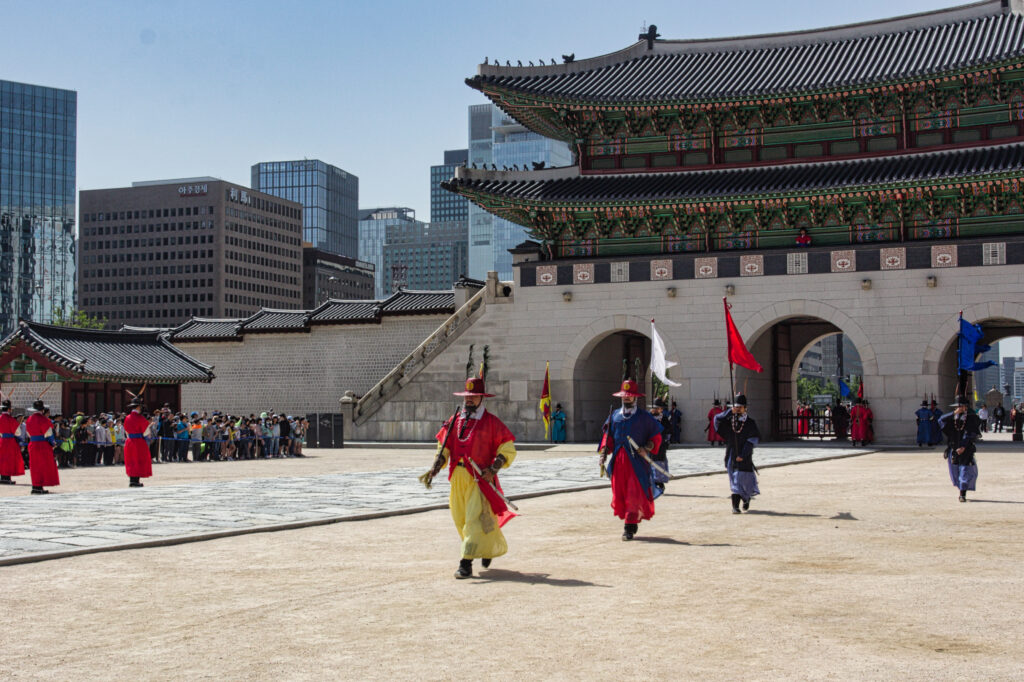
On our way to the exit, we could see the changing of the guard, which was really impressive, with musicians playing a hymn and two large groups of guards performing a ceremony to exchange. Around, we could see many locals wearing hanboks and taking photos with the nice backdrop of the palace.
Changeokgung Palace
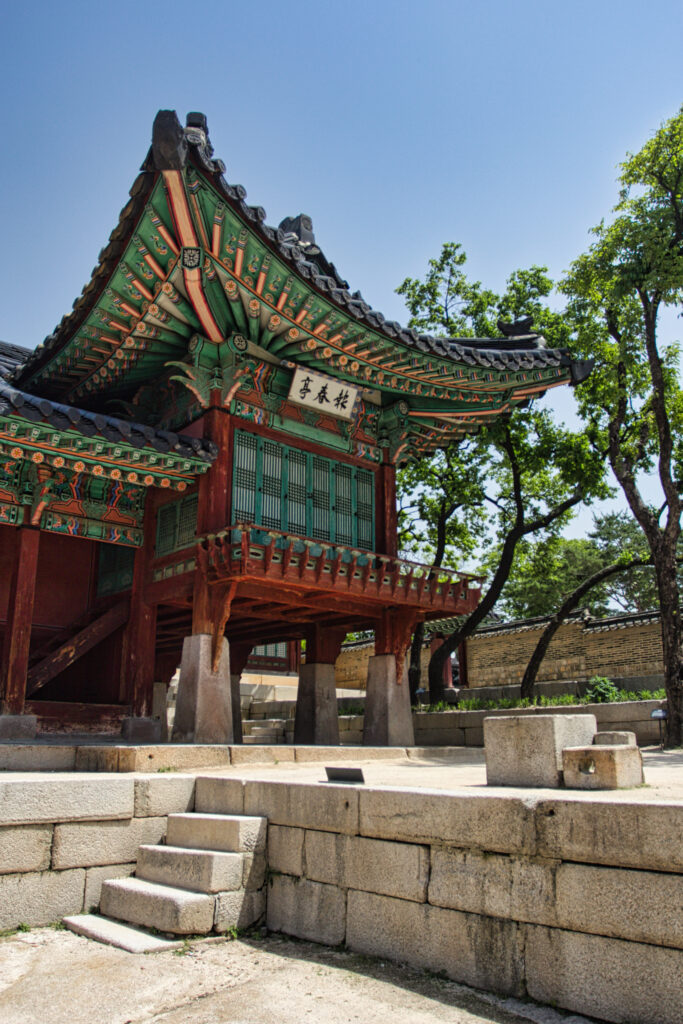
After exiting our first palace we passed by the Jogyesa temple again, wanting to see it inside, as we couldn’t the last day due to all the ceremonies. However, we weren’t lucky again, and the temple was closed for prayer. Thus, we headed to our next destination, Changeokgung Palace, a UNESCO Heritage Site since 1997. This palace is absolutely stunning and has gorgeous gardens around. It was established in 1405 and was the preferred residency for most of Korea’s kings. We wanted to visit the Secret Garden, which is another highlight of Changeokgung Palace, but were running out of time as we had to catch the train to Busan, so we had to skip it.
Busan
We arrived to Busan after a 2:15 h train ride, and went to our hotel. The hotel didn’t have a map, so we went to touristic information to ask for advice on what to visit. The guy who worked there was not very chatty, stating that the attractions to visit were already marked on the map, so we had to google a bit before deciding where to go. We went to see Gamcheon Culture Village, which are many small houses with different colors. While it looked cute on pictures, from close by the houses were in a rather poor state. We also got verbally harrassed by a couple of men there, so we returned to the hotel with a not so positive impression of Busan.
Day 5 – Yangdong and Bulguska
Yangdong
We woke up early again to take a bus to Gyeingju, from where one can reach two UNESCO Heritage Sites, Yangdong and Bulguska. Once we arrived to Gyeingju, we went to touristic information to get the bus info, since they are not very frequent. From the bus terminal, we took bus 23, which took us 35-40 min to reach Yangdong.
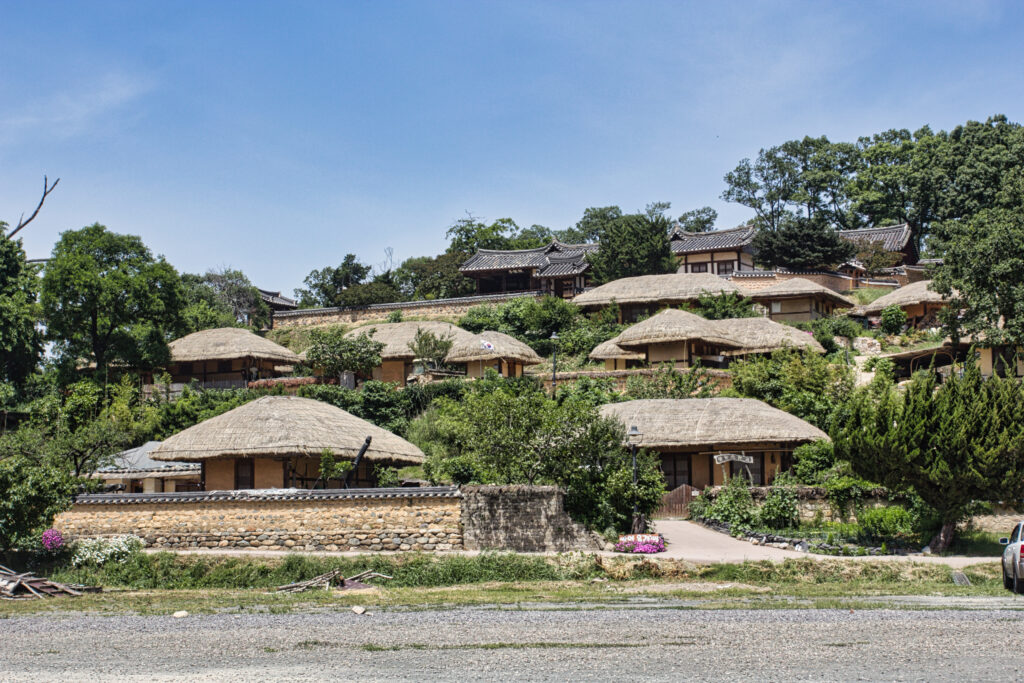
Yangdong was declared a UNESCO Heritage Site in 2010, so one needs to buy tickets to visit, for 8,000 won. The village itself is very pleasant. You can walk around little houses with thatched roofs. There were some bigger and more solid houses, belonging to rich citizens of the village, but I found the houses with the tatched roofs more interesting. There’s still people living in these houses, so it’s not just a touristic place. The village is not particularly large, it has around 150 houses, and you can take a map to visit the keypoints, such as the Seobaekdang House, the Mucheomdang House, the Hyangdan house, or the Gwangajeong house.
Bulguksa
After visiting the folk village, we took the bus back to Gyeingju to go to our next destinatoin, Bulguksa. We bought the ticket for 5,000 won per person. When we arrived, the temple was still decorated for Buddha’s Birthday celebrations. There were also children’s drawings around, and overall the temple was nicely decorated.
The construction of the temple begain in 751 by the Prime Minister Gim Dae-seong, and was finished around 20 years later. The temple was burned down by the Japanese army in 1593, and while parts of it were rebuilt, it was not until 1969 that it was completely restored. The temple was designated a UNESCO Heritage Site in 1995.
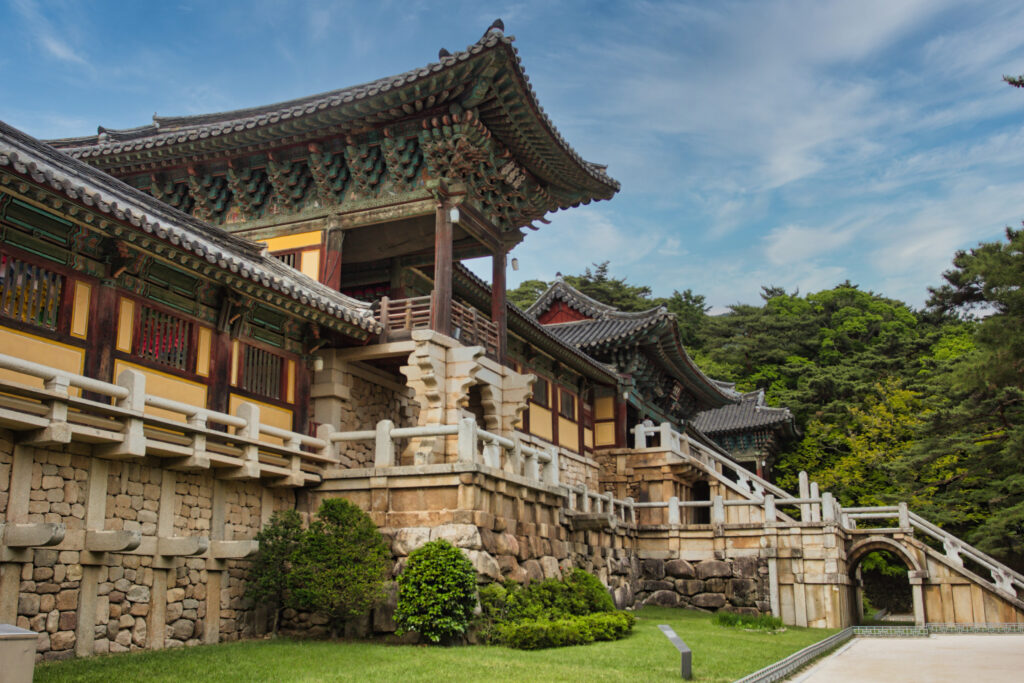
You can also go to Seokguram grotto, a place with a Buddha statue, but the bus that goes there passes once every hour and we had to wait for too long, so instead we decided to go back to Busan.
Day 6 – Fukuoka
We woke up at 5:45 to get to the ferry station on time, as we were heading to Fukuoka, Japan. The ferry that carries you from Busan to Fukuoka is quite cool, as it can reach speeeds of 90 km/h and let’s you cross the passage between the two countries in just above 3 h. Once we passed passport control in Japan, we took the bus until our hotel, the Forza Hakataeki Hakataguchi, which had modern and quite large rooms. After luggage dropping, we took the JR Kyushu Pass, which included the trains of the north of Kyushu.
Fukuoka is a large city, with 1,5 million inhabitants, and it’s very lively. It’s filled with small stores, shopping malls, and many very appetizing restaurants. The only downside was that it was even hotter than in South Korea.
Kushida Shrine
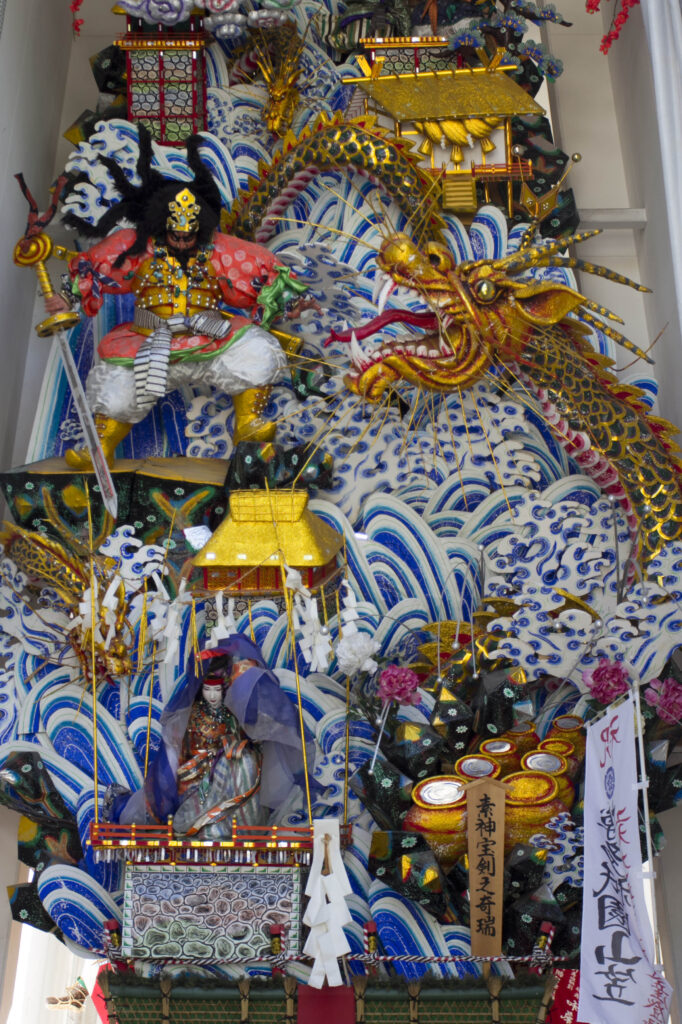
We first walked nearby Hakata Eki (station), right next to a canal, until we reached the oldest temple in Fukuoka, the Kushida Shrine, built in 757. The highlight of this shrine is that it does the biggest festivals in Fukuoka, and you can see very impressive floats measuring over 10 m. These festivals are declared UNESCO Intangible Cultural Heritage. The temple itself is also really pretty and is surrounded by a beautiful garden with flowers.
After the shrine visit, we took the train until Ohori Koen, which is considered one of the most beautiful gardens in Japan. Initially, I was a bit disappointed, as it seemed quite a regular park with a lake and some trees around. One, however, needs to go into the paid area (190 yen) of the garden. This garden was absolutely stunning, with a small lake with mini waterfalls, beautiful flowers blooming, strategically located rocks, and small trees carefully cut to their correct shapes. We stayed in the parc until it was closing time, and headed to the Fukuoka Castle, from which you can barely see anything, as there’s only some walls left.
Tower of Fukuoka
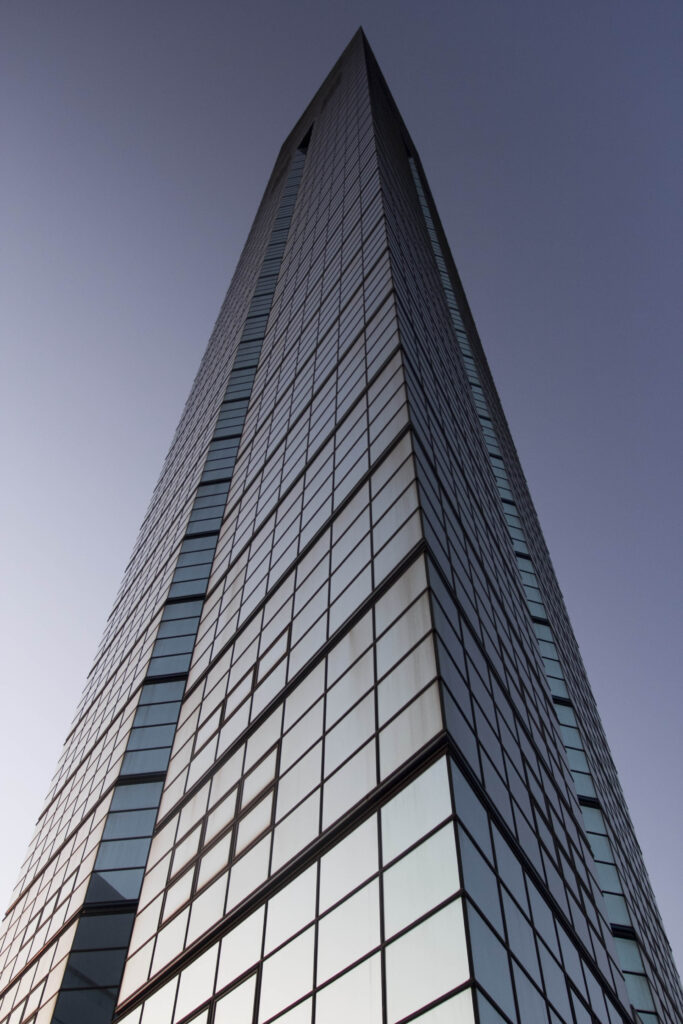
Out next stop was the Tower of Fukuoka, which is located next to the ocean. I’m a big fan, I love this type of architecture, and this building felt like it was merging with the sky. We stayed on the beach to enjoy the sunset, and then headed to look for a restaurant for dinner.
Day 7 – Hells of Beppu
The Hells of Beppu are located 2 h away from Fukuoka and were the perfect destination to use our JR Passes. After reaching Beppu, we took bus number 2 until Umi-zigoku mae, where we could see the first five hells, while to see the last two, we had to take bus 16 until Chikoika Jigoku mae, as they are located 3 km away.
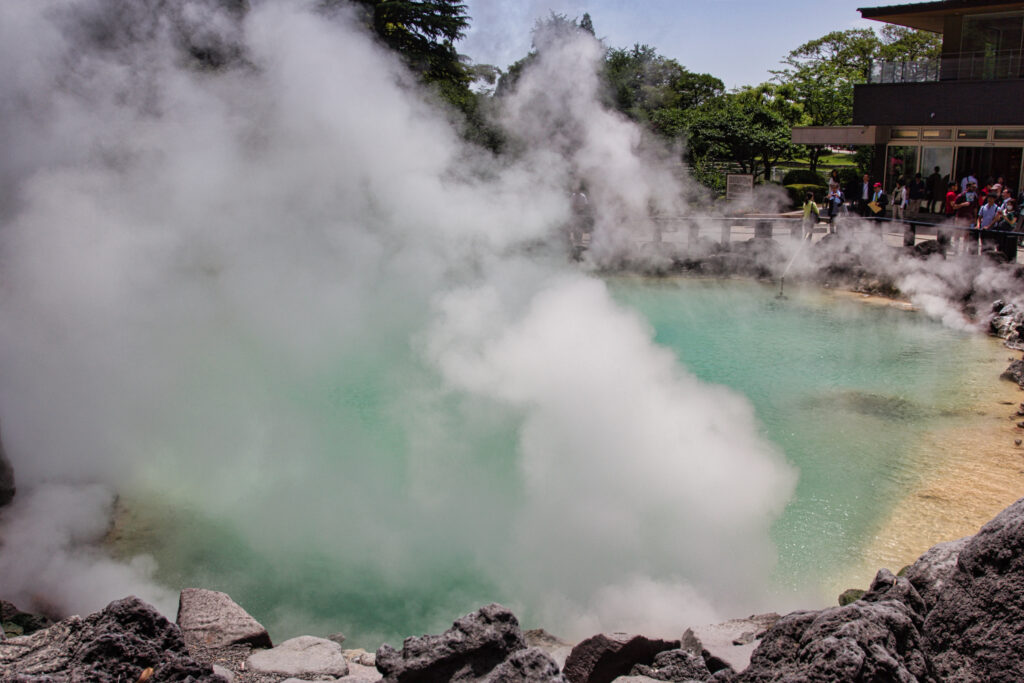
The first caldera, Umi-Jigoku, was my favorite. It has a beautiful light blue color due to its cobalt content. There were some employees boiling eggs in the water, which you could later buy. Next to the first caldera there was a smaller lake with red water, and a place to put your feet, although it was way too warm for me.
The second caldera, Oniishibouzu-Jigoku, had giant mud bubbles exploring on the surface. The third, Kamado-Jigoku, didn’t seem particularly impressive. There was the statue of a demon with a hot pot, and some gas leaving the pot. The fourth place, Oniyama Jigoku, was a crocodile farm, which I also didn’t find very interesting. The last lake was called Shiraike-Jigoku, and had a white color to it.
After having a snack and taking the bus, we visited the Chinoike-Jigoku, a red lake filled with iron and magnesium oxide. The last stop, Tatsumaki-Jigoku, is a geyser, a very regular one by that matter. It has pretty short cycles of 30-40 min, so we only had to wait for 15 min before we could see the eruption. The natural height of the geyser is around 30 m, but it is contained by some rocks, probably for safety reasons.
After seeing the hells, we returned to Fukuoka, and took another shinkansen now until Kumamoto, where we spent the night.
Day 8 – Kurokawa
For this part of the trip, we rented a car, since we wanted to see some nature. From Kumamoto, we headed to the volcan Aso. We weren’t particularly lucky with the weather, as it was raining all the time. Initially, we followed the GPS and ended up on a close road. Fortunately, a Japanese family stopped to help us, and gave us a map to reach mount Aso. We finally arrived, and even paid the 800 yens ticket to access the caldera area, but the weather was so bad we couldn’t see anything at all.
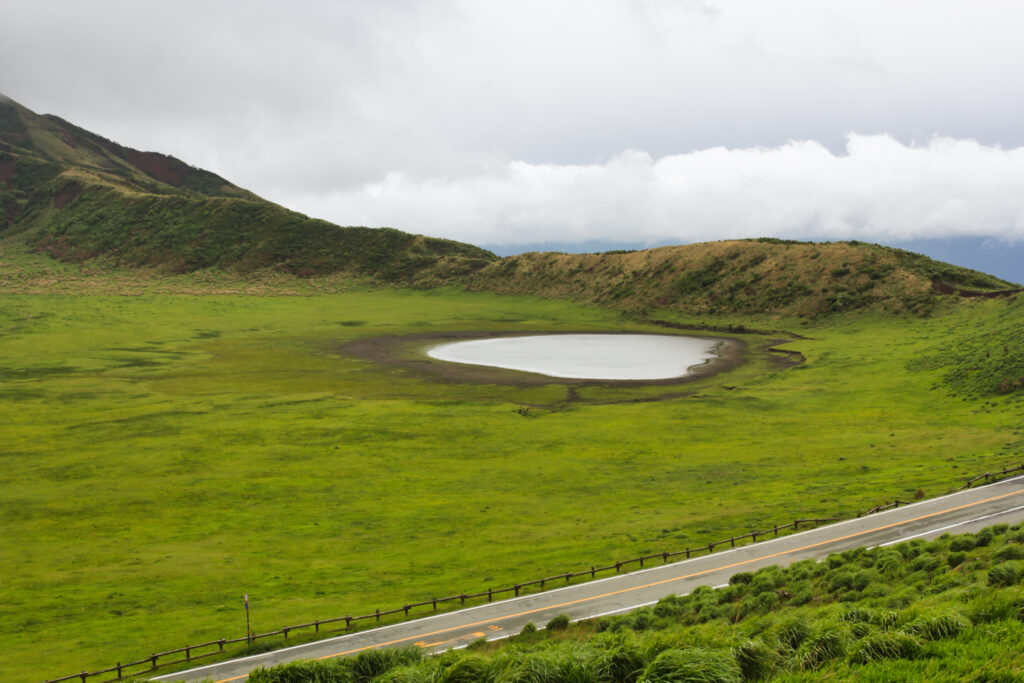
Sine the weather was not the best for a nature trip, we continued to our hotel in Kurokawa. Kurokawa is an excellent onsen place, and the hotel we took, Kiyashiki, had all the facilities to spend a relaxing onsen day in it. Our room had two floors, one with a tatami room with chairs and a bed, and the lower room was the bedroom, with European style beds. There was a beautiful view of the mountains and a small river, and we had two private baths, one inside the room and one outside.
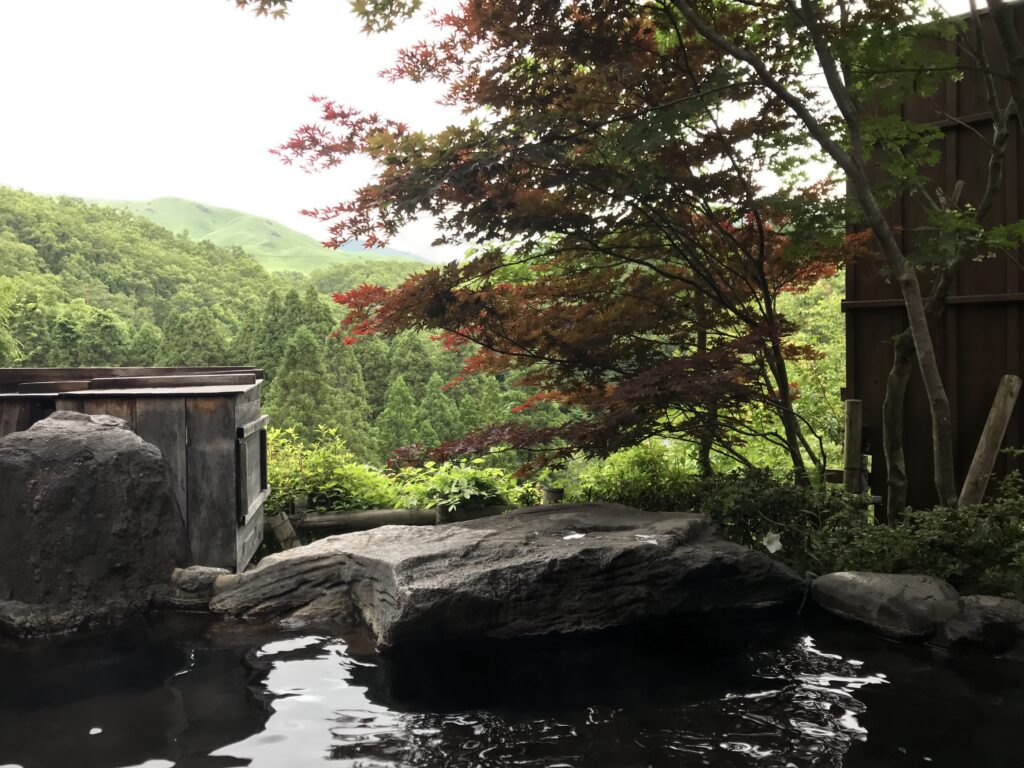
We also booked the family bath, which you can reserve for 45 min per room. It was beautiful and larger than the bath we had in our room. At 18:30 it was dinner time, so we went to the restaurant, where we got served many different dishes. At the time, I could speak some Japanese, but I didn’t have the vocabulary to understand the names of the dishes that the waiter was telling us, so he went to look for an English dictionary to translate it for us! It was a super cool place.
Day 9 – Mount Aso, Takachiho y Nabegataki waterfall
Nabegataki waterfall
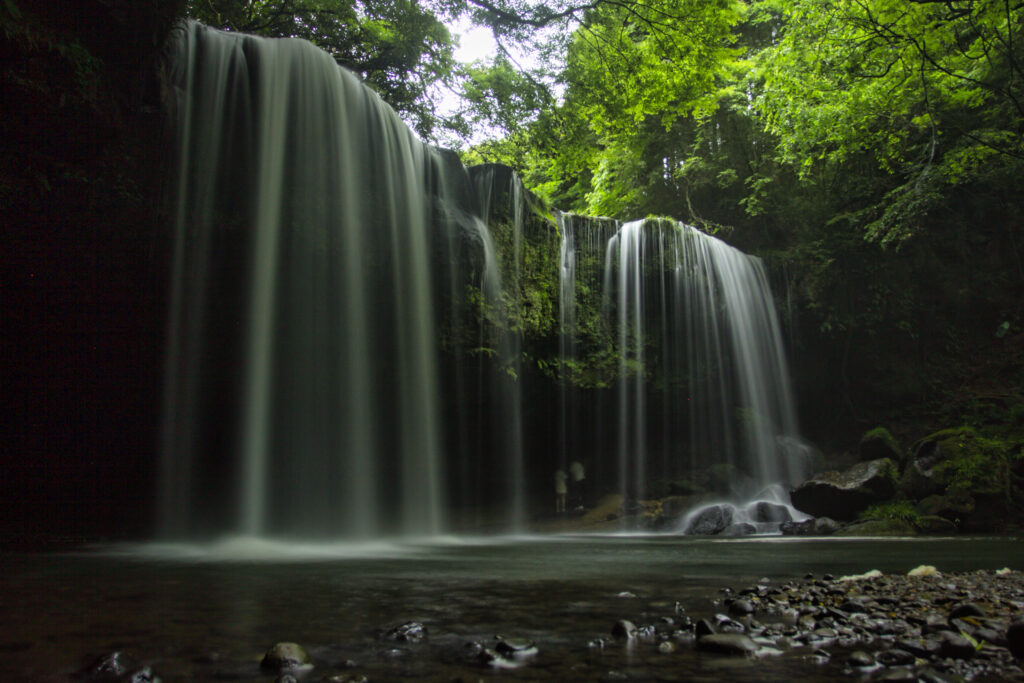
After enjoying breakfast in our hotel, we headed to see the Nabegataki waterfall. It’s a nice waterfall with a small cave behind, where you can enter and see the waterfall from a different perspective. The fall was formed after an eruption, when pyroclastic flow deposits became hard rocks, while the sedment underneath got eroded over time.
Mount Aso
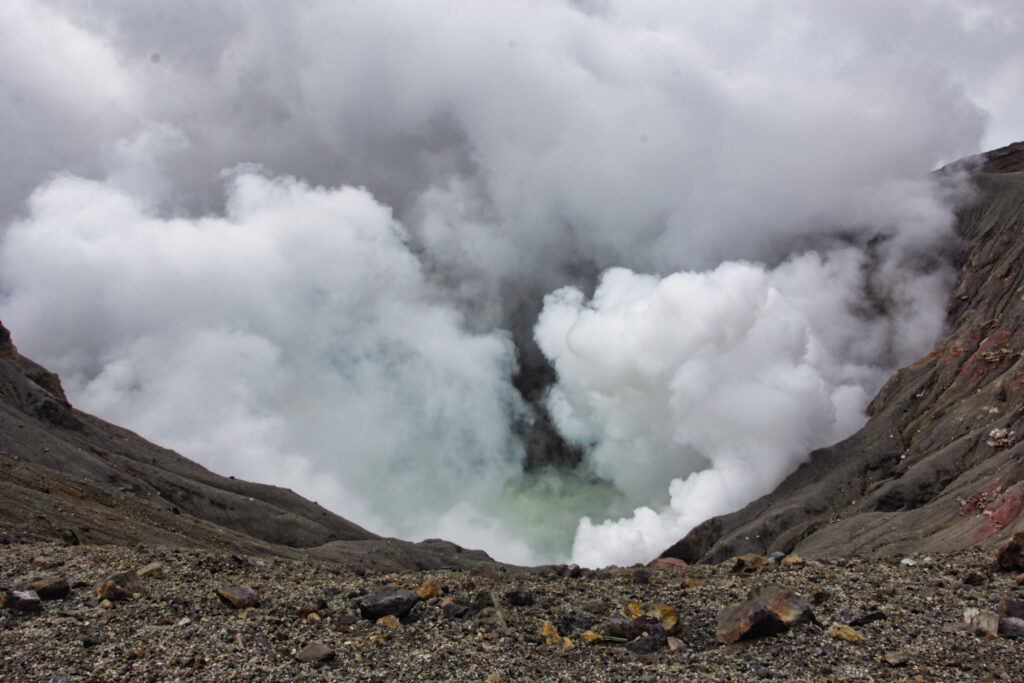
After some debating, we decided to try to see Mount Aso again, although it was still cloudy. This time, we did the smart thing and asked in the local museum if there was anything we could see. Since the answer was no, we went to have lunch, and after eating there was still a huge cloud on top of the mountain. Nonetheless, we decided to go all in and drove again to the parking in Mount Aso. We got lucky this time! Up there, there was no rain and it was even quite warm. We could see that many gases were coming out of the crater, forming a huge gas column above the crater. However, the gas was going in the direction opposite to us, so we could see some glimpses of the blue lake in the caldera.
Takachiho
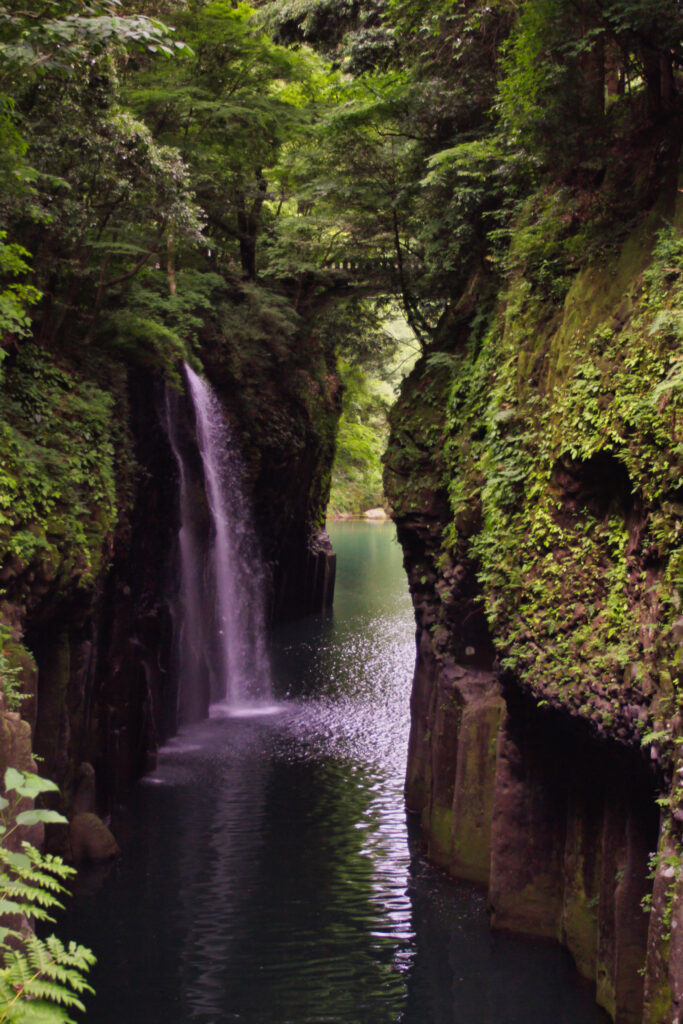
Since it was already quite late after our adventure, we headed to our hotel in Takachiho, to leave the car there and visit the Takachiho Gorge. Our hotel was very conveniently located close to the main temple and also pretty close to the gorge (10 min). It was a nice walk to see the gorge with the waterfall. There were also quite interesting rock formations, with long basalt columns (similar to what one can see in Iceland!). The water had a beautiful dark green color too. We followed the gorge by the established path, until reaching some steps that led us to a bridge, from where we could go back to the city.
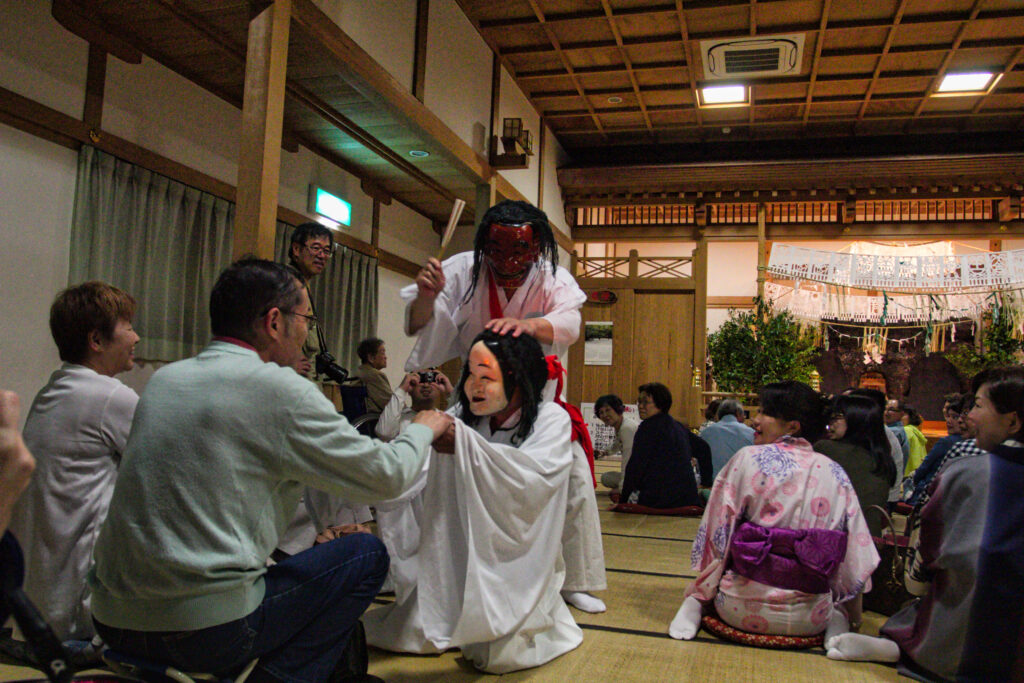
After having dinner in the only open restaurant in Takachiho, we went to the Takachiho Shrine, where every day at 20:00 one can see some of the dances of the traditional festival Takachiho Yokagura. The festival happens from November to February and then, the dances are performed throughout the night to invite a local deity and pray for good harvest. You can see four dances in the shrine, with the actors wearing impressive masks. The dances are very expressive, and the fourth one has a touch of humor. In it, a couple were going out, but the man was getting distracted by going to flirt with members of the public. In that moment, the woman would come and softly hit the lady with whom he had flirted with the kimono. THere was also the opposite scene, when she was distracted with a gentelman, and he would hit her with a fan (although the actor was hiting his own hand). The man came to flirt with my travel companion, which was hilarious!
Day 10 – Kumamoto
Our first stop of the day was the Tsujun Bridge, which is an aqueduct that was used to bring water to rice fields. From time to time, if there was too much water, the bridge would release the excess water from the sides, and that way it became a tourist attraction. We wanted to get on the bridge, but it was closed for repairs, so we just stopped around to take a look from afar.
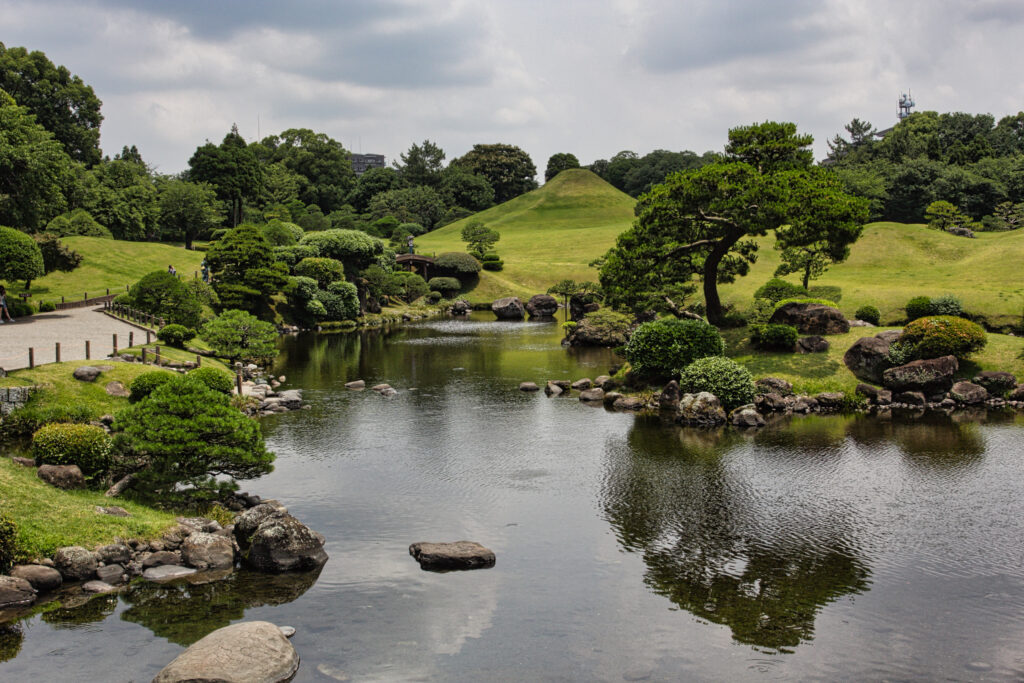
We then headed back to Kumamoto, and our first stop was the Suizenji Jojuen Garden. The garden was really nice, with mounts imitating mountains, one of which was the mount Fuji. We walked around and stopped in one of the houses to have a tea contemplating the landscape of the park.
After a quick ramen lunch, we went to the Kumamoto Castle, which unfortunately was closed. Apparently, in 2016 there had been an earthquake of magnitude 7 that had destroyed many buildings in Kumamoto, and the castle hadn’t been reformed since. When we walked around the castle, we could understand why it was still closed – the exterior walls were half-way collapsed, and the castle looked very damaged.
Nonetheless, there was plenty of life in the streets in front of the castle, with many small stores (with the mascot of Kumamoto, a cute black bear) and restaurants. We returned to our hotel afterwards and had some okonomiyaki for dinner.
Day 11 – Sapporo
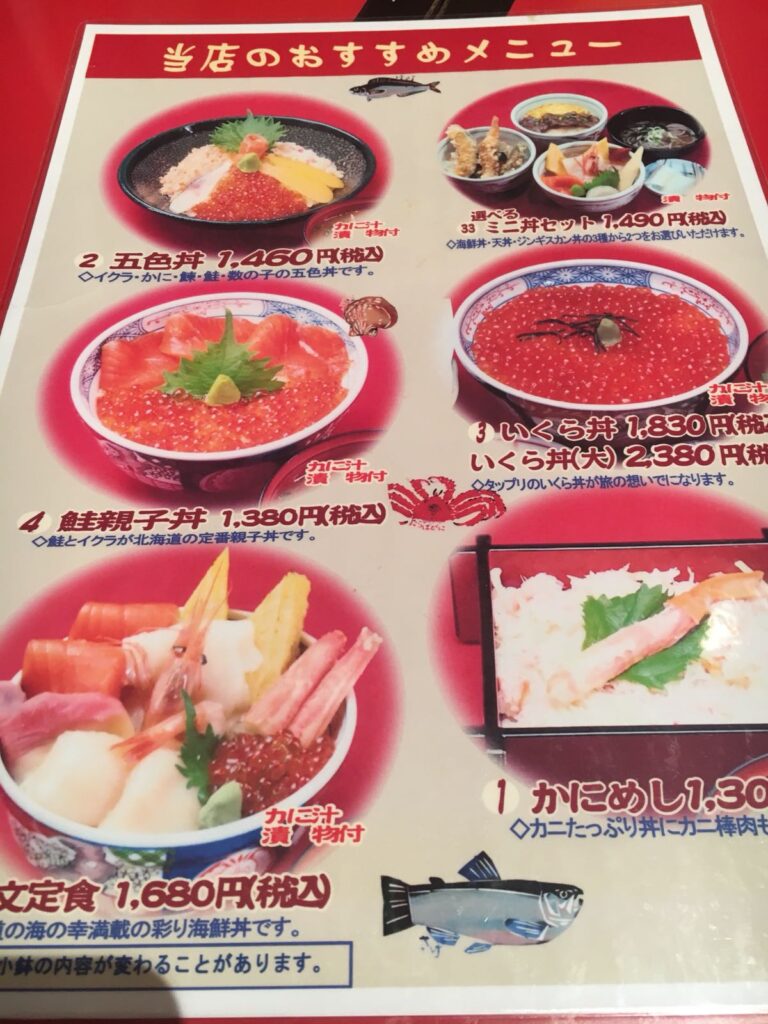
In the morning, we had a flight to Sapporo, the capital of Hokkaido, the northernmost island of Japan. Once in Sapporo airport, we took the train to the city, which takes about 50 min. During the trip, I chatted with an elderly man who told me that Hokkaido food was the best in Japan, and I have to agree with him! We left our things in the hotel, and since the weather was bad and it was already quite late, we decided to do some of our shopping, and to enjoy the food in Hokkaido. The crabs are amazing there!
Day 12 – Lake Shikotsu, Lake Toya, and Otaru
To make our lifes easier, we rented a car in Hokkaido too. It was a bit messy, because the datacard was not working and we had no internet to find the place, but at the end we figured it out and could take the car.
Lake Shikotsu
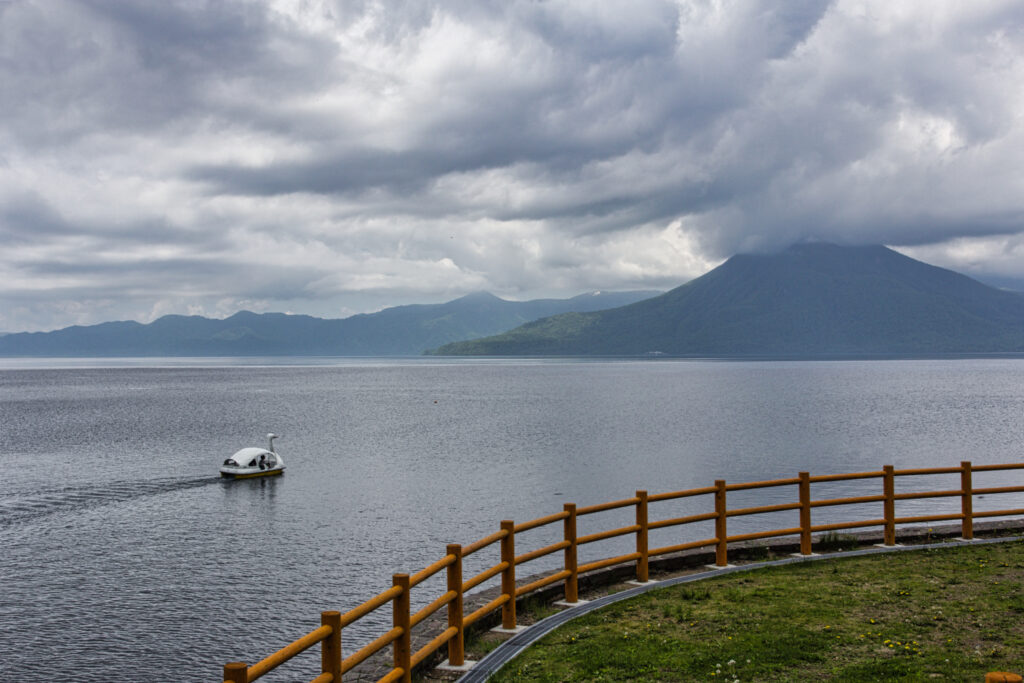
Our first stop was the Lake Shikotsu. We had just marked the first town near the lake as our destination, so the GPS brought us to a small town. It was quite cold, so we grabbed our jackets, and went down towards the lake. The lake itself is really large and around you can see nice mountains. The water was very transparent and we could see people using pedalos in the shape of swans. We walked around the lake for a bit until a red bridge, which had been built during the Meiji era to transport materials to construction sites. We then went down to a beach, where you could head into a bird sanctuary.
Lake Toya
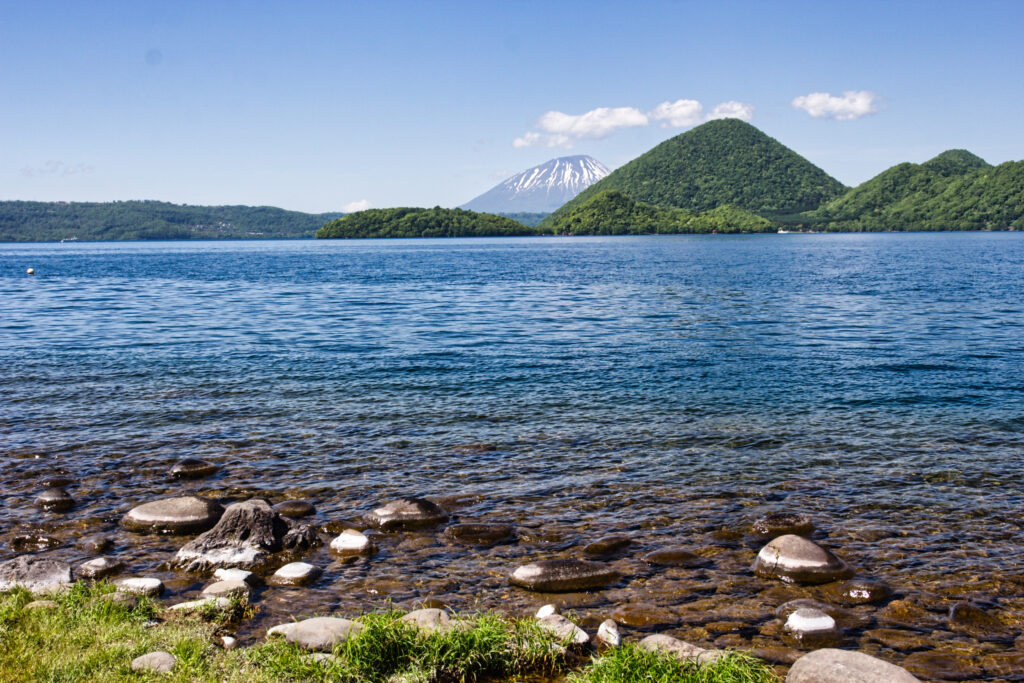
It was getting colder, so we went back to the car and drove to Lake Toya. Lake Toya is a volcanic caldera filled with water. It has a small island in the center, Nakajima. The landscape was really beautiful, and the lake had a gorgeous backgrop of a volcano with snow behind. We stopped in tourist information and decided to go to the Nishiyama Craters Walking Trail. But first, we stopped in a lookout area, which costed 1,000 yen, and from where you could see the Lake Toya and the sea, Mount Yotei, Nakajima, and the Yu-Kun Crater.
Nishiyama Craters Walking Trail
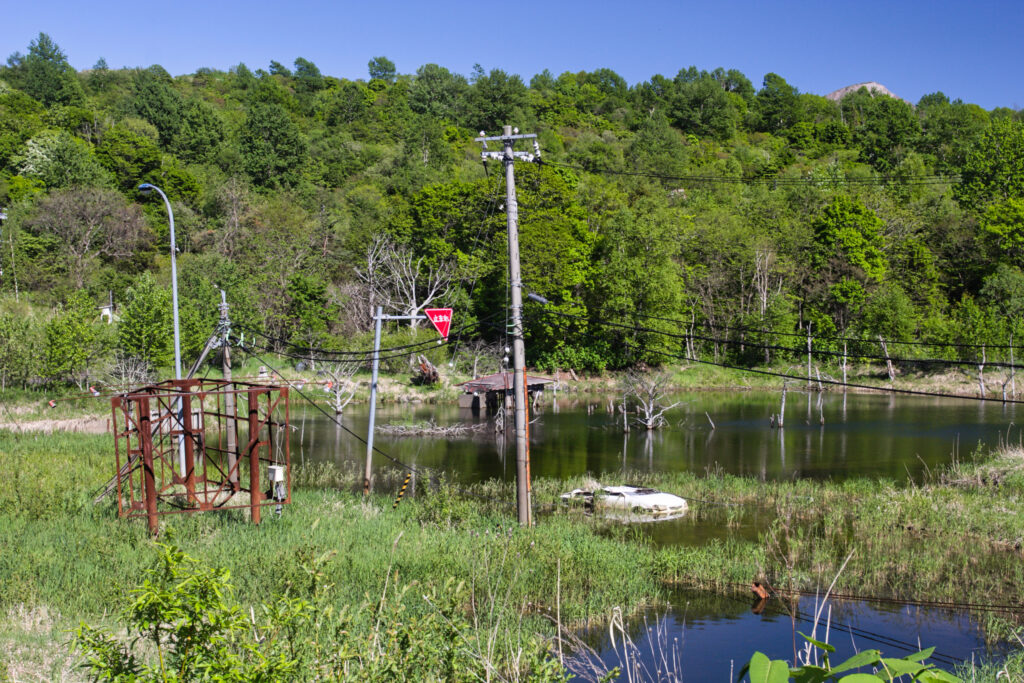
We then found the headtrail, which brought you to a trail from where you could see the rests of the Highway 230 after a volcano eruption. Further down the trail there was an abandoned car and a collapser wooden house. We passed by an abandoned apartment complex, where a new crater had opened up. At the end of the trail you could see a kindergarden. The whole hike was quite eerie, looking like a postapocaliptic movie. Human footprints being erased by the forces of nature. It was a relief to learn that everyone of the city had been timely evacuated and there had been no injuries or deaths from that incident.
Otaru
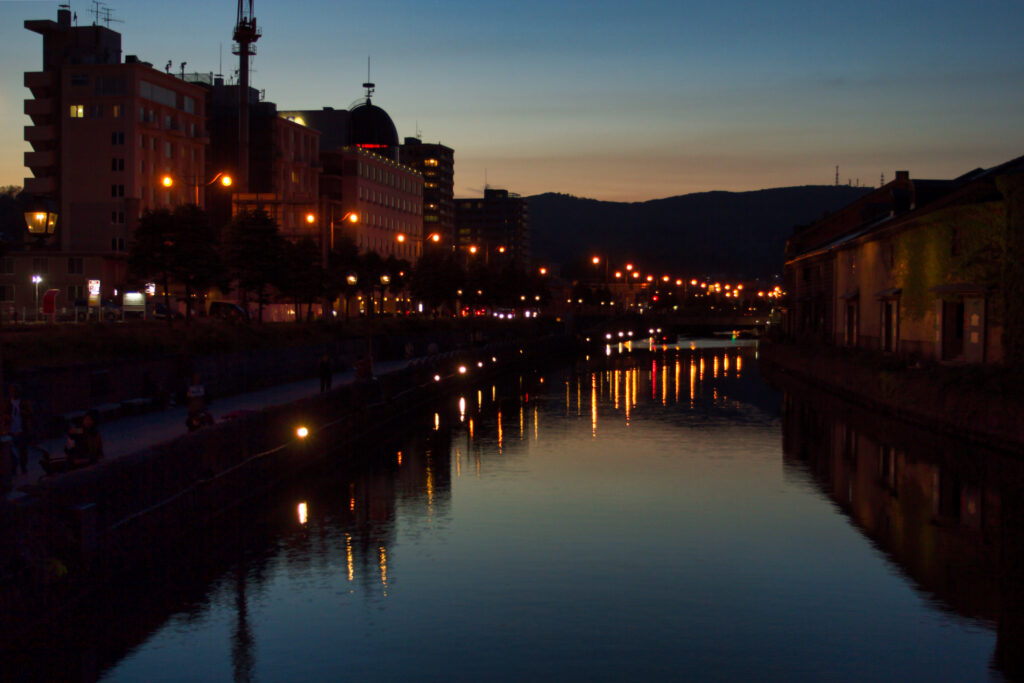
After the hike, we decided to go to Otaru, which was an almost 3 h long trip. It was already evening, so we checked TripAdvisor and picked one of the most popular places in Otaru, Sawasakusuisan Kaisenho. On our way there, we passed by the canal of Otaru, which looks beautifully at night. When we arrived to the restaurant it looked like it was about to close, but the cook let us in. The cook kept joking with the six people who were in the bar, and asked us if we had come guided by the TripAdvisor recommendation, of what he was very proud. He recommended us to take the chirashi, which was outstanding! One of the best sushis I ever tried.
Day 13 – Blue Pond in Biei and Flower Farms
Blue Pond
We woke up at 5 am in order to reach the Blue Pond before it was too crowded. We left the hotel at 5:30 and arrived by 9:15 to the place, when unfortunately it was already very crowded. Reaching this place by bus was quite difficult, as there’s only 5 buses a day that go there.
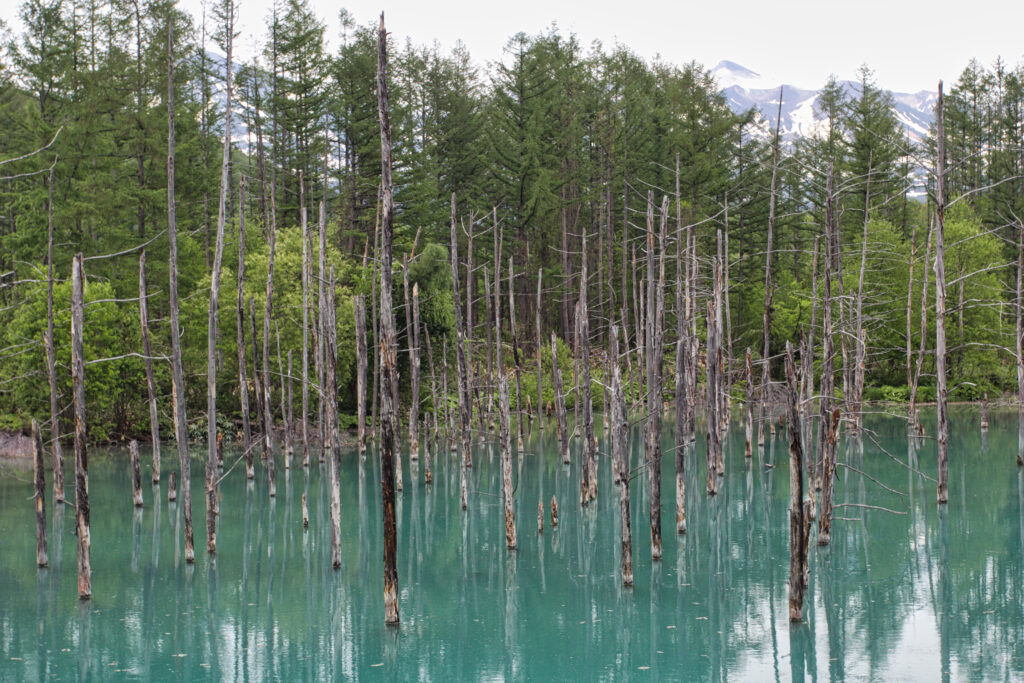
The Blue Pond was really pretty and photogenic, with a very special blue color. The dead trees inside give it a mysterious vibe. The Blue Pond is an artificial lake, which appeared after building some contention dikes to avoid flooding due to a nearby volcano eruption. The aluminum gives the water its color. Given the popularity of the attraction, we could see that there was some construction going on to make the place more accessible.
Farms
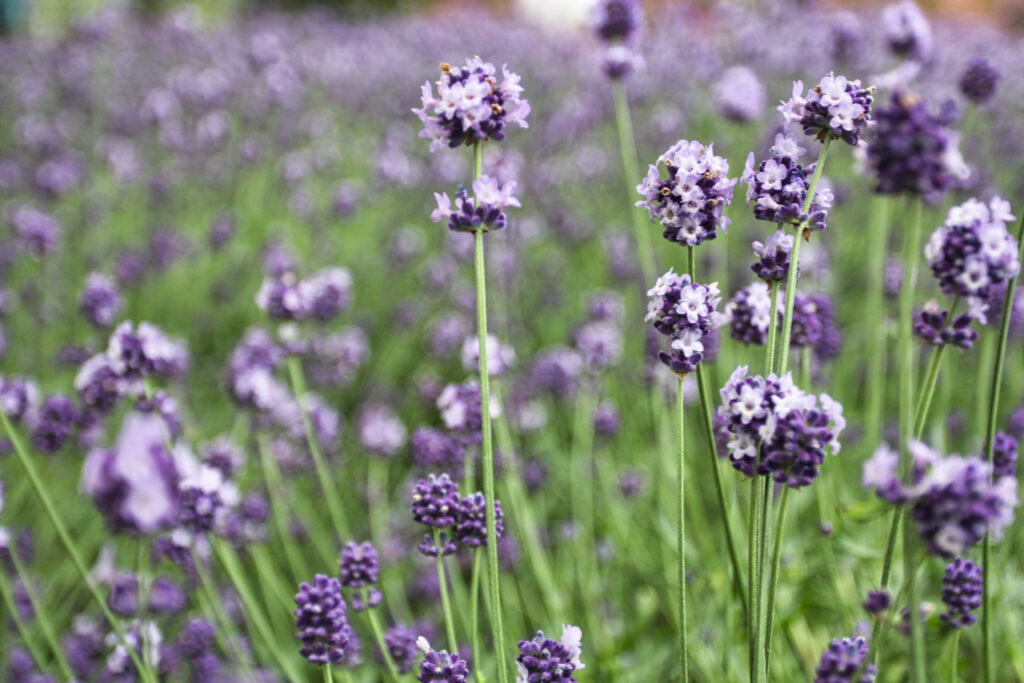
After visiting the Blue Pond, we went to see the flower farms. The first one we visited was Shikisai no Oka, which is one of the largest ones. However, we were visiting in May, so there were still not many flowers blooming and it was a bit boring. July/August are high season for this farm, and the photos they had looked stunning. Since we already were there, we drove into the Farm Tomita without many hopes. However, that was actually a good idea, since they had planned part of their land to entertein tourists during all seasons, and had already some types of lavender blooming. We walked around quite a bit, enjoying the greenhouses with lavender flowers.
From there, we already headed back to Sapporo. We had a hotel next to the station, which I find very convenient in Japan.
Day 14 – Sapporo
In the morning we went to the market to have breakfast. There were many stalls selling all types of crabs, and many of the stores were focused more on tourists. In one of the places they had a giant crab, with which you could take a photo. That was convincing enough for us to have a sushi breakfast there. The food was delicious!
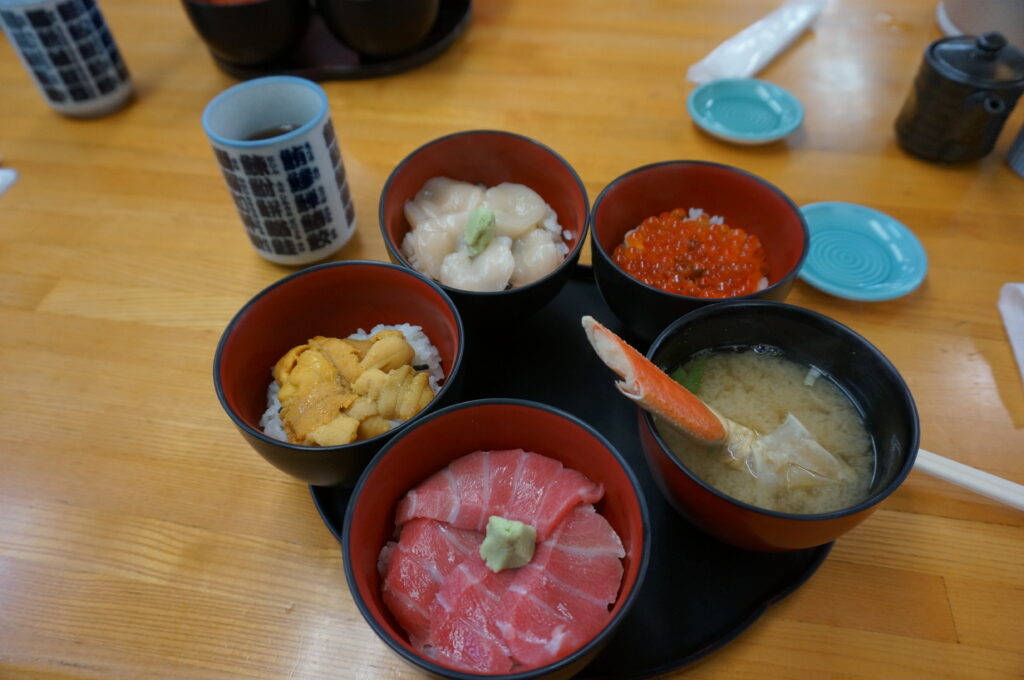
With our bellies full of delicious food, we went to Odori Park, a nice park to walk around, and then we reached the Clock Tower. Somehow, we ended in Sapporo Kani-Honke, a chain specialised in crab food, so we just ate the menu of crab. Happy of having eaten as much as we could, we headed to the airport to catch our flight back to Tokyo.
Day 15 – Tokyo
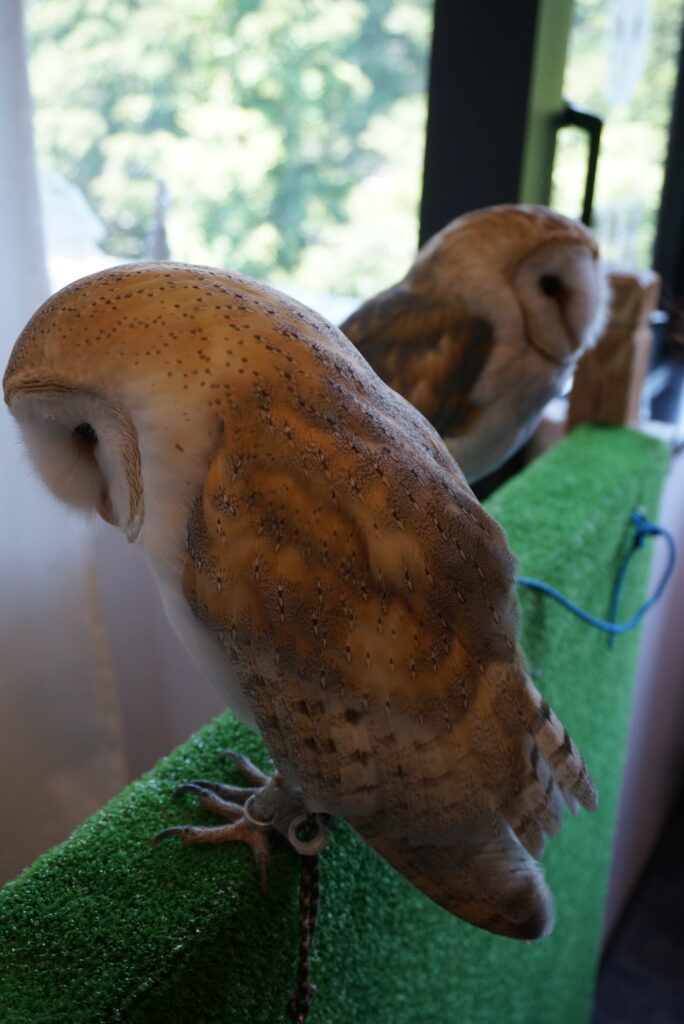
We stayed in a hotel in Shibuya. Usually I like Shibuya a lot, but there was a construction area, so reaching the hotel was a bit more difficult than what I anticipated. In the morning, we went to Harajuku to remember the vibe of Takashita Street, and because I wanted to go to the Owl Café they had there. It was a quite small café, with only 12 people allowed at a time. Since it was so small, it was quite difficult to get to check the owls from close, so we left quite quickly after entering.
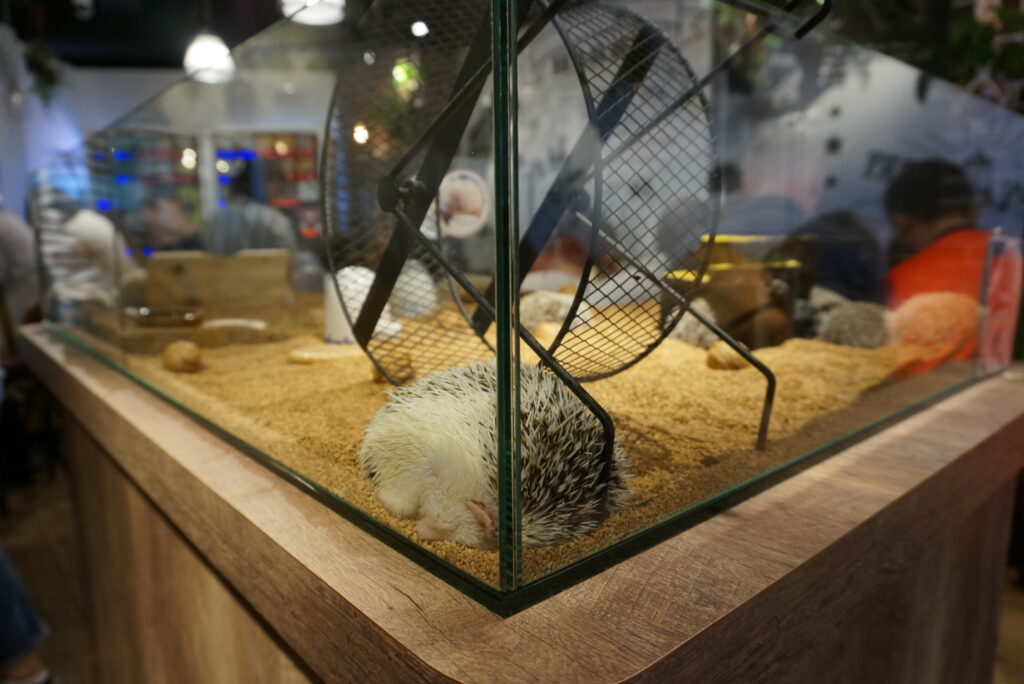
Instead, we went to the Harry’s Hedgehog Cafe, which has, as you may have guessed, hedgehogs. They are so cute! This cafe was quite large. Every client had assignated one or several hedgehogs. You did get some gloves to be able to put the hedgehogs on your hands. Since they are noctural animals, they tended to fall asleep pretty fast. After the animal cafes, we went to a kimono store, where we got to try some beautiful kimonos, and in the evening we met with a friend who lives in Tokyo for dinner. We then went to sleep to prepare to the flight next day.
Personal Highlights
I like to end up my posts with what was my favorite part of the trip. Here, that would be:
- Yangdong and Bulguska. Both are spectacular places, and perhaps how challenging it is to reach them adds to the charm.
- Nishiyama Craters Walking Trail. This trail really stuck to my memory. For me, it was like watching the HBO Chernobyl series in life. I could totally imagine that trail with the background music they had in that documentary.
- Takachiho dances. They were so fun! It was really a highlight of the trip.
- Kiyashiki Hotel. This has been one of my most memorable hotel stays in my life. The onsens were awesome.
Want to get inspired?